Alcalá de Henares
Walking through Alcalá de Henares is a journey through the living history of the Spanish language. Designated a UNESCO World Heritage City in 1998, this historic destination is renowned as the birthplace of Miguel de Cervantes and home to one of the oldest and most prestigious universities in Europe.
Its medieval layout, centered around the majestic Plaza de Cervantes, blends seamlessly with the Renaissance spirit of the San Ildefonso College, creating a unique setting where knowledge, architecture, and literature can be felt throughout every corner of the historic center.
What to See in Alcalá de Henares: Top Landmarks and Must-Visit Monuments
Alcalá de Henares boasts one of the richest historical and cultural heritages in the Madrid region. Its historic center is home to some of the most important landmarks of the Spanish Renaissance and the Golden Age, making it an essential destination for first-time visitors.
Among the top attractions in Alcalá de Henares are Cervantes Square, the vibrant heart of the city; the San Ildefonso College – University of Alcalá, a symbol of Renaissance humanism; the Cervantes Birthplace Museum, where visitors can discover the life and legacy of the author of Don Quixote; and the Cathedral-Magistral of Saints Justo and Pastor, one of Spain’s most distinctive religious monuments.
This remarkable architectural heritage is complemented by sites such as the Roman City of Complutum, the Regional Archaeological and Paleontological Museum of Madrid (MARPA), the Archbishop’s Palace, Laredo Palace, the medieval walls, and the Monastery of San Bernardo, creating a unique historical ensemble in the region.
To learn more about each landmark, explore the dedicated monument pages and cultural routes featured in this section.
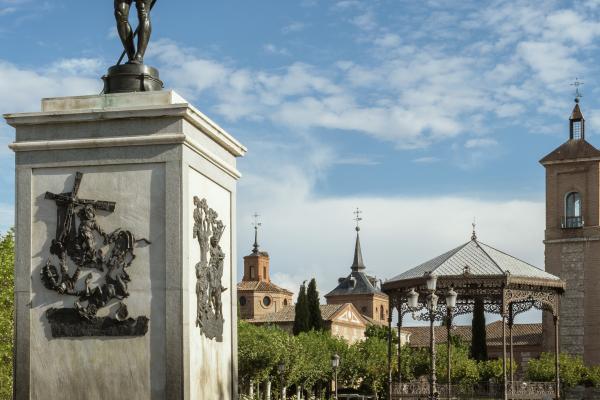
Cervantes Square in Alcalá de Henares
Cervantes Square is the historic and social heartbeat of Alcalá de Henares, a city designated as a UNESCO World Heritage Site and one of the most prominent cultural destinations in the Madrid region. This vibrant, open square is surrounded by centuries-old architecture and stands as an absolute must-see landmark on any travel itinerary about things to do in Alcalá de Henares, drawing both history enthusiasts and travelers looking to immerse themselves in the authentic local atmosphere.
To fully explore the city, discover its historic monuments, and plan your custom cultural itineraries, make sure to visit Alcalá de Henares.

College of San Ildefonso: The Birthplace of Spanish Humanism
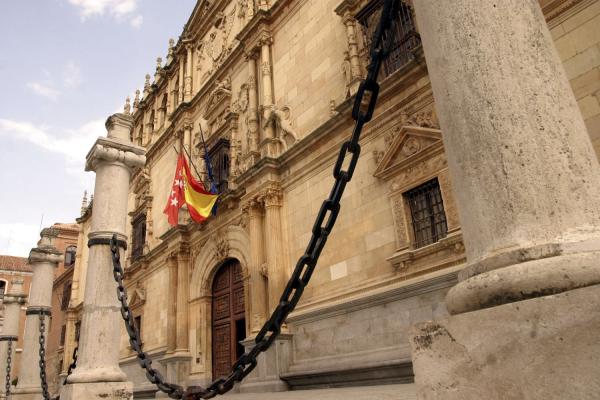
The College of San Ildefonso, the historic heart of the University of Alcalá, stands as one of the most sublime masterpieces of the Spanish Renaissance and the ultimate symbol of the cultural heritage of Alcalá de Henares—a city proudly designated as a UNESCO World Heritage Site.
Founded in 1499 by Cardinal Cisneros, this building represents not only the origins of the university but the birth of a city designed specifically as a cradle of higher education. It went on to become one of the most influential academic institutions in Europe and a blueprint model for Spanish-American universities.
To discover the full historic context of the city, its rich legacy, and its top monuments, explore our official Alcalá de Henares travel guide.

Magistral Cathedral of Saints Justus and Pastor
In the heart of Alcalá de Henares' historic district, in Plaza de los Santos Niños, stands the Magistral Cathedral of Saints Justus and Pastor, the mother church of the Complutense diocese and one of the most unique sanctuaries in the Madrid Region. Its location marks the ancient urban, political, and social heart of the medieval city.
The temple rises on the exact site where, according to tradition, the children Justus and Pastor were martyred in the year 304 during the Diocletianic Persecution. A 5th-century chapel was erected over that enclave, eventually becoming a cathedral during the Visigothic era. Following various medieval destructions and reconstructions, it was elevated to a collegiate church in the 15th century. Under the visionary drive of Cardinal Cisneros, the current building was constructed between 1497 and 1515 in the exquisite Isabelline Gothic style.
Its title of "Magistral," granted in 1519, makes it—alongside St. Peter's Church in Leuven—one of the only two temples in the world with this rare distinction, which required all its canons to hold doctorates in theology, reflecting its close bond with the University of Alcalá. In 1991, with the restoration of the diocese, it proudly reclaimed its cathedral status.
Featuring a Latin cross floor plan and three naves covered by elegant rib vaults, the building blends exterior sobriety with interior richness. Highlights include its flamboyant Gothic portal, the imposing 62-meter Herrerian-style bell tower—begun by legendary architect Rodrigo Gil de Hontañón—and the 17th-century cloister, which houses the Interpretation Center and the Cathedral Museum.
Within the ambulatory lies the crypt containing the sacred relics of the Holy Children (Santos Niños), safeguarded in a magnificent silver and gold urn. Among its notable chapels, the Chapel of the Virgen del Val (patron saint of Alcalá) and the Chapel of San Diego de Alcalá truly stand out.
Designated a National Monument in 1904 and meticulously restored after the devastating fire suffered at the start of the Spanish Civil War in 1936, the Magistral Cathedral is today a historical, artistic, and spiritual landmark, witnessing more than sixteen centuries of living history in Alcalá de Henares.

Cervantes Birthplace Museum
The Cervantes Birthplace Museum is one of the most visited landmarks in Alcalá de Henares, a historic UNESCO World Heritage City and the proud birthplace of Miguel de Cervantes.
This museum stands as an essential stop within any cultural walking tour and is a top-tier highlight of what to see in Alcalá de Henares, especially for travelers looking to immerse themselves in the life and legacy of the author of Don Quixote.
To discover more about the city and plan your itinerary, make sure to consult our principal Alcalá de Henares travel guide.
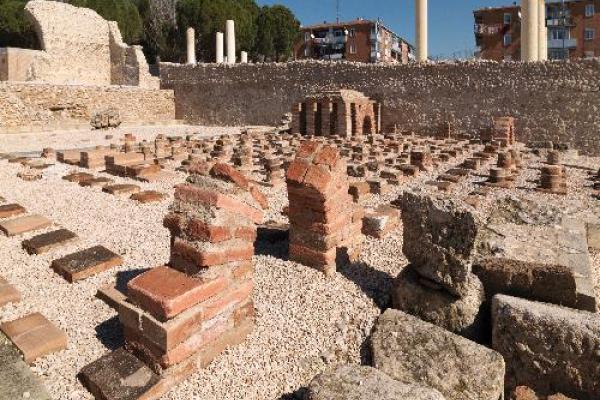
Complutum: The Major Roman City Near Madrid
Complutum was one of the main Roman cities in the interior of Spain. The city is located in the fertile plain of Rio Henares by means of two successive foundations: the first, towards the change of Era. The second, towards 50 / 60d.C. In this great city of about 50 hectares, the Forum occupied approximately its center. It was the main public space of the city, surrounded by buildings with administrative, judicial, commercial and religious functions.
The monumental façade, the civil basilica, the northern thermal baths, the south portico, the market, the southern thermal baths, the Curia and the Criptopórtico, as well as the road infrastructures of Decumano III and Cardo IV and the network of drains of the city.
One of the most significant elements is the Wall of the Miracle, a Roman wall of large dimensions, belonging to the monumental complex, and has been the object of worship to the Saints Justo and Pastor, patrons of Alcalá de Henares, along the centuries, which has allowed its conservation to date.
Around the area already visited, new works are being developed that will allow the visit to several urban houses: the House of Mars, the House of the Atrium and above all the spectacular House of Griffins, with its magnificent collection of Roman mural painting , on which a cover has just been placed that will allow the visit to the complicated process of excavation and restoration.
The Community of Madrid and the City of Alcalá have recovered these important archaeological remains through the Regional Plan of Visible Yards.

MARPA: The Archaeological & Paleontological Museum of Madrid Region
Located in the iconic Plaza de las Bernardas—sharing the square with the Archbishop's Palace and the San Bernardo Convent—stands the MARPA. This museum is far more than an exhibition center: it is the official guardian of the Madrid region's history, spanning from the era when dinosaurs roamed these lands to the dawn of the industrial age.
The museum is housed within the historic Dominican College-Convent of the Madre de Dios, founded in 1565. Walking through its galleries allows visitors to journey through the history of the building itself, which survived the Napoleonic invasions (serving as cavalry barracks), the Spanish confiscation of 1835, and later uses as courtyards and a prison.
Following an exemplary architectural renovation, the ancient cloister has been transformed into the stunning Patio de Cristales (Glass Courtyard). This modern, glass-roofed venue now serves as a vibrant space for conferences, concerts, and cultural congresses.
What to See at MARPA: Permanent Collections
The MARPA offers a fascinating, educational chronological journey through its rich permanent collections:
- Paleontology & Prehistory: Discover ancient fossils alongside Paleolithic and Neolithic tools that chronicle the earliest steps of humanity in the Madrid region.
- Roman Treasures: Do not miss the spectacular collection of Roman mosaics and unique artifacts, such as the famous Pátera de Titulcia—an invaluable silver ritual dish uncovered in local archaeological excavations.
- Living History & Industrial Archaeology: The galleries display historic vestiges from the Bronze Age, the Iron Age, and the Ancient, Medieval, and Modern eras, extending all the way to industrial archaeology.
The museum stands out for its vibrant cultural agenda. In addition to its permanent displays, the MARPA continuously updates its programming with high-impact temporary exhibitions dedicated to archaeological and paleontological discoveries.
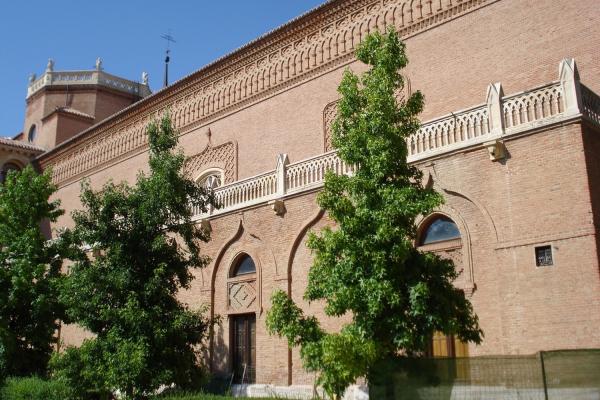
Archbishop’s Palace of Alcalá de Henares: A Witness to Spanish History
The Archbishop’s Palace of Alcalá de Henares is one of the most imposing historic buildings in the city and a key symbol of ecclesiastical and political power in Spain during the Middle Ages and the Renaissance.
Located in the heart of the old town, this monumental complex is a fundamental part of the heritage of Alcalá de Henares, a UNESCO World Heritage city. A visit here is essential to understand why the Community of Madrid has been, for centuries, a strategic center of decisions that shaped history.
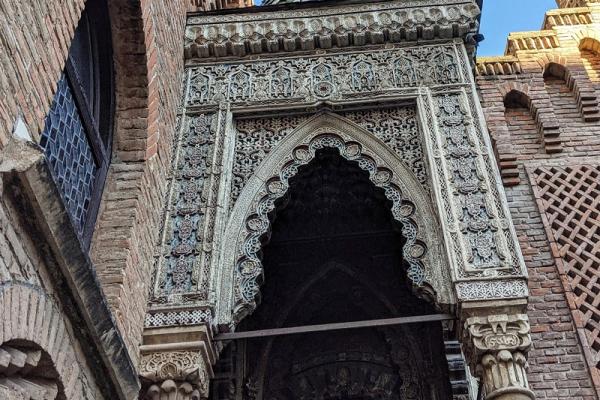
The Neo-Mudejar Splendor of Alcalá’s Laredo Palace
The Laredo Palace is one of the most unique and striking architectural landmarks in Alcalá de Henares, a renowned UNESCO World Heritage Site and a premier cultural destination within the Madrid region. This exceptional 19th-century historicist palace is a true architectural gem that often flies under the radar for mainstream tourists, yet it stands as one of the finest recommendations for what to see when exploring the city.
It offers the ideal escape for travelers seeking authentic cultural experiences beyond the traditional historic center, inviting visitors to lose themselves in the artistic fantasy and exoticism of the Romantic era.
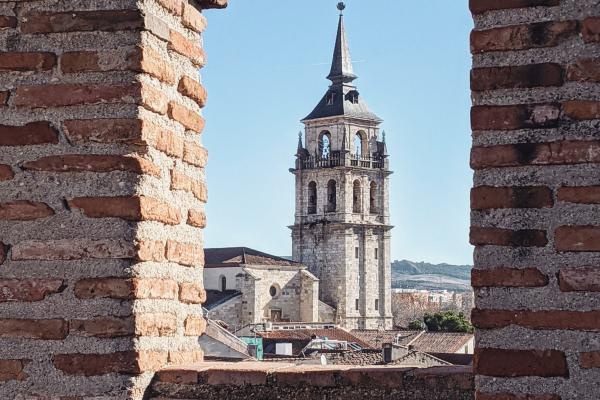
The Medieval Walls of Alcalá de Henares and a Journey Into the Past
The Medieval Walls of Alcalá de Henares stand as one of the city’s most significant historic landmarks and a defining testament to its strategic military origins. Although only select sections survive today, this formidable fortification system provides an immersive look into Alcalá’s urban evolution, charting its rise from an ancient Islamic stronghold to one of the most influential strongholds of the Kingdom of Castile.
This monument remains a cornerstone of the historic enclave that earned Alcalá de Henares its prestigious designation as a UNESCO World Heritage Site. Walking beneath its preserved watchtowers allows travelers to trace the multicultural tapestry that shaped the identity of the modern-day Madrid region.
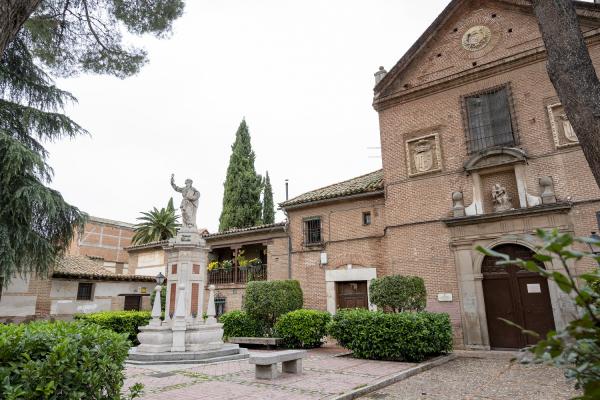
The Monastery of San Bernardo as a Baroque Gem in Alcalá de Henares
The Monastery of San Bernardo stands as one of the most unique and fascinating religious complexes within the rich historic heritage of Alcalá de Henares. Located right in the heart of the city, this monumental building is a cornerstone of the architectural legacy that solidified Alcala's status as a UNESCO World Heritage site.
Popularly known as the "Las Bernardas" Convent, this 17th-century Baroque monastery captivates visitors with its groundbreaking architecture and its deep ties to the cultural history of the Madrid Region. It is, without a doubt, a must-visit landmark for travelers seeking off-the-beaten-path things to do in Alcalá de Henares.
To discover all the monuments and seamlessly map out your route, consult our comprehensive Alcalá de Henares Travel Guide.
Things to Do in Alcalá de Henares: Cultural Events, Attractions, and the Cervantes Train
An Unforgettable Journey Through Spain’s Golden Age
Alcalá de Henares, a UNESCO World Heritage City near Madrid and the birthplace of Miguel de Cervantes, is renowned for its vibrant cultural scene and literary heritage. Throughout the year, the city hosts cultural events, festivals, and unique experiences that make it one of the top cultural destinations in the Madrid region.
The city's flagship event is Cervantes Week, a Festival of National Tourist Interest that transforms Alcalá de Henares every October into a living Spanish Golden Age setting, featuring historical markets, cultural activities, parades, and immersive reenactments inspired by the world of Cervantes.
Other must-see attractions include the Cervantes Train, a unique theatrical journey connecting Madrid and Alcalá de Henares, and the Corral de Comedias, the oldest working theater in Europe and one of Spain’s most important historic performance venues.
Explore our updated cultural agenda, which also features major events such as the Alcalá Classics Festival and the open-air performance of Don Juan in Alcalá, reinforcing the city’s reputation as a leading cultural, literary, and heritage tourism destination in Spain throughout the year.
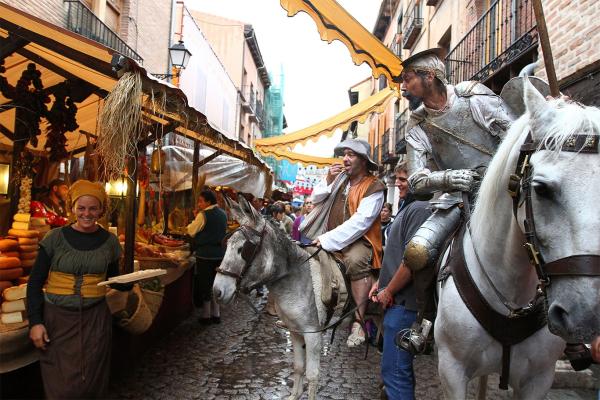
Cervantine Week
This event has been declared a Fiesta of Regional Tourist Interest and has a schedule that lasts approximately one week.

Cervantes Train
The train leaves from Atocha station and the passengers are accompanied by actors who represent some of the most famous passages of Cervantes' most important work, El Quijote, among other texts. In addition, during the journey they offer to the travelers typical products of the alcalaína bakery. Once in the Complutense City, there is a guided tour of the most representative monuments of the city, animated also with theater performances, such as the Cervantes House and the University of Alcalá. The Cervantes Train runs at certain times during the weekend between April and December. Detailed information is on the Renfe Cercanías website.

Corral of Comedies
The Corral of comedies from Alcalá de Henares, located in Plaza de Cervantes 15, dates from 1601. At that time, the carpenter Francisco Sánchez offered to build a playground or corral of comedies, in the style of Corral de la Cruz, that next to Corral de la Pacheca and Corral del Príncipe was one of the best known in Madrid. In them they represented the most popular works of the playwrights of the Century of Gold.
Alcalá de Henares has had different uses throughout its trajectory: corral of comedies since 1603, roofed coliseum since 1769, romantic theater from 1831 and cinema projections room from 1927 to 1980, year in which the City Council regained ownership. By then, almost four centuries had passed in which had forgotten its original function.
Attending one of its classical theater performances is a unique experience, as it is one of the oldest Corrals of comedies in Spain. In addition, on certain dates there are guided tours.
A new window will open
Actividades y eventos en Alcalá de Henares
¿Te lo vas a perder?
Alcalá de Henares Walking Tours & Itineraries
Alcalá Walking Tours: From Iconic Storks to Ancient Roman Ruins
Exploring Alcalá de Henares means embarking on a journey where history, world-class heritage, and natural landscapes blend into perfect harmony.
Your adventure begins with the Essential Alcala Walking Tour, a curated itinerary cutting straight through the historic old town to connect the famous University with the Cervantes Birthplace Museum. However, the city invites you to look beyond the surface; visitors can also discover the ancient Roman city of Complutum, delve deeper into its academic legacy, or explore contemporary spaces tied to modern university life.
For outdoor enthusiasts and active travelers, Alcalá serves as a strategic hub within the CiclaMadrid bike network. Scenic cycling routes seamlessly connect the city to the historic town of Nuevo Baztán and the stunning landscapes of the Alcarria region, offering a unique way to experience the area's natural environment.



Where to Eat in Alcala de Henares: Best Restaurants & Tapas

Alcalá de Henares gastronomy is world-famous for its vibrant tapas culture and centuries-old convent pastries. You cannot visit Cervantes' birthplace without trying the iconic Costrada de Alcalá or the sugar-coated almonds handmade by the Franciscan Clarissas nuns. The local cuisine, deeply rooted in traditional Castilian flavors, shines through its slow-roasted meats and game dishes, which you can savor in both historic taverns and the prestigious Parador de Turismo.
Alcala Tapas Culture: Tradition in Every Bite
Enjoying tapas in Alcalá de Henares is much more than an appetizer—it is the social heartbeat of this historic city. Famous throughout the Madrid region for its hospitality, the city keeps alive the wonderful tradition of serving a generous, free tapa with every drink. Visitors can choose from a wide array of options, ranging from traditional hearty stews to modern culinary creations. This culinary ritual is best experienced under the historic stone arches of Calle Mayor, the longest continuous arcaded street in Europe, where bustling outdoor terraces and the aroma of authentic Castilian cooking create a vibrant, welcoming atmosphere all year round.
Convent Pastries: From Candied Almonds to the Costrada
A walk through Alcalá de Henares leaves a sweet, historic aftertaste that drifts directly from the cloistered turn-boxes (tornos) of its ancient convents. The undisputed crown jewel of local pastry making is the Costrada de Alcalá, an exquisite cake featuring layers of crispy puff pastry, rich cream, and toasted meringue. However, the city’s best-kept secret lies behind the walls of the San Diego Convent, where cloistered nuns craft their famous Almendras Garrapiñadas (candied almonds). Following a centuries-old recipe, these local almonds are glazed in a delicate sugar syrup to create a crunchy, melt-in-your-mouth treat that is a must-buy for every traveler.
This sweet tradition is rounded out by seasonal Penitentes (typical during Holy Week), Rosquillas de Alcalá (glazed donuts), and roasted chestnuts that perfume Calle Mayor during winter. Purchasing these pastries through a convent's wooden turn-box is not just a transaction; it is an immersive cultural experience that connects you with centuries of artisan mastery. These sweet treasures are the perfect finale to a day of tapas bar-hopping, cementing Alcalá de Henares as a destination where history is tasted with the exact same passion with which it is read.
To plan your custom food tour, check out the official Alcala de Henares restaurant directory featuring fully updated dining options.
Accommodation in Alcalá de Henares: Where to Stay & Best Hotels
Staying overnight in the "City of Arts and Letters" allows visitors to immerse themselves in the magical atmosphere of the Spanish Golden Age once the sun sets and the monuments light up. Alcalá de Henares offers a top-tier hotel infrastructure that seamlessly blends the historic heritage of its ancient convent-colleges with the modern comforts of a vibrant, well-connected university city. The city's lodging options adapt perfectly to every traveler's profile:
- Historic Hotels and Paradores: The crown jewel of local accommodation is the Parador de Alcalá de Henares, located in the former 17th-century College-Convent of Santo Tomás de Aquino. It is a must-stay destination for travelers seeking luxury, cutting-edge design, and living heritage in a single space.
- Boutique and Charming Hotels: The historic old town houses small, intimate hotels situated in beautifully restored buildings just steps away from the Cervantes Birthplace Museum and Calle Mayor—ideal for romantic getaways or cultural trips.
- Business and Conference Lodging: Thanks to its excellent transport links to Madrid and the Barajas Airport, the city features modern, functional hotels equipped with top-tier technology for business travelers and university event attendees.
To make your choice easier and check room availability, you can access the official Alcala de Henares hotel and accommodation directory (opens in a new window), where you will find the fully regulated and updated listings to plan your perfect stay in the birthplace of Cervantes.
How to Get to Alcalá de Henares & Getting Around
Alcalá de Henares, a UNESCO World Heritage city, is strategically located in the Henares Corridor, offering excellent accessibility by both private vehicle and public transport, ensuring easy connections with Madrid and the rest of the region.
By car, it is easily accessible from Madrid in about 30-40 minutes via the A-2 highway (Autovía del Nordeste), the main artery connecting it to the capital, as well as the M-300 for local connections.
Regarding public transport, it is a key hub for the Cercanías Renfe commuter train (lines C-2 and C-7), offering direct links to central Madrid stations (Atocha and Chamartín) in approximately 40 minutes. Additionally, several intercity bus lines connect the city with the Avenida de América transport hub in Madrid and nearby towns like Torrejón de Ardoz and Guadalajara.
The city's proximity to the A-2 and Madrid-Barajas Airport (MAD), along with its night bus services (búhos), consolidates its status as a highly accessible destination.
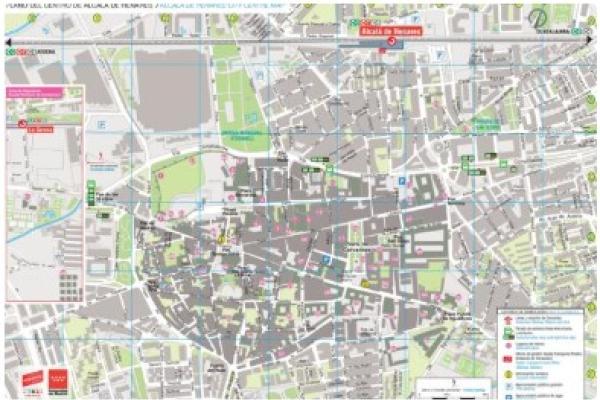
 Alcalá de Henares Public Transit Map
A new window will open
Alcalá de Henares FAQ: Travel Guide & Tips
What can you see in Alcalá de Henares in one day?
In one day, you can easily tour the historic center, the historic University of Alcalá, Plaza de Cervantes, Calle Mayor, and the Cervantes Birthplace Museum. It is one of the most popular cultural day trips from Madrid.
What is Alcalá de Henares famous for?
Alcalá de Henares is famous as the birthplace of Miguel de Cervantes, the author of Don Quixote. It is also renowned for its 15th-century university and its historic old town, which is a designated UNESCO World Heritage Site.
How do you get from Madrid to Alcalá de Henares?
You can get there by the Cercanías commuter train (lines C-2 and C-7), regional intercity buses, or via the A-2 highway. The direct transit travel time from central Madrid is approximately 30 to 40 minutes.
What are the best things to do in Alcalá de Henares?
The best things to do include taking a historic walking tour, visiting local museums, exploring the ancient Roman ruins of Complutum, and experiencing the city's famous free tapas culture.
How many hours do you need in Alcalá de Henares?
You need at least 6 to 8 hours (a full day trip) to see the main sights. However, spending a weekend getaway allows you to enjoy the local dining scene and evening cultural events after the crowds leave.
Where is the historic center of Alcalá de Henares?
The historic center is located around Plaza de Cervantes and Calle Mayor (Europe's longest arcaded street), where almost all top tourist attractions and restaurants are concentrated.
Is Alcalá de Henares worth visiting with kids?
Yes, it is highly recommended for families due to its flat pedestrian-only streets, open plazas, stork-spotting routes, and interactive cultural exhibits suitable for children.
What are the must-see landmarks in Alcalá de Henares?
The top must-see landmarks are the University of Alcalá facade, the Cervantes Birthplace Museum, the Magisterial Cathedral, and the 17th-century Corral de Comedies theater.