Archbishop’s Palace of Alcalá de Henares: A Witness to Spanish History
The Archbishop’s Palace of Alcalá de Henares is one of the most imposing historic buildings in the city and a key symbol of ecclesiastical and political power in Spain during the Middle Ages and the Renaissance.
Located in the heart of the old town, this monumental complex is a fundamental part of the heritage of Alcalá de Henares, a UNESCO World Heritage city. A visit here is essential to understand why the Community of Madrid has been, for centuries, a strategic center of decisions that shaped history.
What is the Archbishop’s Palace?
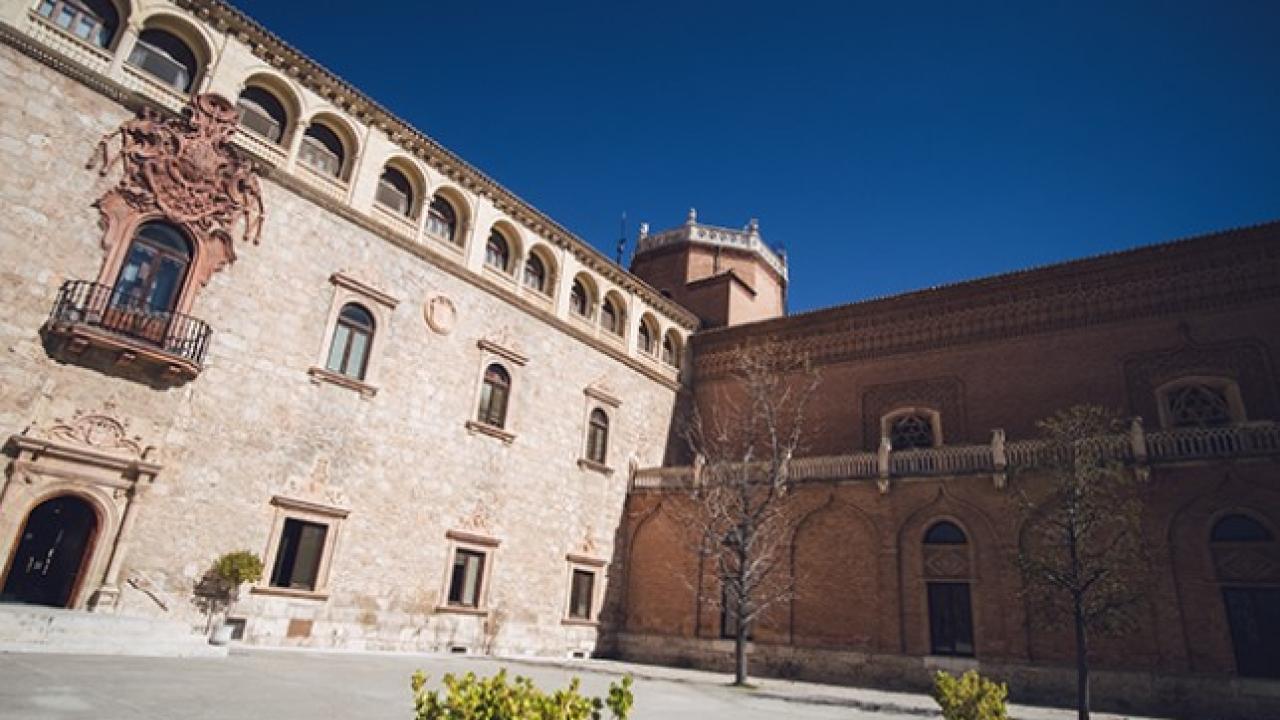
The Archbishop’s Palace of Alcalá de Henares was the temporary residence of the Archbishops of Toledo, who held the title of Primate of Spain. At a time when Alcalá de Henares was one of the most influential administrative and religious centers of the Crown of Castile, the palace functioned as a true court of power.
Today, its imposing presence continues to define the identity of UNESCO-listed Alcalá de Henares, forming part of a walled complex that transports visitors back to the city’s golden age of faith, scholarship, and literary brilliance.
History of the Archbishop’s Palace: Seat of Kings and Cardinals
A Center of Power in the Middle Ages and the Renaissance
Originally built in the 13th century as a Mudéjar fortress, the Archbishop’s Palace of Alcalá de Henares evolved over time into an elegant Renaissance residence. Influential figures such as Cardinal Cisneros and Cardinal Tavera left their mark on the building, expanding and transforming it to reflect the prestige and authority of their positions.
A Key Site in Spanish Royal History
This building is far more than architecture—it is living history. Within its walls, two major events of global significance took place:
The first meeting between the Catholic Monarchs and Christopher Columbus, a pivotal moment that led to the voyage resulting in the discovery of the Americas.
The birth of Catherine of Aragon, daughter of the Catholic Monarchs and future Queen of England.
Evolution and Preservation of the Historic Complex
Although the palace suffered a major fire in 1939 that destroyed much of its interior treasures—including its famous monumental staircase—its façade and exterior structure remain one of the most powerful and iconic elements of the monumental landscape of Alcalá de Henares.
What to See at the Archbishop’s Palace: Architecture and Surroundings
Renaissance Façade and Defensive Elements
When observing the building, the spectacular Plateresque façade immediately stands out, along with the coat of arms of Cardinal Tavera. The palace is integrated into the city’s fortified enclosure, where towers and stretches of the medieval walls can still be seen—remnants of the defensive system that once protected the archiepiscopal residence.
The Antiquarium and the City Walls
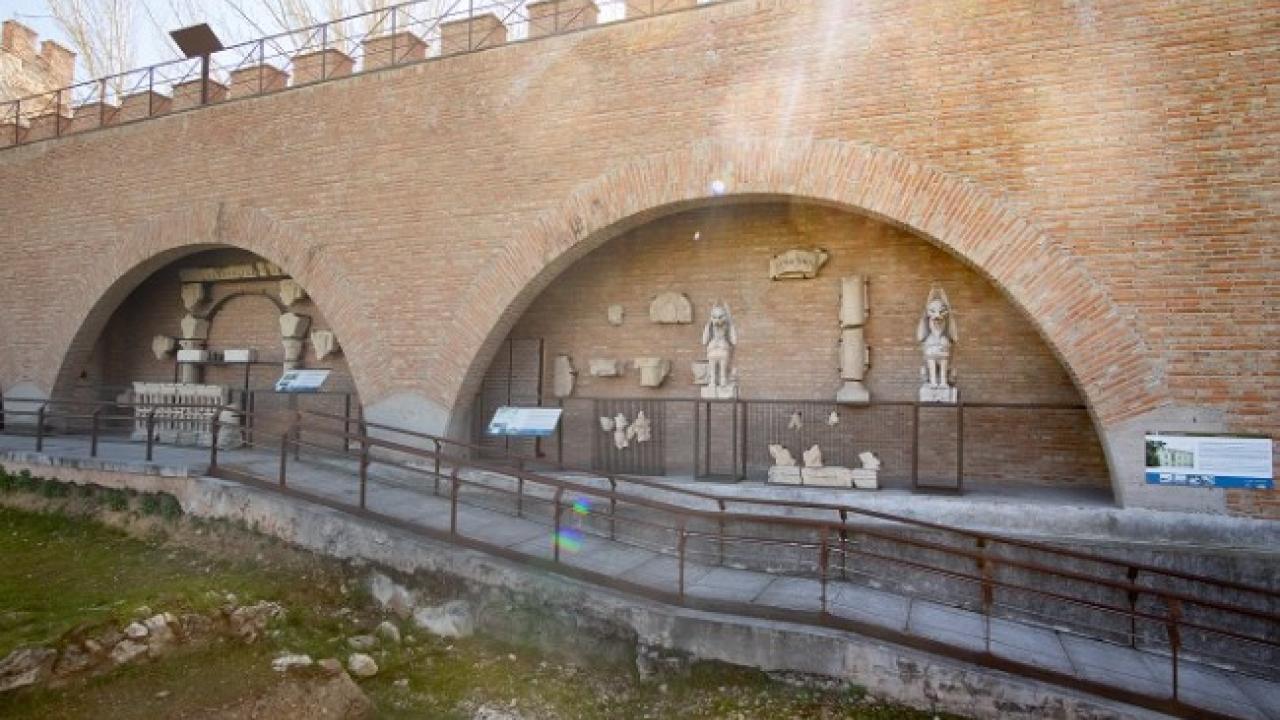
One of the best ways to experience the palace is by visiting the Antiquarium, an open-air museum that allows visitors to walk along the city walls, towers, and parts of the former palace galleries. This provides a unique perspective on medieval military engineering and the strategic importance of the site.
A Key Stop on Alcalá de Henares’ Cultural Route
Located in Plaza del Palacio, its surroundings invite historical reflection. It is an essential stop for anyone seeking to understand the evolution of Alcalá de Henares—from its origins as a fortified settlement to its transformation into a renowned university city.
The Archbishop’s Palace in Your Visit to Alcalá de Henares
The Archbishop’s Palace of Alcalá de Henares is located in the city’s founding core. Thanks to its strategic position, it fits perfectly into a walking itinerary through the historic center of Alcalá de Henares.
From this point, you can reach within just a few minutes:
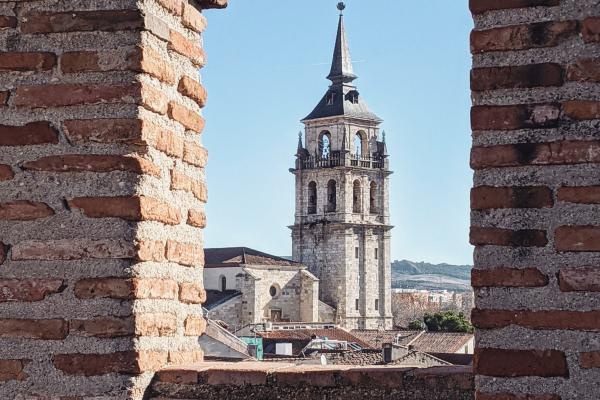
The Magistral Cathedral of Alcalá de Henares, one of the only two churches in the world to hold this title, alongside Leuven Cathedral.
The University of Alcalá, Cardinal Cisneros’ great educational project.
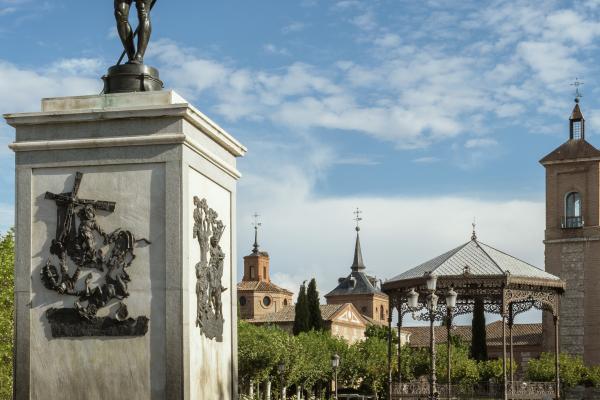
The Plaza de Cervantes, the social and cultural heart of the city.
To plan your full visit and explore the city in depth, consult our Alcalá de Henares travel guide.
Practical Information for Your Visit
Location: Plaza del Palacio, s/n. The palace is located in the pedestrian area of the historic center and is easily accessible from any point in the old town of Alcalá de Henares.
Visit and accessibility: Although the interior of the palace currently houses the Bishopric, the main tourist highlights are its exterior and the walk along the city walls through the Antiquarium, which offers a unique historical perspective of the complex.
Official recommendation: Don’t forget to bring your camera to capture the storks nesting on its towers—an iconic image that reflects both the biodiversity and the cultural heritage of Madrid’s historic landscape.