San Lorenzo de El Escorial
Art, nature, history, heritage and gastronomy: In San Lorenzo de El Escorial you can choose from a wide range of enjoyable plans. Considered as the eighth wonder of the world in the 18th century, the Monastery of El Escorial represents a unique cultural asset being an example of the human creative spirit. The Monastery and Site of San Lorenzo de El Escorial, recognised by UNESCO as a World Heritage Site since 1984, offers an attractive tourist attraction for visitors all year round.
San Lorenzo de El Escorial stands as one of the most significant historical destinations in the Region of Madrid, offering an exceptional blend of imperial heritage, mountain scenery, and world-class cultural tourism right in the heart of the Sierra de Guadarrama. The focal point of the town is the Royal Monastery of El Escorial, a majestic 16th-century Renaissance monument declared a UNESCO World Heritage Site. Commissioned by King Philip II as a grand symbol of the power of the Spanish monarchy, the complex houses the Royal Library, the Pantheon of Kings, sweeping courtyards, and historic gardens. For an unforgettable visit, travelers can arrive aboard the Philip II Tourist Train (Tren de Felipe II), a vintage rail journey from Madrid that faithfully recreates the historic route to the Royal Site, making it an ideal cultural day trip. Just a few kilometers away lies the Valley of Cuelgamuros (Valle de Cuelgamuros), an impressive natural enclave surrounded by pine forests that complements the experience with a unique historical and panoramic perspective of the region.
What to See in San Lorenzo de El Escorial: Most Important Monuments
Enjoy the enclave in the heart of the Sierra de Guadarrama mountain range
Exploring the heritage of San Lorenzo means traversing a city meticulously designed for the Crown, where every building serves as a piece of a perfect historical engine. The Herrerian architecture defines an urban landscape of clean lines and mathematical proportions that has captivated travelers for centuries.

Royal Monastery of San Lorenzo de El Escorial
The Royal Monastery of San Lorenzo de El Escorial is one of Spain’s most important landmarks and one of the greatest masterpieces of European Renaissance architecture. Located in San Lorenzo de El Escorial, this monumental complex is a UNESCO World Heritage Site and represents the historical, cultural and religious power of the Spanish monarchy.
To plan your full visit, explore everything to see in San Lorenzo de El Escorial, one of the most important cultural destinations in the Madrid region.

Cuelgamuros Valley (Valley of the Fallen)
The Cuelgamuros Valley (Valle de Cuelgamuros) is one of the most unique locations in the Region of Madrid. Nestled in the heart of the Sierra de Guadarrama, just a few miles from San Lorenzo de El Escorial, this remarkable site blends breathtaking natural scenery with deep historical significance, offering visitors a truly distinctive day trip from Madrid.
Planning a visit to the Valley of Cuelgamuros is the perfect way to enhance your cultural getaway to El Escorial—combining stunning mountain landscapes, heritage, and local history into one unforgettable itinerary.

Royal House of Infant
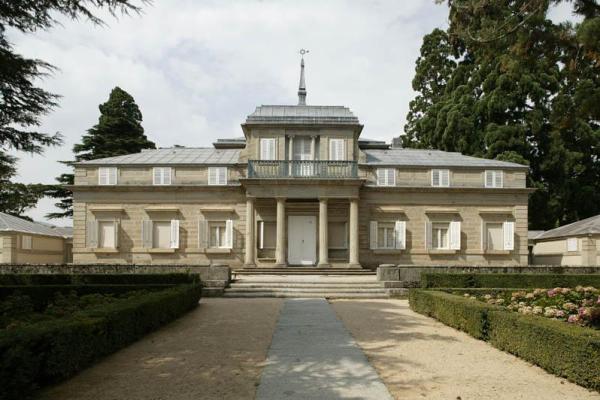
The Casita del Infante, also known as Casita de Arriba, is an elegant neoclassical building built between 1771 and 1773 by the architect Juan de Villanueva, commissioned by Charles III for his son, Infante Gabriel de Borbón. Its main purpose was to serve as a place of recreation and relaxation, especially for enjoying chamber music, one of Infante Gabriel's great passions.
The building has a square floor plan and is constructed of granite, with a sober and harmonious main façade, featuring a portico of Ionic columns. The central hallway is covered by an octagonal dome, and the rooms are arranged around a central hall designed for music.
It is surrounded by Italian-style gardens on descending terraces, designed so that music could be heard both inside and outside. The gardens were completed in 1774 by the Florentine Luis Lemmi, following Villanueva's plan, overlooking the natural surroundings of La Herrería.
Infante Gabriel himself, a great musical enthusiast and talented musician, even performed works by his teacher, Father Antonio Soler, during the inauguration of the Casita del Infante.
The original decoration was lost, mainly due to Napoleonic plunder; the current decor dates from the reigns of Charles IV and Ferdinand VII.
During the Franco regime, it was restored to serve as the residence of Juan Carlos de Borbón, then a student, and his bedroom and office are still preserved.
In 1988, King Juan Carlos and Queen Sofia hosted a luncheon here in honor of Queen Elizabeth II of England and the Duke of Edinburgh.
The Casita del Infante is an architectural and scenic gem, less well-known than the Royal Monastery of San Lorenzo, but of great historical and artistic value, ideal for those seeking to learn about the palatial and cultural environment of the Spanish royal family in the 18th century.
House of The Prince
Belonging to National Heritage, it is one of the residences of the Royal Family. Of small dimensions, with a luxurious interior, was commissioned by Carlos III to Juan de Villanueva so that it served like recreation pavilion and country house of the then Prince of Asturias - later Carlos IV.
Raised between 1771 and 1775 in a single block of two floors with a facade that vaguely recalls the Prado Museum, Villanueva's masterpiece, it was later enlarged between 1781 and 1784. Its interior is representative of the palatial art of the time with rich eighteenth- which dominate the rich silks, marbles, stuccos and ceilings of the best artists of the time such as Mariano Salvador Maella or Francisco Bayeu. In the upper floor, the vaults (located at a much lower height than those of the lower floor) are finished with stuccos with reliefs. During the reign of Alfonso XIII the frescoes and furniture were restored.
The Prince house is surrounded by two gardens, front and back, with a clean and elegant layout, connected by two porticoes of Tuscan columns. The palatial taste of the time is present in its fountains, ponds, waterfalls, walks and box hedges.
To this is added the existence of an extensive park around it, open to the public, where along with native species such as oak and oak we find five trees cataloged by the Community of Madrid as unique: two spruces of the Caucasus, one pinsapo and two giant sequoias.
A huge wooded park closed to traffic by a huge stone wall, with pedestrian paths, complete the whole.
ADDRESS: Avenida de los Reyes Católicos

Seat of Philip II
Philip II’s Seat is Located in the lush Herrería Forest, this legendary natural viewpoint provides the most iconic panoramic views of the El Escorial Monastery. Tradition holds that King Philip II used this granite vantage point to oversee the progress of the monastery's construction. Today, it remains a symbol of the deep connection between the Spanish Monarchy and the landscape of the Guadarrama Mountains, making it a must-visit spot for hikers and history enthusiasts seeking the best photography location in the region.
What to do in San Lorenzo de El Escorial: Experiences and Living Heritage
Planning what to do in San Lorenzo de El Escorial opens a gateway to a wide range of experiences that combine the grandeur of the Spanish Empire with top-tier cultural and active leisure activities. The ideal starting point for any visitor is the Tourist Office, located in the heart of the historic center; here, in addition to receiving detailed information, you can sign up for guided tours that decipher the town's hidden symbolism. Cultural life beats strongly at the Royal Coliseum of Carlos III—the oldest covered theater in Spain—and is complemented by visits to the Arboreto Luis Ceballos Environmental Education Center or "InsectPark," a unique space in Europe. The privilege of exploring this destination reaches its peak when participating in active tourism experiences across Mount Abantos or enjoying organ and sacred music concerts in the Basilica—a perfect combination for those seeking everything from the serenity of art to the vitality of nature.
San Lorenzo de El Escorial Tourist Office
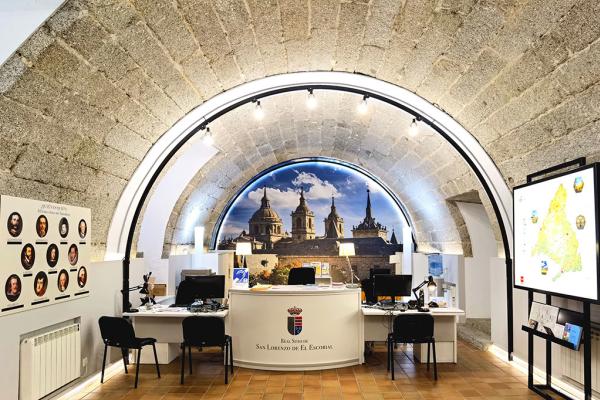
The essential starting point for any trip to San Lorenzo de El Escorial is its Tourist Office. Strategically located in the historic center, just steps away from the Monastery’s Lonja, this welcome center provides travelers with everything needed to transform a simple visit into an unforgettable experience. The privilege of receiving advice from their technical team allows you to discover not only the Royal Site's opening hours but also the most up-to-date cultural agenda, from concerts at the Royal Coliseum of Carlos III to temporary exhibitions at the House of Culture.
At its facilities, visitors have access to a wide range of informative materials, including detailed maps of the town, brochures on the main monuments, and guides for the nature trails heading toward Mount Abantos. Additionally, the office is the place to inquire about and book official guided tours, which are fundamental to understanding the architectural complexity and symbolic significance of this World Heritage Site. The office's commitment to accessibility and tourism quality ensures that everyone—whether looking for a hiking day through La Herrería or a historical-artistic tour—finds the key to enjoying San Lorenzo to the fullest.
Practical Information and Contact
To plan your arrival and ensure you don't miss any local programming, you can contact the office through the following official channels:
- Location: Calle Grimaldi, 4 (Next to Plaza de la Constitución).
- Standard Hours:
- Tuesday to Saturday: 10:00 AM – 2:00 PM and 3:30 PM – 6:00 PM.
- Sundays: 10:00 AM – 3:00 PM.
- (It is recommended to confirm closures on specific public holidays).
- Phone: (+34) 918 905 313
- Email: info@sanlorenzoturismo.org

Philip II Train
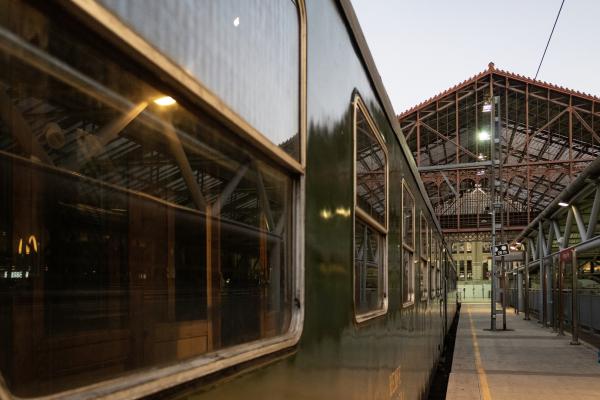
Traveling on the Philip II Train (Tren de Felipe II) is much more than a simple rail trip; it is a total immersion into Spanish history from the moment you step on board. This historic train, featuring meticulously restored 1940s carriages, connects Madrid with the Royal Site of San Lorenzo de El Escorial, following the very same tracks once traveled by the Royal Court.
The magic of this experience lies in its nostalgic atmosphere, where the rhythmic clatter of the locomotive and the vintage decor transport travelers back to the 16th century. The journey is brought to life by onboard performances featuring the most relevant figures from the House of Austria (Habsburgs). It is the perfect choice for those seeking an original, sustainable, and cultural way to discover the Guadarrama Mountains and its World Heritage treasures.

Royal Coliseum of Charles III
Was built by the architect Jaime Marquet between 1770 and 1771 for the enjoyment of the gentlemen and ladies of the court. Within its rectagular shape a "U" is formed by tiers of seats. Above are two box levels; one level of the amphitheatre is completely covered, remarkable at the time. The coliseum could hold up to five hundred spectators. In 1980, the renovation of the building was awarded with the National Renovation Prize and in 1995 it was declared a monument of Cultural Interest.
Real Club de Golf de La Herrería: Golf in a UNESCO World Heritage Setting
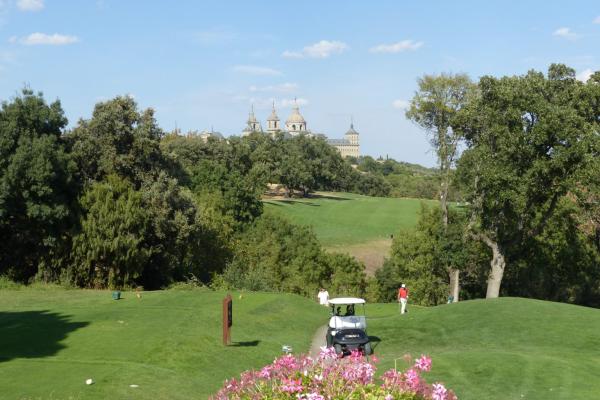
Nestled in an area of incalculable beauty at the foot of Mount Abantos, the Real Club de Golf de La Herrería offers privileged views of the iconic domes of the El Escorial Monastery. More than just a sports venue, it is a sanctuary of peace seamlessly integrated into the historic La Herrería Forest.
- An 18-Hole Technical Challenge This 18-hole golf course provides players with a technical and varied layout where environmental preservation is the hallmark of its identity. Here, you can practice your swing surrounded by centuries-old oaks, ash trees, and holm oaks.
- Exclusivity and Heritage The privilege of playing at La Herrería lies in its exclusive atmosphere and its deep historical connection to the Royal Site. It is recognized as one of the most prestigious and charming courses in the Region of Madrid.
- The Perfect Golf Getaway It is the ultimate destination for those seeking to combine the rigors of high-level golf with the serenity of a landscape declared a UNESCO World Heritage site.
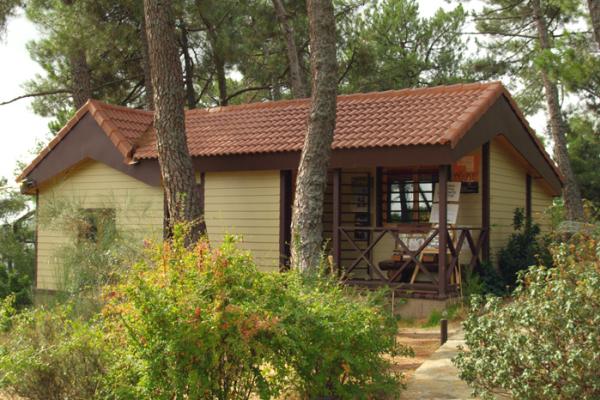
CEA Arboreto Luis Ceballos
Located on the southern slopes of Mount Abantos in San Lorenzo de El Escorial, the Luis Ceballos Arboretum is much more than a botanical garden; it is a living museum of Spanish forest flora. This Environmental Education Center, part of the Community of Madrid’s prestigious network, spans nearly four hectares and is home to over 250 species of trees and shrubs native to the Iberian Peninsula and the Balearic Islands.
The privilege of visiting the Arboretum lies in the chance to take a botanical journey across Spain’s diverse geography without leaving the Guadarrama Mountains, enjoying an environment that blends scientific outreach with unparalleled scenic serenity.
What to do at the Luis Ceballos Arboretum? Nature Experiences
Planning a visit to the Luis Ceballos Arboretum is a commitment to a day of relaxation and learning in the heart of the mountains. The center offers a journey through various thematic areas, where you can admire everything from high-mountain firs and pines to species native to the Mediterranean coast.
The experience reaches its peak during weekend activities, which include themed guided hikes, botanical identification workshops, and biodiversity observation sessions—all free of charge and designed for all audiences. For hiking enthusiasts, the center serves as a key reference point for learning about the forest management of Mount Abantos within a protected "Picturesque Site" (Paraje Pintoresco).
Practical Information for Your Visit
To make the most of your experience, please note that access may be regulated due to its location in a special protection area. We recommend checking their schedule and booking activities through official channels:
- Location: Carretera del Monte Abantos, San Lorenzo de El Escorial.
- Services: Self-guided itineraries, temporary exhibitions, and interpretive areas.
- Top Tip: As this is a high-mountain center, it is essential to wear appropriate footwear and check the weather forecast before your arrival.
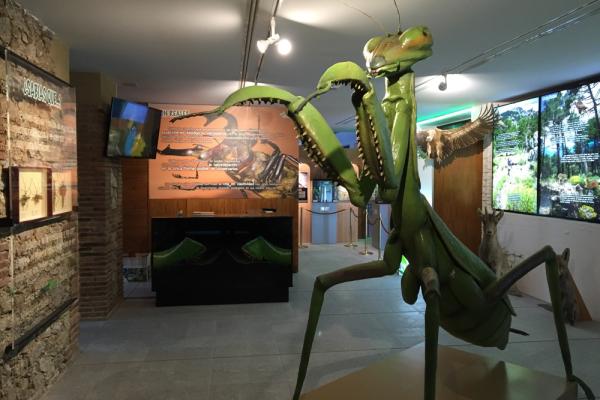
InsectPark: The Incredible Insect Museum in San Lorenzo de El Escorial
InsectPark is one of the most unique attractions in San Lorenzo de El Escorial—a specialized museum dedicated to the fascinating world of insects that masterfully combines scientific outreach, nature, and entertainment.
It is a top-rated destination for families, schools, and visitors seeking a unique and educational experience just a short drive from Madrid.
- Discover Biodiversity in Nature Located in a privileged natural setting, InsectPark allows you to explore the world's biodiversity through interactive exhibits and educational activities. It has become one of the most recommended fun things to do with kids in El Escorial, offering a close-up look at the micro-fauna that inhabits our planet.

Festival and Event Calendar in San Lorenzo de El Escorial
Discovering the richness of San Lorenzo de El Escorial’s traditions is the best way to connect with a town that celebrates its history with an elegance and solemnity unique in Spain. The most anticipated event of the year is the Pilgrimage of the Virgin of Gracia (Romería de la Virgen de Gracia), declared a Festival of National Tourist Interest. Held on the second Sunday of September, it transforms the La Herrería Forest into a stage for pure folklore, where decorated carts and traditional dance groups pay tribute to the patron saint in an incomparable natural setting.
The privilege of experiencing local culture is also evident during Holy Week (Semana Santa), declared a Festival of Regional Tourist Interest. Its processions are renowned for their sobriety and absolute silence, with the Monastery as a backdrop, creating an atmosphere of devotion that overwhelms the visitor. When Christmas arrives, the town becomes a family landmark thanks to its Monumental Nativity Scene, a display of life-sized figures occupying the main squares of the historic center, also recognized as a Festival of Regional Tourist Interest.
In addition to these dates, the calendar is completed with major cultural events such as the San Lorenzo Patron Saint Festivities (August 10th), featuring outdoor concerts and a traditional market, or the Escurialense Summits Crossing (Travesía de las Cumbres Escurialenses), a legendary sporting event for mountain lovers. To plan your visit and ensure you don’t miss a thing—from summer festivals to the organ music cycles in the Basilica—we recommend checking the official event calendar, the essential guide to enjoying the living history of this Royal Site.
Route through San Lorenzo de El Escorial
Heritage, Viewpoints, and Cycle Tourism
San Lorenzo de El Escorial: The Ultimate "Must-See" Day Trip Itinerary
If you only have one day to explore this UNESCO World Heritage site, follow this curated route to experience the perfect blend of royal history, architecture, and nature.
1. The Royal Monastery of El Escorial (The Crown Jewel)
Start your morning early at the Monastery. It is the heart of the town and a symbol of the Spanish Golden Age.
- Don't miss: The Royal Pantheon (where Spanish kings are buried), the breathtaking Library with its frescoed ceilings, and the Basilica.
- Pro Tip: Book your tickets online in advance to skip the lines.
2. The Historic Town Center & Plaza de la Constitución
After leaving the Monastery, take a stroll through the cobblestone streets of the Casco Histórico.
- What to see: Walk past the Casas de Oficios (Trade Houses) and head to the main square (Plaza de la Constitución) for a coffee. The architecture here follows the strict, elegant "Herrerian" style of the Monastery.
3. The Prince’s House (Casita del Príncipe)
A 10-minute walk downhill leads you to this 18th-century Neoclassical palace.
- The Highlight: The surrounding gardens and orchards are spectacular and free to enter. It offers a more intimate, "Versailles-style" glimpse into royal life compared to the massive Monastery.
4. Lunch: Authentic Castilian Gastronomy
You cannot leave without trying the local food.
- The Dish: Look for a traditional Mesón to try Cocido Madrileño (chickpea stew) or Roasted Lamb.
- Sweet Treat: Stop by a local bakery for Bizcochos de chocolate or Mantecados.
5. The "Silla de Felipe II" (Philip II’s Chair)
In the afternoon, take a short drive or a scenic hike to this natural viewpoint carved into granite.
- The View: Legend says King Philip II sat here to watch his Monastery being built. It offers the best panoramic photo of the entire town and the mountains.
6. Sunset at Mount Abantos or InsectPark
To finish your day:
- For Nature Lovers: Head up to Mount Abantos for a sunset view over the Madrid skyline.
- For Families: Visit InsectPark, a unique micro-fauna museum that provides a fun, educational end to the day.


Gastronomy: Where to eat in San Lorenzo de El Escorial?

Talking about the gastronomy of San Lorenzo de El Escorial is to evoke the robust flavors of the Sierra de Guadarrama within a dining tradition spanning centuries. The town is famous for its top-tier steakhouses (asadores), where suckling lamb and wood-fired suckling pig share the spotlight with the emblematic Cocido Madrileño. This traditional chickpea stew, typically served in "three courses" (tres vuelcos), has become a ritual for visitors seeking a hearty meal after a day of sightseeing.
The privilege of dining in this Royal Site lies in its versatility: from historic taverns where you can taste portions of oreja (pig's ear) or callos a la madrileña (Madrid-style tripe), to fine-dining restaurants that reinterpret local products with avant-garde techniques.
The local larder, defined by the excellent Sierra de Guadarrama beef (with Protected Geographical Indication), is complemented by artisanal pastries that never disappoint. You cannot leave without trying the famous bizcotelas, the town's signature sweet that once delighted the Royal Court. Whether you are looking for a terrace with views of the Monastery or a cozy corner in the historic center, you will find the perfect option to suit your taste.
Accommodation: Where to stay in San Lorenzo de El Escorial?
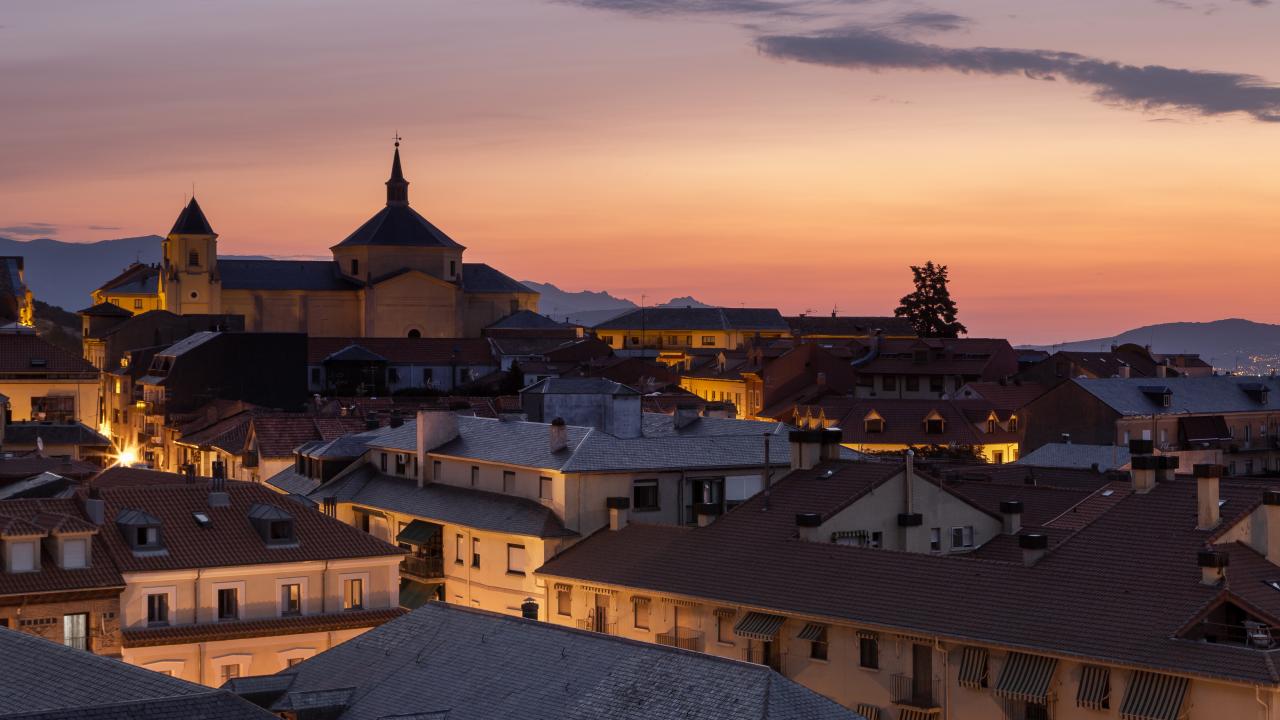
The accommodation offer in San Lorenzo de El Escorial stands out for its ability to provide rest within buildings of fascinating historical significance, allowing travelers to extend the magic of their visit long after sunset. The privilege of staying in this Royal Site lies in its diversity: from luxury hotels with a stately essence and direct views of the Monastery's domes, to cozy guesthouses and tourist apartments located in the heart of the historic center. For those seeking a more intimate connection with nature, the outskirts of the town offer accommodations overlooking Mount Abantos and the La Herrería Forest, providing the silence and fresh air characteristic of the Sierra de Guadarrama.
Waking up in San Lorenzo de El Escorial allows you to enjoy the town during its quietest hours, discovering corners that often go unnoticed during one-day visits. Whether you are looking for a traditional suite for a romantic getaway or a family-run establishment to serve as a base for your hiking routes, the local hospitality guarantees a stay defined by quality and comfort.
How to get to San Lorenzo de El Escorial?
Learn how to get to and move around San Lorenzo de El Escorial easily
Strategically located in the Sierra de Guadarrama, San Lorenzo de El Escorial is one of the primary cultural and tourist hubs of the Community of Madrid. Its connectivity is excellent, offering various transport alternatives for both those who choose a private vehicle and users of the public network.
Getting There by Road
For those traveling by car, the main communication route is the Northwest Highway (A-6) until exit 47, where it connects with the M-600. Another popular option is the Galapagar road (M-505), which offers a journey with panoramic views of the mountains. The distance from the center of Madrid is covered in an estimated time of 45 to 50 minutes, while the connection with nearby municipalities like Guadarrama or Collado Villalba is quick and direct.
Public Transport: Train and Buses
Connectivity with the capital and surrounding municipalities is guaranteed through a reinforced railway service and an extensive fleet of intercity buses.
- Cercanías Renfe: The C-8a Line connects the El Escorial Train Station with Madrid’s main stations (Atocha, Sol, Nuevos Ministerios, and Chamartín). Although the station is located in the neighboring municipality of El Escorial, there are constant shuttle buses that go up to the historic center of San Lorenzo in just a few minutes.
- Intercity Buses: From the Moncloa Interchange in Madrid, lines 661 and 664 depart regularly. Line 661 runs through Galapagar, while 664 uses the BUS-VAO lane of the A-6 for a faster journey. For night travel, line N604 keeps the service operational throughout the early morning.
- Transversal Connections: Line 660 connects San Lorenzo with Collado Villalba and Guadarrama, facilitating movement between the main centers of the Sierra Oeste.
Internal Mobility: City Buses
Once at the Royal Site, movement between the Monastery, the historic center, residential areas like Mount Abantos, and the El Escorial Hospital is efficiently handled via city bus lines (L1, L2, and L4). This internal service is designed so that visitors and residents can access key cultural and social points without needing a private vehicle, helping to preserve the monumental environment.
To plan your trip more precisely and find the exact location of stops and frequencies, we recommend downloading the official transport maps. Having these maps on your device will allow you to optimize your movements and enjoy San Lorenzo de El Escorial with total comfort.
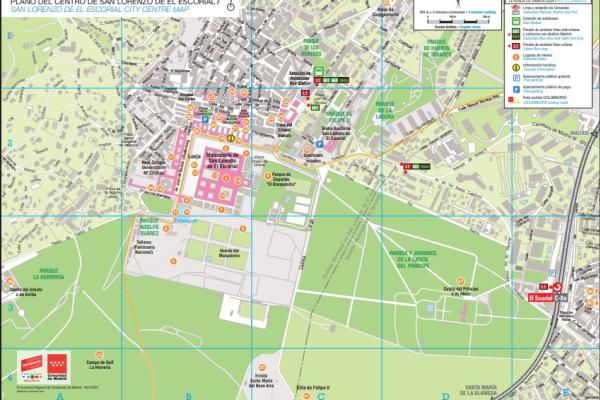 Map of San Lorenzo de El Escorial
A new window will open

Frequently Asked Questions about San Lorenzo de El Escorial
What to see in San Lorenzo de El Escorial in one day? In one day in San Lorenzo de El Escorial, you can visit the El Escorial Monastery, the Royal Coliseum of Carlos III, the Casita del Infante, and Philip II's Seat (Silla de Felipe II). It is also recommended to stroll through the historic center and enjoy its streets and squares.
Why is San Lorenzo de El Escorial famous? San Lorenzo de El Escorial is known for the Monastery of El Escorial, a UNESCO World Heritage site. It is one of the most important architectural ensembles in Spain and a symbol of the power of Philip II's monarchy.
How to get to San Lorenzo de El Escorial from Madrid? You can arrive by commuter train (Cercanías line C-3 to El Escorial), by intercity bus, or by car via the A-6. The journey takes approximately 45 minutes to 1 hour.
What to do in San Lorenzo de El Escorial? In addition to visiting the Monastery, you can go hiking, visit viewpoints like Philip II's Seat, discover cultural spaces like the Royal Coliseum of Carlos III, or enjoy family plans such as InsectPark.
How much time is needed to visit San Lorenzo de El Escorial? One day is enough to see the main attractions, although a weekend allows you to enjoy the natural surroundings and cultural offerings at a more relaxed pace.
Where is the center of San Lorenzo de El Escorial? The center revolves around the Monastery of El Escorial and its surrounding streets, where the main points of interest are concentrated.
Is it recommended to visit San Lorenzo de El Escorial with children? Yes, it is an ideal destination for families, offering cultural activities, natural spaces, and educational plans like InsectPark.
What to see near San Lorenzo de El Escorial? In the surrounding areas, you can visit the Sierra de Guadarrama, explore hiking trails, natural viewpoints, and other historical sites in the region.
Is it possible to take a day trip from Madrid? Yes, San Lorenzo de El Escorial is one of the best destinations for a day trip from Madrid due to its proximity and cultural richness.