

Royal Monastery of San Lorenzo de El Escorial
The Royal Monastery of San Lorenzo de El Escorial is one of Spain’s most important landmarks and one of the greatest masterpieces of European Renaissance architecture. Located in San Lorenzo de El Escorial, this monumental complex is a UNESCO World Heritage Site and represents the historical, cultural and religious power of the Spanish monarchy.
To plan your full visit, explore everything to see in San Lorenzo de El Escorial, one of the most important cultural destinations in the Madrid region.
Discover the history and art of El Escorial Monastery
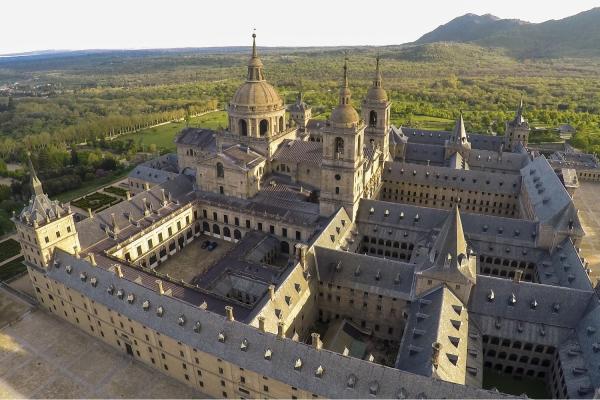
The Monastery of El Escorial is a unique architectural complex that brings together a monastery, a royal palace, a basilica, a royal pantheon, and a historic library. It was conceived in the 16th century as a symbol of the power of the Spanish monarchy and as the spiritual center of the Empire.
Today, it stands as the most emblematic monument of San Lorenzo de El Escorial and one of the essential cultural visits in the Madrid region.

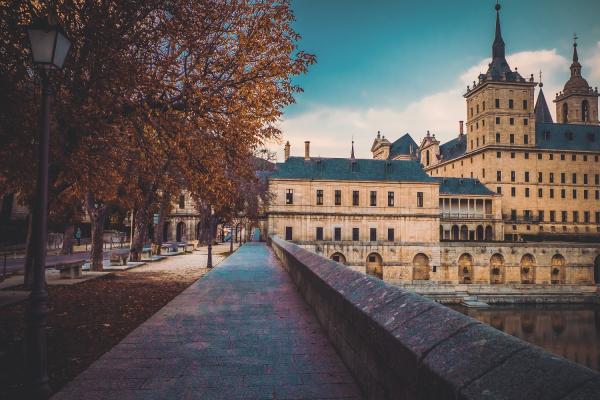
Facade of the monastery © Vivvi Smak. Shutterstock
History of the Monastery of El Escorial
Built under Philip II
The monastery was commissioned by King Philip II in the 16th century as a royal residence, religious centre and dynastic pantheon for the Spanish monarchy.
A symbol of the Spanish Empire
Its austere and monumental design reflects the political and religious power of Spain at the height of its imperial era.
From royal complex to UNESCO World Heritage Site
Over time, the site has become one of Spain’s most important monuments and a defining landmark of San Lorenzo de El Escorial.
What to see inside the Monastery of El Escorial
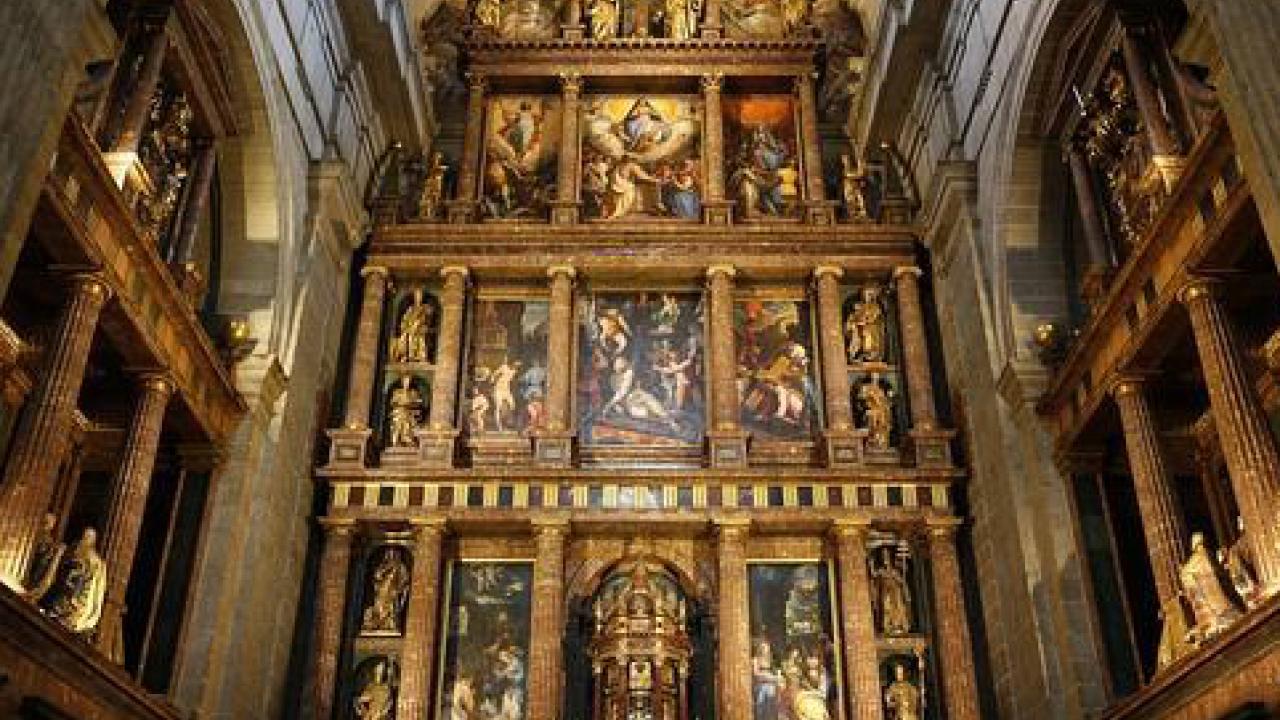
The Monastery of El Escorial is far more than a monumental building. It is a unique historical and artistic complex that houses some of Spain’s most important cultural treasures. Widely regarded as one of the greatest works of the European Renaissance, its interiors stand out for their architectural grandeur and outstanding art collection, making it a true world-class gallery.
The Basilica
Located at the heart of the complex, the Basilica of El Escorial Monastery is one of its most impressive spaces. Its massive dome, inspired by St. Peter’s Basilica in the Vatican, dominates the skyline. Inside, visitors can admire frescoes, altarpieces and works by renowned artists such as Luca Giordano and Federico Zuccaro, making it a key example of Renaissance and Baroque religious art in Spain.
The Pantheon of Kings
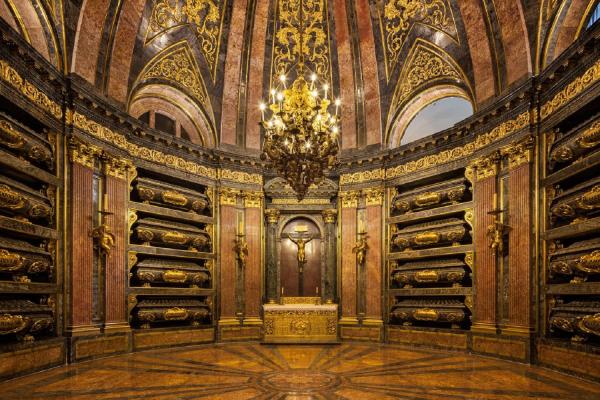
The Pantheon of Kings is one of the most iconic and symbolic spaces within El Escorial Monastery. It serves as the burial place of Spanish monarchs since Charles I. Decorated with marble and bronze, it reflects the power and legacy of the Spanish monarchy. Visiting this space is like walking through the dynastic history of Spain in a setting of great historical significance.
The Royal Library
The Royal Library of El Escorial is one of the most important historic libraries in Europe. It houses thousands of rare books, manuscripts and codices, including texts in Latin, Greek, Arabic and Hebrew. Its magnificent main hall, adorned with allegorical frescoes representing knowledge, makes it one of the most beautiful rooms in the complex and a symbol of King Philip II’s humanist vision.
Art collection: a Renaissance masterpiece gallery
The Monastery of El Escorial is also home to an outstanding art collection, considered one of the most important in Spain. Visitors can discover works by masters such as El Greco, Titian, Velázquez and Bosch, reflecting the close relationship between the Spanish monarchy and European art.
This collection transforms the visit into a unique cultural experience, where architecture, history and painting come together in one of the most complete cultural attractions near Madrid.
Visiting the Monastery of El Escorial
Practical information
Opening hours and ticket availability may vary depending on the season, holidays and special events. A full visit typically takes between 1.5 and 3 hours.
How to get there from Madrid (Cercanías train and other options)
Getting to the Monastery of El Escorial from Madrid is easy and one of the most popular day trips in the region.
The best option is the Cercanías commuter train, which is direct, affordable and convenient. From Madrid stations such as Atocha, Chamartín or Príncipe Pío, take lines C-3 or C-8 towards El Escorial. The journey takes approximately 50–60 minutes.
From El Escorial train station, the monastery is a 10–15 minute walk from the centre of San Lorenzo de El Escorial. The route is clearly signposted and passes through historic streets with views of the Sierra de Guadarrama.
Alternatively, intercity buses run from Moncloa transport hub (Madrid), taking around 1 hour.
By car, the journey takes about 45–50 minutes via the A-6 and M-600 highways.
Best time to visit
Early morning or late afternoon are the best times to visit, offering fewer crowds and better lighting conditions, especially in San Lorenzo de El Escorial.
FAQ about the Monastery of El Escorial
What is the Monastery of El Escorial?
It is a monumental complex in San Lorenzo de El Escorial that includes a monastery, royal palace, basilica and royal pantheon.
Where is the Monastery of El Escorial located?
It is located in San Lorenzo de El Escorial, in the Madrid region of Spain.
Who built the Monastery of El Escorial?
It was commissioned by King Philip II in the 16th century.
How do you get there from Madrid?
You can take Cercanías trains (C-3 or C-8), intercity buses from Moncloa, or drive via the A-6 motorway.
Is it worth visiting El Escorial?
Yes, it is one of Spain’s most important historical and architectural landmarks and a must-see day trip from Madrid.


