Church of San Jerónimo el Real
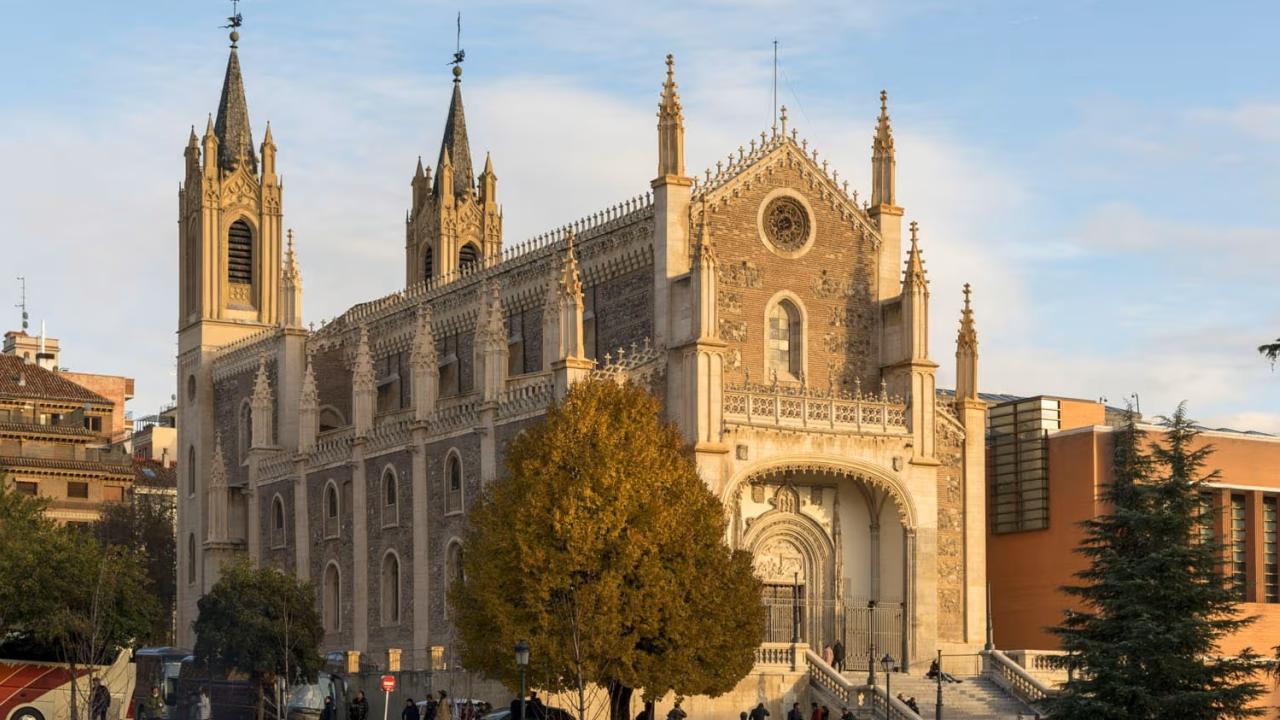
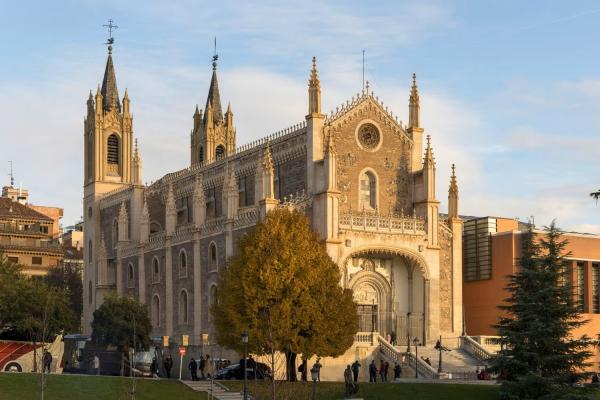
San Jerónimo el Real Church is one of Madrid’s most emblematic religious buildings due to its historical and artistic significance. It was originally part of the Jeronymite monastery known as Los Jerónimos, once one of the most important monastic complexes in the city and closely linked to the Spanish Court and monarchy.
Next to the monastery stood the Royal Quarters (Cuarto Real), which were expanded during the reign of Philip IV as part of the Buen Retiro Palace. Today, the church—now serving as a parish—and a Renaissance cloister are all that remain of the former monastic complex.
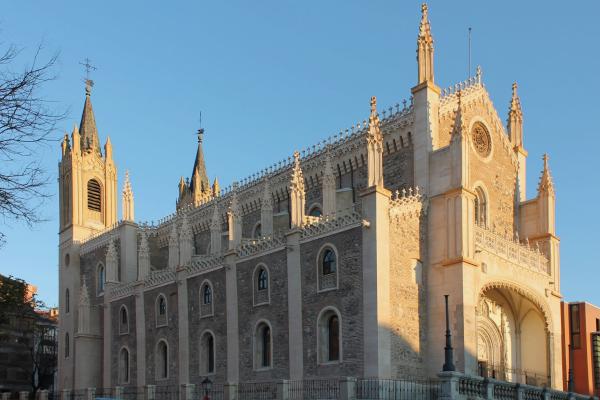
Since the late 15th century, when the Catholic Monarchs ordered its construction in the late Gothic style with Renaissance influences, San Jerónimo el Real became a regular residence for the royal family. In 1510, Ferdinand II of Aragon convened the Cortes in the church, and in 1528, during the reign of Charles I of Spain, Philip of Habsburg was sworn in as heir to the throne there, a tradition that continued until the 19th century.
The church served as the setting for royal funerals, proclamations, and weddings. In 1906, the wedding of Alfonso XIII and Victoria Eugenie of Battenberg was celebrated here, and the most recent royal proclamation took place in 1975 with Juan Carlos I.
During the reign of Philip II, the Royal Quarters were expanded, allowing the king to attend Mass directly from his private chambers, following a model similar to that of the Monastery of San Lorenzo de El Escorial. The complex reached its greatest splendor under Philip IV, when it became a center of courtly life.
The Napoleonic invasion of 1808 severely damaged both the monastery and the Buen Retiro Palace. Later, Ferdinand VII of Spain converted the site into an artillery barracks. Subsequently, by order of Francisco de Asís, the church was restored and the towers flanking the apse were added.
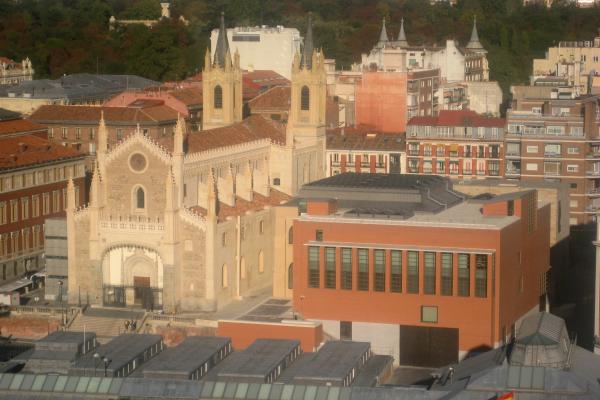
In 1878 the church was transferred to the Archdiocese of Toledo, which undertook further renovations. At the beginning of the 21st century, as part of the agreement to incorporate the cloister into the expansion of the Prado Museum designed by Rafael Moneo, the church underwent a comprehensive restoration.
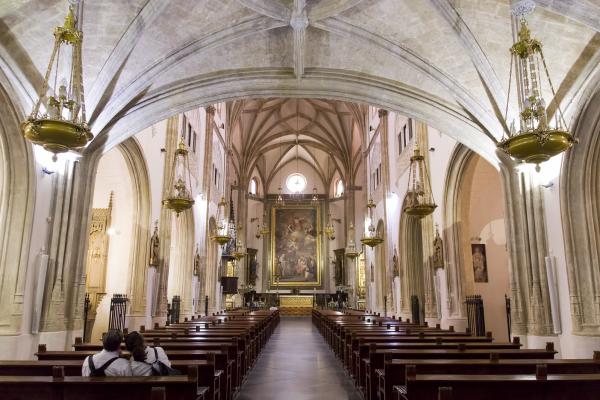
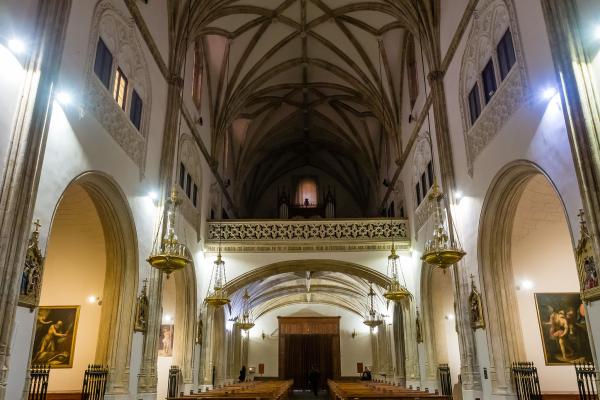
Inside, notable works include The Last Communion of Saint Jerome by Rafael Tejeo, as well as paintings by Juan Andrés Ricci, Francisco Rizi, José Moreno, and Antonio de Pereda, on loan from the Prado Museum. During restoration work, 16th-century mural paintings and Renaissance reliefs were also uncovered.
In 2023, the tomb and funerary monument of Hans Khevenhüller—imperial ambassador in Madrid between 1572 and 1606—were restored.
The cloister, designed by Fray Lorenzo de San Nicolás according to the architectural principles of El Escorial, was dismantled and reconstructed piece by piece as part of the Prado Museum’s expansion. Today it retains its original courtyard with arches and columns and presents a cubic volume clad in red brick. Inside, a large skylight stands out, along with the bronze doors by Cristina Iglesias that connect it with Ruiz de Alarcón Street.
San Jerónimo el Real thus stands as a place where history, art, and the memory of the Spanish monarchy come together in the cultural heart of Madrid.
Visit the Church of San Jerónimo el Real
Plan your visit: Check visiting hours and Mass times. Don’t miss the Eucharist sung by the Jerónimos Choir.
Discover San Jerónimo el Real in images