College of San Ildefonso: The Birthplace of Spanish Humanism
The College of San Ildefonso, the historic heart of the University of Alcalá, stands as one of the most sublime masterpieces of the Spanish Renaissance and the ultimate symbol of the cultural heritage of Alcalá de Henares—a city proudly designated as a UNESCO World Heritage Site.
Founded in 1499 by Cardinal Cisneros, this building represents not only the origins of the university but the birth of a city designed specifically as a cradle of higher education. It went on to become one of the most influential academic institutions in Europe and a blueprint model for Spanish-American universities.
To discover the full historic context of the city, its rich legacy, and its top monuments, explore our official Alcalá de Henares travel guide.
History and Origins of College of San Ildefonso

The College of San Ildefonso project was conceived by Cardinal Cisneros as the spiritual and intellectual hub of the University of Alcalá de Henares. His goal was highly ambitious: to create a premier center of higher education that could compete with the major academic powerhouses of the era, such as Paris or Bologna, under the new ideals of Renaissance Humanism.
Thanks to the papal bull issued by Pope Alexander VI, the project gained the necessary authority to establish Alcalá as a golden age intellectual powerhouse—the very place where the monumental Complutensian Polyglot Bible was meticulously crafted.
What to See Inside the College of San Ildefonso

The interior of the building is a national treasure, housing spaces of immense artistic and historical value within the University of Alcalá:
The Paraninfo and the Cervantes Prize
The Paraninfo is the main ceremonial hall where the most solemn academic events were held. It stands out for its impressive Mudéjar coffered ceiling and rich decorative details. Today, it is internationally known as the venue where the King and Queen of Spain present the Cervantes Prize each year, the most prestigious literary award in the Spanish-speaking world.
The Courtyard of Santo Tomás de Villanueva
Designed by Juan Gómez de Mora in the 17th century, the Main Courtyard (Patio Mayor de Escuelas) is remarkable for its monumentality and restrained Herrerian style. It is one of the most photographed and emblematic courtyards of academic life in Alcalá.
The Chapel of San Ildefonso and the Tomb of Cisneros
This space harmoniously combines Mudéjar plasterwork with polychrome wooden ceilings. It houses the cenotaph of Cardinal Cisneros, a masterpiece in Carrara marble sculpted by Domenico Fancelli and Bartolomé Ordóñez. It is also the resting place of highly influential figures such as Elio Antonio de Nebrija, author of the first grammar of the Spanish language.
Visit the University of Alcalá and College of San Ildefonso
Visiting the College of San Ildefonso is, without a doubt, the ultimate cultural experience in Alcalá de Henares. Walking its historic cloisters allows you to retrace the exact footsteps of Spanish literary giants such as Lope de Vega, Quevedo, and Calderón de la Barca.
Insider Tips for Your Visit
- Planning: Booking in advance is highly recommended, especially for official guided tours—the only way to unlock exclusive access to restricted masterpieces like the Paraninfo (Great Hall) and the Chapel.
- Hours: Always check official schedules before heading out; as a fully active university hub, certain areas may temporarily close for prestigious academic ceremonies.
- Location: You will find it at Plaza de San Diego, perfectly situated in the heart of the city's pedestrian-only historic district.
For a seamless and fully tailored journey, unlock our premium Alcalá de Henares travel guide. There is always something extraordinary waiting to be discovered in Madrid and its legendary UNESCO World Heritage cities.
Cómo llegar al Colegio Mayor de San Ildefonso
El Colegio Mayor de San Ildefonso se sitúa en pleno centro histórico y peatonal de Alcalá de Henares, exactamente en la Plaza de San Diego, s/n.
-
En Cercanías Renfe:
Líneas C-2 y C-8 con parada en la estación de Alcalá de Henares. Desde la estación hay un paseo de apenas 10 minutos a pie atravesando la calle Libreros hasta la Plaza de San Diego.
-
En Autobús Interurbano:
Línea 223 (con salida desde el Intercambiador de Avenida de América en Madrid) con parada en la Vía Complutense / Vía Azaña, a 5 minutos a pie del conjunto universitario.
-
En Coche y Aparcamiento:
Se accede por la autovía A-2 (Salida 23 / Alcalá de Henares Centro). Al ser zona peatonal protegida, se recomienda estacionar en los aparcamientos públicos gratuitos del recinto ferial o en el parking de pago de la Plaza de San Lucas.
Spanish Renaissance Architecture and the Plateresque Facade
The construction of the College of San Ildefonso, part of the University of Alcalá, began in the early 16th century under the direction of architect Pedro Gumiel.
Its most iconic feature is the Plateresque façade, a masterpiece designed by Rodrigo Gil de Hontañón and completed in 1553. This richly decorated frontispiece is a complex iconographic program carved in limestone, symbolizing the triumph of the Church and Knowledge.
The harmony of its proportions and the refinement of its ornamentation make it the finest example of Plateresque architecture in the Madrid Region, and a cornerstone of Spain’s Renaissance architectural heritage.
Preguntas Frecuentes sobre el Colegio Mayor de San Ildefonso (FAQ)
¿Es obligatorio hacer la visita guiada para ver el interior del Colegio Mayor?
Para acceder a los espacios emblemáticos del interior —como el Paraninfo y la Capilla de San Ildefonso con el Sepulcro de Cisneros— es imprescindible realizar la visita guiada oficial, ya que son salas históricas protegidas. Los patios exteriores pueden contemplarse de forma libre en el horario de apertura.
¿Cuánto dura la visita guiada al recinto universitario?
La duración aproximada de la visita guiada por el Colegio Mayor de San Ildefonso es de entre 50 y 60 minutos.
¿Se puede visitar el escenario donde se entrega el Premio Cervantes?
Sí, la visita guiada oficial incluye la entrada al célebre Paraninfo, el espacio ceremonial donde los Reyes de España entregan cada 23 de abril el Premio Cervantes de Literatura.
¿El edificio es accesible para personas con movilidad reducida?
Sí, los patios principales, la Capilla y la planta baja del Paraninfo cuentan con accesos adaptados y rampas para sillas de ruedas.
¿Qué otros monumentos destacados están cerca del Colegio Mayor?
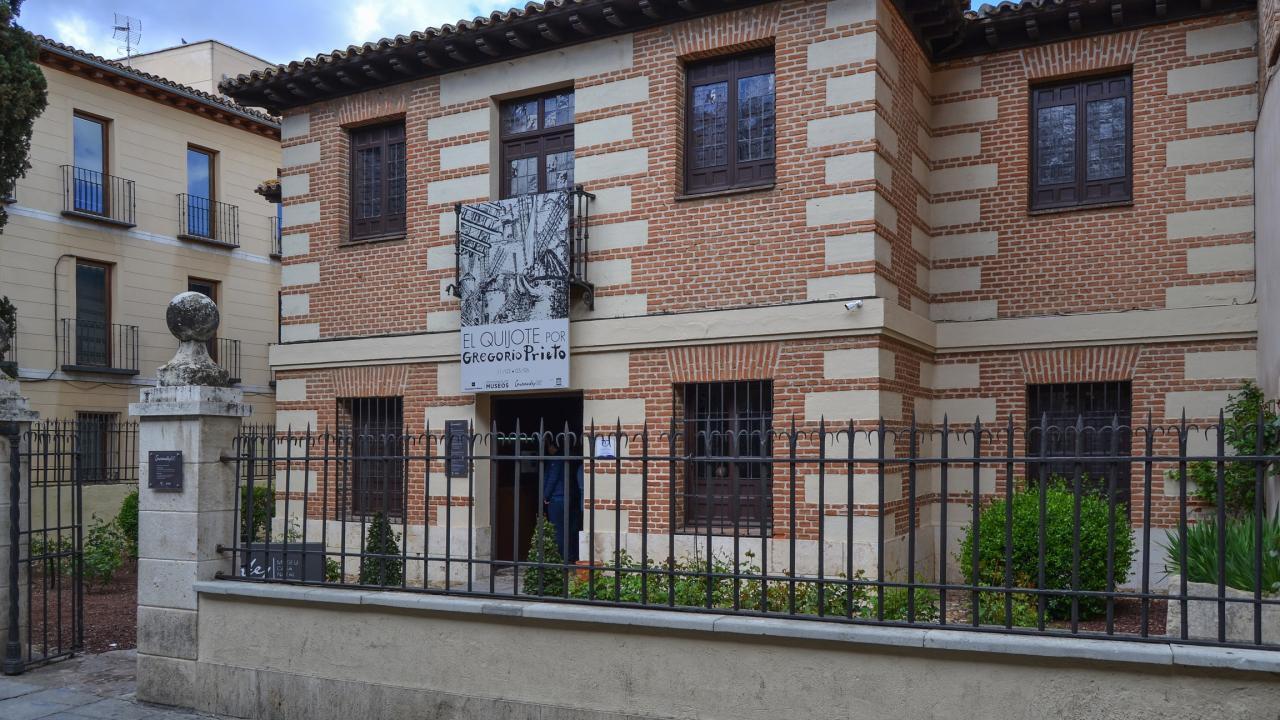
En un radio de menos de 5 minutos a pie puedes visitar la Casa Natal de Cervantes, la Plaza Cervantes, la Catedral-Magistral de los Santos Justo y Pastor y el Teatro Salón Cervantes. Para planificar tu ruta completa por la ciudad, consulta la guía de eventos en la agenda de VisitMadrid.