

Discover Aranjuez, a city filled with history and charm. Explore its palaces, gardens, and its rich cultural and gastronomic legacy.
What to See in Aranjuez? A World Heritage Cultural Landscape
Discovering the Royal Site of Aranjuez, located just 50 kilometers from the capital, is to step into a landscape where architecture and landscape design merge into a site declared a UNESCO World Heritage Site. The centerpiece is the Royal Palace of Aranjuez, an 18th-century jewel managed by Patrimonio Nacional, which houses treasures such as the Porcelain Cabinet. Surrounding it, the Museum of Royal Barges (Falúas Reales), the Real Cortijo de San Isidro, and the Casa del Labrador complete a unique monumental offering that extends throughout the Historic Center, itself designated a Historic-Artistic Site.
The monumental experience expands through its historic gardens: the Prince’s Garden, the Island Garden, and the Parterre. Walking through them evokes the melodies that Maestro Rodrigo dedicated in his famous Concierto de Aranjuez. Furthermore, the architectural richness includes the Aranjuez Bullring, built in 1796 by order of Charles IV, which today houses a renowned Bullfighting Museum. For nature lovers, the banks of the Tagus River offer a landscape of groves and historic orchards that once supplied the Royal Court and today serve as a sanctuary for biodiversity.

Royal Palace of Aranjuez
The Royal Palace of Aranjuez, located on the Tagus River valley, is one of the residences of the Spanish Royal Family and an exceptional testament to Spanish history and art. Its origins date back to the Middle Ages, specifically to the former Casa Maestral of the Order of Santiago, used as a recreational residence by the monarchs beginning in the 15th century.
The Palace we know today is the result of a long construction process spanning several centuries and involving numerous architects and artists. Philip II commissioned the initial project to Juan Bautista de Toledo in 1561, who designed a palace around a square courtyard with two side wings, following the model of El Escorial. After Toledo's death, Juan de Herrera continued the work, introducing some modifications and completing the Cuarto Nuevo (New Room), intended for the king's chambers and the chapel.
During the 17th and 18th centuries, the Palace was expanded and transformed. Philip V promoted the construction of the eastern and western wings, while Santiago Bonavía carried out major remodeling work, such as the main staircase and the main façade. Charles III focused on the interior decoration, highlighting the Porcelain Cabinet, a jewel of Spanish Rococo art. Francesco Sabatini was commissioned to design the two wings flanking the Plaza de Armas, as well as the Royal Parade, a space designed for events and performances.
In the 19th century, the Palace underwent further transformations, adapting to the tastes and needs of the time. Modifications were made to the interior decoration, such as King Francis's Arab Cabinet, an example of exoticism and fascination with Eastern culture.
The Royal Palace of Aranjuez is an architectural complex of great historical and artistic value. Elements of different styles, from the Renaissance to Neoclassicism, can be appreciated here, merging into a harmonious and balanced whole. Highlights include its facades, interior courtyard, main staircase, chapel, and numerous halls and rooms decorated with works of art and period furniture.
The Palace also has other tourist attractions, such as its gardens, declared a UNESCO World Heritage Site.

Royal Gardens of Aranjuez
Considered the most beautiful gardens of that time, they served as inspiration to artists such as the composer Joaquín Rodrigo or the painter Santiago Rusiñol.
There are several historic gardens surrounding the Royal Palace of Aranjuez, each one representing a different type of style according to the time and taste of the monarch who commissioned its creation.
Today you can visit the Prince's Garden (between the Puerta de Villanueva and Calle Isabel II), the Queen's and King's Garden (the latter from the Parterre), the Isla, Isabel II and Parterre gardens.

The Casa del Labrador

Museum of Royal Fall. House of Marinos
The collection of falúas or fluvial pleasure boats is composed of forty objects, six of which are boats and the rest mastites, models and other elements related to the nautical hobbies of the kings. The museum recalls the courtyas in the rivers and ponds of the Real Sites of Buen Retiro in Madrid, La Granja de San Ildefonso and, above all, Aranjuez. The oldest and most spectacular boat to be exhibited is the golden gondola commissioned in Naples by Charles II in 1683, for use in the pond of Buen Retiro in Madrid. Chronologically, it follows the Carlos IV façade, built in Cartagena at the beginning of the 19th century. From the reign of Fernando VII dates the falca with dolphins interlaced in the bow and the royal coat of arms laureate in the stern, as well as the pavilion adorned with butterflies and garlands. To the reign of Isabel II corresponds the canoe in mahogany wood with reinforcements of golden bronze, constructed in Ferrol in 1859. Also of Isabel II is the boat of cabotage work of Jose Tuduri de la Torre, dedicated by "Mahon to its queen". Finally, it exposes the falúa of Alfonso XII, gift of the city of Ferrol in 1879, that was used by the monarch in his stays summer in San Sebastián. In addition we can enjoy the paintings referring to the Spanish squadron of the nineteenth century, as well as a set of bronze cannons from the reign of Fernando VI and various utensils for navigation of falúas.
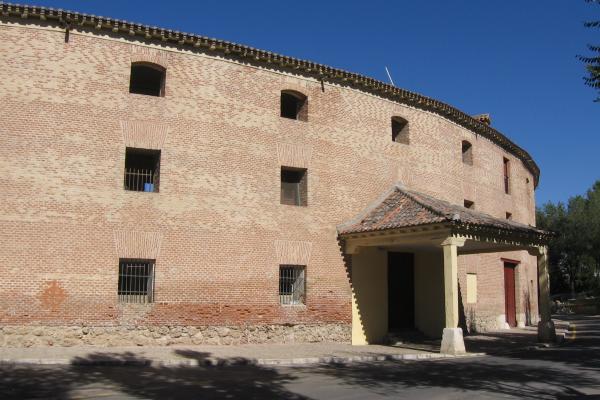
Aranjuez Bullring: Historic Monument and Bullfighting Museum
The Aranjuez Bullring is one of the oldest and most beautiful arenas in Spain, fully integrated into the UNESCO World Heritage Cultural Landscape. Built in 1796 by order of King Charles IV, it stands out for its imposing Neoclassical architecture and its strategic location within the town's Enlightenment-era layout. Inaugurated by legendary figures of bullfighting, its brick and stone structure has witnessed over two centuries of history, surviving fires and reconstructions to regain its original splendor.
When visiting this monument, travelers discover much more than a venue for festivities:
- Royal Architecture: Its circular design and monumental facade place it on par with great historic arenas such as the Maestranza in Seville or Ronda.
- Aranjuez Bullfighting Museum: Inside, visitors can explore a comprehensive exhibition detailing the evolution of the art of bullfighting through trajes de luces (bullfighter costumes), historic posters, and personal items belonging to great masters.
- National Heritage: The building is an essential part of the monumental ensemble surrounding the Royal Palace, making it a mandatory stop on any walking tour of the historic center.
Today, the Bullring remains a living space that hosts traditional bullfights during the San Fernando Festivities and the Aranjuez Mutiny Festival, as well as various cultural events. Its preservation and museum facilities make it one of the most interesting tourist sites for those seeking to understand the identity and traditions of the Royal Site.

Real Cortijo de San Isidro
In 1759 Charles III, who had been king of Naples and Sicily, came to the throne. He chose Aranjuez to live, as it reminded him of his Neapolitan city of Caserta and chose this enclave to develop an experimental agroindustrial and livestock project to activate progress from the enlightened perspective. Thus, in 1762 he created the Cortijo Real, similar to San Leucio, near Caserta, also of agricultural experimentation and that served as a supply of good products to the royal palace.
In the beautiful natural landscape of the Real Bosque began to break virgin lands, forming tree-lined streets to access the new orchards, artificial meadows for grazing etc. They brought from Naples cows, buffaloes, sheep, horses, oxen ... and to irrigate the lands they built three caces and transformed the historical caz de la Azuda. In addition, they planted 25,000 varied trees and 128,000 strains, raising a fence to protect crops from wild animals. In 1770, King Carlos III had a house built for the director of the cortijo, royal residence, stables, oratory, stables ...
Today, when entering the Real Cortijo we find an urban helmet of neoclassic style in which emphasizes the hermitage of San Isidro, in the center. Visiting this enclave allows us to admire the Real Bodega, the Plaza Mayor, the Winery and the Royal House. Its pentagonal perimeter is framed by leafy green areas. And in its environment, the hydraulic systems that distribute the water of the Tagus by the fertile plots are still active. These protected elements are the perfect excuse for a good hiker route.
A new window will open
What to Do in Aranjuez?
Aranjuez vibrates throughout the year with a cultural agenda that blends tradition with cutting-edge leisure. The most prominent highlight is the Fiestas del Motín de Aranjuez (Aranjuez Mutiny Festival), declared a Festivity of International Tourist Interest, where the town brings its history to life through popular reenactments. Music is another fundamental pillar, featuring events such as the Early Music Festival, as well as the year-round programming at the Royal Theater of Carlos III and the Isabel de Farnesio Cultural Center.
During the spring and autumn, the most authentic way to arrive is via the Strawberry Train (Tren de la Fresa). This historic train departs from the old Delicias station in Madrid, offering a journey back in time in wooden carriages with staff dressed in period costumes who treat travelers to products from the local orchards. It is the perfect experience to connect the capital with the living legacy of the Royal Site.

The feast of the Riot
These celebrations, declared of International Tourist Interest, are celebrated since 1981. Each September, coinciding with the celebration of the traditional fairs of cattle and the harvest of yesteryear, the neighbors of Aranjuez remember before 6,000 spectators the Mutiny.
The first act takes place in the Palace of Godoy, where the assault is represented to the house of the minister of the king Carlos IV, Manuel Godoy. The neighbors go through the streets of Aranjuez with torches, the drum roll and the shout of "die Godoy", until arriving at the palace, where they capture him. The event ends with a fireworks display.
The assault was the beginning of a historical cycle, with the fall of a tyrant, the change of the holder of the Monarchy and the step towards the Spanish constitutionalism, whose initial leg was forged in the Royal Site of Aranjuez with the first meetings of the Board Supreme Central and Government of the Kingdom, which would culminate as a project and reality in 1812 when proclaiming the Constitution of Cadiz.
In addition, as part of these festivities, over 170 residents of Aranjuez give life to the chronicle of the National Episodes of Benito Pérez Galdós, which chronicles popular discontent, court intrigues, the fall of Godoy, the abdication of the monarch and the ascent to the throne of its son Fernando VII. The staging takes place in the Couples Square and the Royal Palace becomes the scene of the popular uprising. In an esplanade of more than 7,000 square meters the spectacular representation of the events that took place between the 17 and the 19 of March of 1808 transfers to neighbors and visitors to the Spain of the court of Carlos IV.
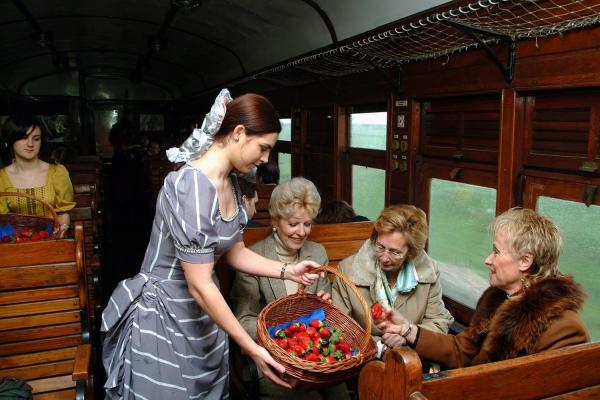
Strawberry Train
A train with a century of history, the Strawberry Train offers its visitors, on spring and autumn weekends, a journey through time and space, recalling the route of the first railway in the Community of Madrid. A journey of approximately 45 minutes in which you can enjoy wonderful views until reaching Aranjuez.
The Strawberry Train is a unique cultural and leisure experience, with a journey on a historic train made up of carriages with a century of history, and a magnificent day in Aranjuez, a city declared a Cultural Landscape World Heritage Site by UNESCO, where you can enjoy its many attractions.
On the way back, we will taste the famous Aranjuez strawberry, which gives its name to our train and gives a sweet taste at the end of our journey.

Royal Farmhouse of Charles III
In it is aged and bottled the wine Bodega del Real Cortijo. The visit begins in his garden, where is the huge door of apiary stone designed by Marquét (royal architect of many monuments of Aranjuez) in the s. XVIII. It is the access to the subterranean cave where it is possible to cross its two branches of almost half kilometer of length flanked by two hundred niches in which the wine ages. The visit ends in the winery, a vaulted room example of the civil architecture of 1792, where a tasting is performed. The winery also organizes complete tastings with winemakers.
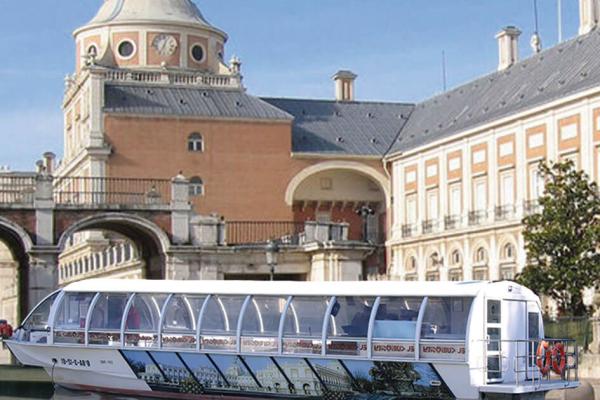
Aranjuez Tourist Boat: A Unique Cruise on the Tagus
Get on board the Curiosity, a boat that will take you sailing around the city of Aranjuez in a leisure experience for the whole family.
You'll have an onboard guide during the 45-minute trip, and you'll also be able to take part in an original outdoor escape-room game called ‘The Secret City’, suitable for all the family to enjoy.
Set sail on the magnificent heritage city of Aranjuez and discover places you would never have dreamed of before!

Essential Walking Route: The Best of UNESCO Aranjuez
Route Itinerary
Aranjuez is a perfectly flat, pedestrian-friendly city, making it ideal for a scenic walking tour. Here is an essential 3 to 4-hour route that covers the most iconic landmarks of the Aranjuez Cultural Landscape.
The Route Itinerary
- Aranjuez Train Station (The Historic Gateway) Start your journey at the train station. Built in Neomudéjar style, its stunning mosaics and wooden coffered ceilings set the stage for the royal heritage you are about to explore.
- Royal Palace of Aranjuez (Palacio Real) Walk down the wide avenues toward the palace. This 18th-century residence is the crown jewel of the city. Tip: Be sure to visit the Porcelain Cabinet inside.
- Jardín del Parterre & Jardín de la Isla Located right next to the Palace, these are the most "formal" gardens. The Island Garden (Jardín de la Isla) is particularly romantic, surrounded by the Tagus River and filled with mythological stone fountains.
- Plaza de la Mariblanca (San Antonio Square) Head into the town center to see this monumental square. Here you will find the Church of San Antonio and the beautiful Mariblanca Fountain.
- Royal Theater of Carlos III A short walk from the square takes you to this historic 18th-century theater, a masterpiece of the Enlightenment that still hosts active cultural programming today.
- Jardín del Príncipe (The Prince's Garden) Walk along the river to enter the largest fenced garden in Europe. This landscape-style park is home to the Museum of Royal Barges (Museo de Falúas Reales), where you can see the opulent boats used by Spanish monarchs.
- Historic Center & Gastronomy End your walk in the Historic-Artistic District. This is the perfect place to try the local delicacies: strawberries (fresones) and asparagus (espárragos), which have been famous since the time of the Royal Court.


Gastronomy: Where to Eat in Aranjuez?

Tasting Aranjuez means discovering the excellence of its historic orchards, an 18th-century legacy that continues to provide the capital with products of exceptional quality. The local riverside cuisine centers on two main stars: Aranjuez asparagus and strawberries (fresones). These delicacies are best enjoyed in the traditional 'gangos'—typical open-air eateries located along the banks of the Tagus River—as well as in the kitchens of the Castilian inns (mesones) in the old town.
The town's culinary scene is a benchmark for Madrid's gastronomy, seamlessly blending a deep respect for tradition with the innovation of Michelin-starred restaurants.
Accommodation: Where to Stay in Aranjuez?
To truly enjoy the magic of Aranjuez at nightfall, when its gardens and palaces are illuminated, the town offers a diverse infrastructure that combines history, comfort, and a connection with nature. Staying overnight at the Royal Site allows visitors to enjoy a fully immersive experience, soaking in the tranquility of its Enlightenment-era squares once the day-trip crowds return to the capital.
The accommodation options in Aranjuez cater to every type of traveler:
- Charming Hotels: The old town is home to lodgings situated in rehabilitated historic buildings, ideal for those seeking a romantic or cultural getaway just steps from the Royal Palace.
- Nature Tourism and Caravaning: Located on the banks of the Tagus River is the Aranjuez International Campsite, a benchmark in the Community of Madrid for families and caravaning enthusiasts. This space offers modern pitches and facilities within a wooded setting of great scenic value.
- Modern Lodging: The outskirts and residential areas feature functional hotels with full services, perfect for business trips or large-scale events.
How to get to Aranjuez?
Discover How to Get To and Around Aranjuez Easily
Public Transport: Trains and Buses Connectivity with Madrid and the southern region is guaranteed by one of Spain’s most historic railway networks and a high-frequency intercity bus service.
- Cercanías Renfe (Commuter Train): Line C-3 connects Aranjuez with Madrid’s main central stations (Atocha, Sol, Nuevos Ministerios, and Chamartín). With constant frequency, it is the preferred choice for thousands of users. Additionally, during the tourist season, the iconic Strawberry Train (Tren de la Fresa) offers a unique historic experience departing from the Madrid Railway Museum.
- Media Distancia (Medium Distance Trains): As a key railway hub, Aranjuez is a stop for Medium Distance trains connecting the city with Cuenca, Valencia, and various towns across Castilla-La Mancha.
- Intercity Buses: Regular lines 423 and VAC-158 depart from the Legazpi transport hub and the South Station (Méndez Álvaro). Other lines, such as the 429 and 430, link the town with neighboring municipalities and outlying residential areas. For night travel, the N402 line keeps the service operational throughout the early morning hours.
Getting Around Locally: Urban Buses Once at the Royal Site, moving between different neighborhoods, the Tajo University Hospital, the university area, and the monuments is handled efficiently by a network of five urban bus lines (L1 to L5). This service is designed to provide residents and tourists easy access to gardens, palaces, and service centers without the need for a private vehicle.
To plan your trip more accurately and find exact stop locations and frequencies, download the official transport maps available in this section. Having these maps on your device will allow you to optimize your travel and enjoy Aranjuez in total comfort.
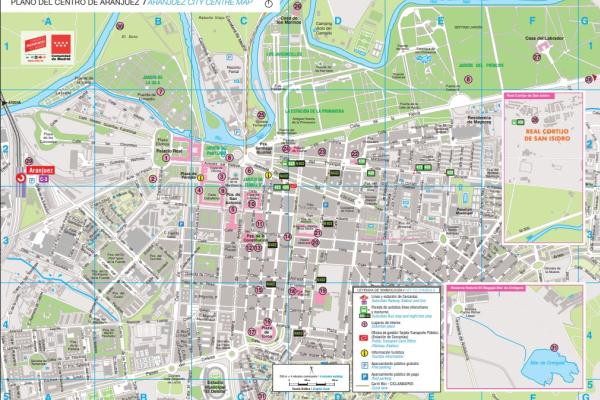 Map of the Aranjuez Historic Center
A new window will open

Frequently Asked Questions about Aranjuez
What to see in Aranjuez in one day? In a single day in Aranjuez, you can visit the Royal Palace of Aranjuez, stroll through historic gardens such as the Prince’s Garden or the Island Garden, and explore the historic center, which features plazas, fountains, and buildings tied to the former Spanish court.
Is Aranjuez worth visiting? Yes, Aranjuez is one of the most complete cultural destinations in the Community of Madrid. It combines historic heritage, gardens declared a cultural landscape, and the surroundings of the Tagus River, making it a highly recommended excursion from Madrid.
How much time do you need to visit Aranjuez? Usually, visitors spend between half a day and a full day. In about 3 to 5 hours, you can visit the main points of the historic center and the gardens, although a more leisurely visit allows for a better appreciation of the palace grounds and its green spaces.
What gardens are there in Aranjuez? The main gardens are the Prince’s Garden, the Island Garden, and the Parterre Garden. All of them are linked to the Royal Palace of Aranjuez and are considered one of the most important historic landscape ensembles in Spain.
Can you go to Aranjuez by public transport from Madrid? Yes, Aranjuez is very well connected to Madrid. You can arrive by commuter train (Cercanías line C-3) or by intercity bus, making it an easy and accessible excursion without the need for a car.
What is the Strawberry Train and when does it run? The Strawberry Train (Tren de la Fresa) is a historic tourist train that connects Madrid with Aranjuez, recreating the first railway route in the Community of Madrid. It operates during the tourist season and offers a complete cultural experience with guided tours upon arrival in Aranjuez, including the palace and its gardens.
What is the best time to visit Aranjuez? Spring and autumn are the best times to visit Aranjuez


