

Considered the most beautiful gardens of that time, they served as inspiration to artists such as the composer Joaquín Rodrigo or the painter Santiago Rusiñol.
There are several historic gardens surrounding the Royal Palace of Aranjuez, each one representing a different type of style according to the time and taste of the monarch who commissioned its creation.
Today you can visit the Prince's Garden (between the Puerta de Villanueva and Calle Isabel II), the Queen's and King's Garden (the latter from the Parterre), the Isla, Isabel II and Parterre gardens.
Los Tres Jardines Reales que debes conocer
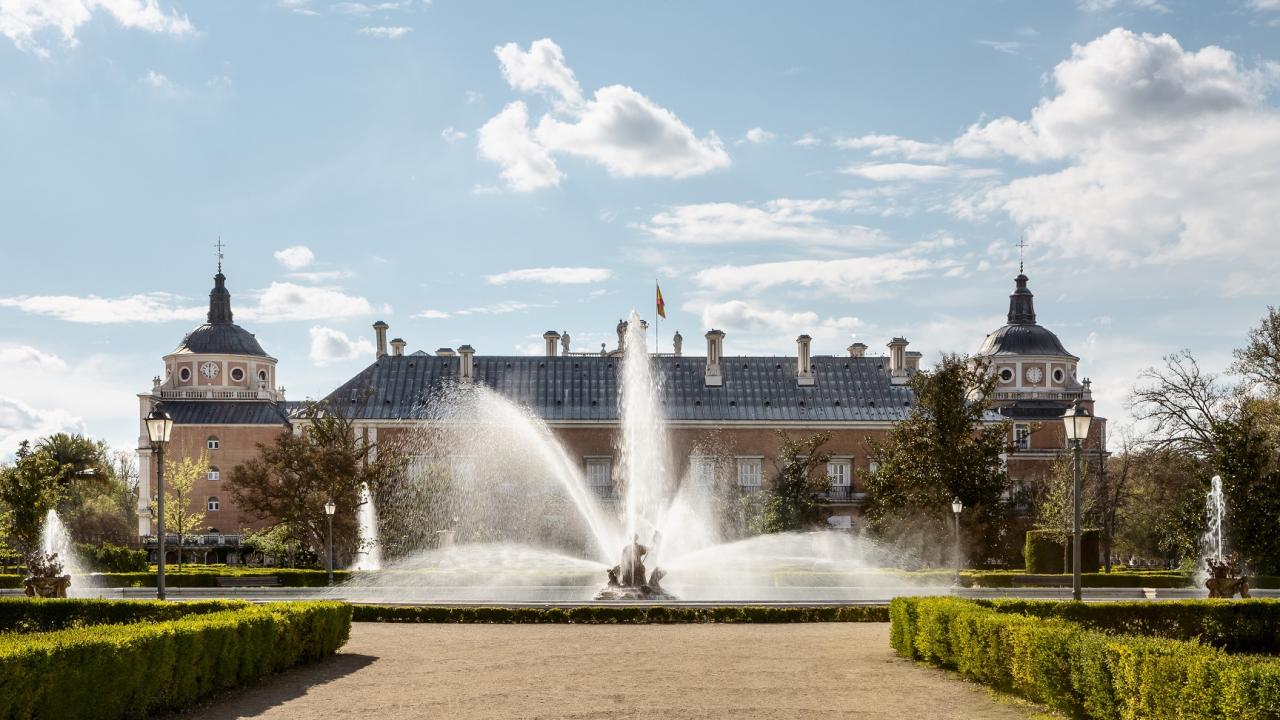
El complejo botánico de Aranjuez se divide en varios recintos, cada uno con una personalidad y un diseño únicos que definen la esencia del turismo en Aranjuez.
El Jardín del Príncipe: El más extenso y variado
Con un perímetro de 7 kilómetros, es el jardín más grande de España. Fue creado por Carlos IV y destaca por su estilo paisajista inglés.
- Imprescindibles: Aquí se encuentran el Estanque de los Chinescos, el Museo de Falúas Reales y la Casa del Labrador.
-
Naturaleza: Es un auténtico jardín botánico con especies traídas de América y Asia en el siglo XVIII.
El Jardín de la Isla: Un oasis rodeado por el Tajo
Llamado así por estar rodeado casi por completo por el río Tajo, es el jardín más antiguo y romántico. De estilo renacentista, está diseñado como un salón al aire libre lleno de fuentes mitológicas.
-
Fuentes destacadas: La Fuente de Hércules y la Hidra, la Fuente de Apolo y la famosa Fuente del Niño de la Espina son paradas clave que debes ver en Aranjuez.
El Jardín del Parterre: El orden a los pies del Palacio
Ubicado junto a la fachada este del Palacio Real, este jardín de estilo francés destaca por su simetría perfecta, sus setos recortados y sus flores de temporada. Es la imagen de postal que define la elegancia del Real Sitio de Aranjuez.
Guía Práctica: Horarios, Entradas y Acceso
Para planificar tu excursión a Aranjuez y disfrutar de los jardines al máximo, ten en cuenta la siguiente información:
Horarios de Apertura y Cierre
Los jardines tienen horarios que varían según la luz solar (se cierran al anochecer):
- Invierno: Abren a las 08:30 y cierran a las 18:30 h.
- Verano: Abren a las 08:30 y cierran a las 21:30 h.
- Nota: En días de alerta por viento o lluvia intensa, los jardines pueden permanecer cerrados por seguridad.
Entradas
El acceso a los Jardines del Parterre, de la Isla y del Príncipe es gratuito. Solo es de pago la entrada si se desea acceder a los edificios que hay en su interior, como el Museo de Falúas o la Casa del Labrador.
Preguntas Frecuentes sobre los Jardines de Aranjuez
¿Se pueden visitar los jardines con perros?
En el Jardín del Príncipe y de la Isla está permitido el acceso con mascotas siempre que vayan atadas con correa y se respeten las normas de limpieza.
¿Se puede hacer picnic o comer en el césped?
No está permitido comer ni tumbarse en las praderas de césped de los jardines históricos para garantizar su conservación. Sin embargo, existen bancos y zonas de descanso en todo el recorrido.
¿Es posible recorrer los jardines en bicicleta?
No se permite el uso de bicicletas dentro de los recintos ajardinados.
¿Cuál es la mejor época para visitarlos?
La primavera (abril y mayo) es la época de máxima floración, mientras que el otoño ofrece una paleta de colores ocres espectacular en el Jardín del Príncipe.
Breathe nature in Aranjuez Gardens
Relax while strolling and listening to the murmur of fountains

Prince's Garden
We begin with the largest garden in Aranjuez, the stunning Prince's Garden, with an area of 145 hectares in which to walk and let yourself get lost. Built during different periods, it was completed during the reign of Charles IV.
It was created according to the landscape model that prevailed in the rest of Europe and is arranged around eight gardens.
It houses different spaces and key locations such as the Prince's Gate (or Embarcadero), the Embarcadero of Ferdinand VI, the Museum of Falúas and the Royal House of the Labrador (currently closed to the public).
Inside, we can also contemplate fountains sculpted in Carrara marble, such as the fountain of Narcissus and the fountain of Apollo.

Island Garden
It takes its name from its location, an island formed by the Tagus River. It is a unique example of a Spanish Renaissance garden and was commissioned by Felipe II.
The island is a large green area that houses many trees, wide avenues and several stone and marble fountains depicting figures and mythological scenes.
Quite remarkable is visiting the Cascada de las Castañuelas (waterfall), with swans and unique fauna, located at the entrance to the garden.

Parterre Garden
Built by Juan de Herrera in the 16th century, its design has been modified by different dynasties until the 18th century, when the garden acquired the appearance that it has today. Three fountains stand out in the garden: the first one is devoted to Hercules and Antaeus together and its pillars with the inscription "Non Plus Ultra", behind we will find the fountain of Ceres and at the end there is the fountain of the Nereids. Do not forget to visit the small Garden of Statues which leads to the King's Garden.

King's and Queen's Garden
Both of them are located within the Parterre Garden: the Queen's Garden in the north and the King's Garden in the south. The Queen's Garden is similar in appearance to the King's Garden, and it can be strolled through and serves as a link between the Parterre and the Island Garden. As for the King's Garden, it is one of the few Renaissance examples of an enclosed garden in Spain, and it can be seen in its totality from the Parterre Garden.

Garden of Isabel II
Located next to the Plaza de la Mariblanca, it is also known as the Jardín de la Princesita. It was designed to fill in a small unused plot of land so that it would be visible from the palace. Years later, a bronze statue was placed there to commemorate the succession to the throne of Isabella II.


