

Best Places to Visit in Madrid, Spain
There is nothing like walking through the streets of Madrid: Madrid de los Austrias (Habsburg Madrid), The Retiro, Chueca, Malasaña... enjoying its monuments, its culture, museums, gastronomy and of course, its people.
These are the essential places on your visit to Madrid, it doesn't matter if you visit them on foot or using the fantastic public transport network that the city owns, the result is sure to be the same, you will want to come back to Madrid again and again.
Must-see Madrid: top landmarks and attractions
Top 10 things to do in Madrid
If you are visiting the Spanish capital for the first time, there are several must-see places in Madrid that capture the essence of the city. This top 10 list of things to do in Madrid brings together the most iconic landmarks and attractions, making it ideal for first-time visitors and for travellers who want to plan their trip efficiently.
From historic icons such as Plaza Mayor and the Royal Palace of Madrid to green spaces like El Retiro Park, Madrid offers a unique mix of history, culture and urban life. Other highlights include Puerta del Sol, the city’s central hub, and Gran Vía, famous for its vibrant atmosphere, shopping and entertainment.
This selection of top attractions in Madrid will help you discover the city’s most visited and photographed spots, while also serving as a practical starting point to explore Madrid in a few days.
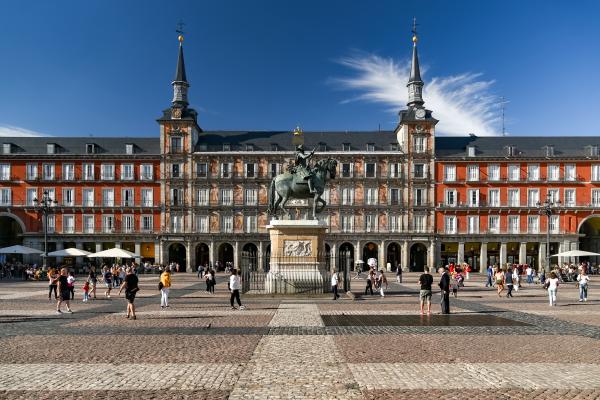
Plaza Mayor: Your Essential Guide to the Heart of Habsburg Madrid
The Plaza Mayor is the beating heart of Habsburg Madrid (Madrid de los Austrias) and stands as one of the most stunning squares in all of Spain. This historic porticoed plaza, anchored by the majestic statue of King Philip III and the iconic Casa de la Panadería, is a must-visit landmark for travelers seeking history, culture, and the city’s most authentic atmosphere. Whether you’re exploring its world-famous Christmas Market or stopping to savor a traditional calamari sandwich under its historic arches, Plaza Mayor is the ultimate starting point for your journey through Madrid’s historic city center.
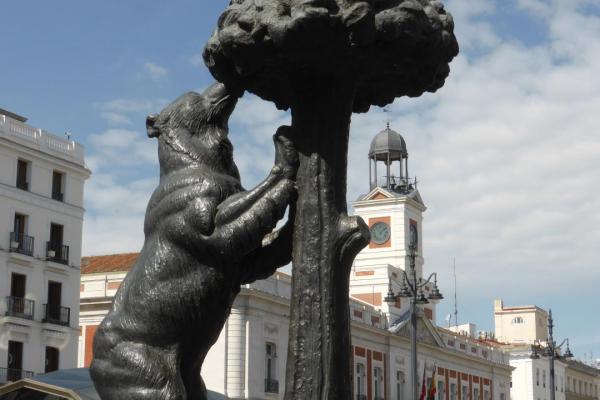
Puerta del Sol: Madrid’s Iconic "Kilometer Zero" for Culture and Entertainment
Puerta del Sol is the vibrant beating heart of Madrid and one of Spain’s most legendary landmarks. Famous for the Real Casa de Correos clock tower—the star of the nation’s New Year’s Eve countdown—this pedestrian square is the ultimate meeting point for locals and travelers alike. From the historic Tío Pepe neon sign to the iconic Bear and the Strawberry Tree statue, every corner of Puerta del Sol captures the essence of the capital. It serves as the perfect starting line for exploring Madrid’s historic center and its premier shopping districts.

Royal Palace of Madrid
The Royal Palace of Madrid is one of the city’s most iconic landmarks and one of Europe’s grandest royal residences. Open to visitors and rich in art, history and ceremonial heritage, it offers a memorable journey through centuries of Spanish monarchy in the heart of Madrid.
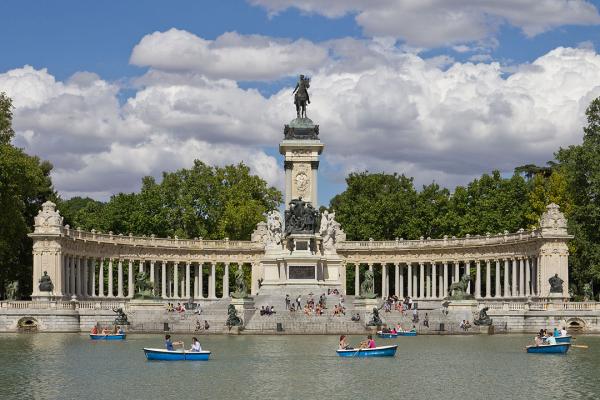
Retiro Park Madrid: What to See and Must-Visit Attractions
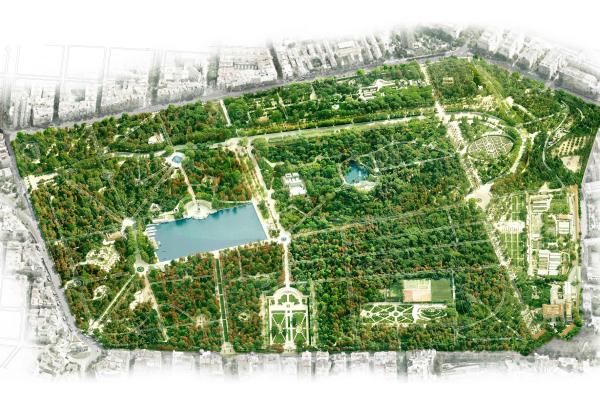
El Retiro Park is much more than Madrid’s main green lung; it is an open-air museum and a UNESCO World Heritage Site. Covering more than 125 hectares, this former royal garden offers a perfect combination of nature, historic architecture and leisure, making it a key landmark among the essential places to visit in Madrid.
From boating on its iconic Great Pond to admiring the light-filled Crystal Palace, strolling through the Rose Garden or relaxing in the Parterre Garden, El Retiro is a unique retreat in the heart of the city. Its central location also makes it easy to combine with other must-see attractions such as the Prado Museum or the majestic Puerta de Alcalá.

Prado Museum Madrid: What to See and How to Visit Spain’s Most Famous Art Museum
Prado Museum is one of Madrid’s essential cultural landmarks and one of the world’s great art museums. Located on Paseo del Prado, it is especially renowned for its outstanding collection of Spanish painting, while also showcasing major works from Italian, Flemish and other European schools.

Santiago Bernabéu Stadium
Located in the heart of Madrid, the Santiago Bernabéu Stadium is one of the city’s most iconic landmarks and the legendary home of Real Madrid CF. Far more than just a football stadium, it offers visitors a unique, immersive blend of world-class sport, history, cutting-edge architecture, and entertainment, making it a must-see attraction for football fans and curious travelers alike. However, the excitement doesn't end at the pitch; Madrid is a city brimming with history, culture, and hidden gems waiting to be discovered. To help you make the most of your trip, check out our curated guide on the best things to see in Madrid to ensure you don't miss a single highlight during your stay.
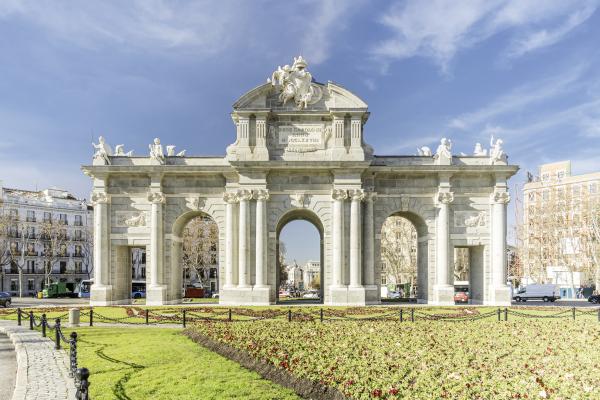
The Cibeles Fountain and the Puerta de Alcalá: Symbols of Monumental Madrid
Welcome to the heart of monumental Madrid, an axis where history, art and urban life come together in perfect harmony. The Cibeles Fountain and the Puerta de Alcalá are not only major architectural landmarks; they are also guardians of the “Landscape of Light” (Paisaje de la Luz), a UNESCO World Heritage Site. We invite you to discover these iconic monuments, located just a short distance from other key landmarks, forming an essential part of the must-see places in Madrid.

Gran Via Madrid
Essential Guide: What to See and Do in Gran Via Madrid
Gran Via Madrid is the heartbeat of Spain’s capital and a must-visit destination for any traveler. Often compared to New York’s Broadway or London’s West End, this iconic avenue is famous for its stunning early 20th-century architecture, world-class musical theaters, and premier shopping districts. Located in the very center of downtown Madrid, it connects seamlessly with the historic Puerta del Sol, creating a vibrant hub for culture and leisure. Whether you are looking for luxury boutiques, historic landmarks, or the best rooftop views in the city, Gran Via offers the ultimate Madrid experience.
If you are planning a trip to the capital, understanding the layout of Gran Via is key. This area is the city’s primary artery, blending historical significance with modern urban energy. From the lights of Callao to the historic shops of Sol, here is everything you need to know to navigate the most famous street in Spain.

La Latina & El Rastro: Madrid’s Historic Streets, Tapas & Flea Market
La Latina is the heart of traditional Madrid and one of the best-located neighborhoods for visitors exploring the city. Its medieval streets form a historic maze that every Sunday leads to El Rastro, Spain’s most famous open-air flea market. One of La Latina’s greatest advantages is its strategic location, just a short walk from many of Madrid’s top attractions.
From here, you can reach Plaza Mayor and Puerta del Sol in less than 10 minutes on foot, while the monumental complex of Palacio Real de Madrid and Catedral de la Almudena is just around the corner.
Visiting this area is the perfect complement after a morning in Parque del Retiro or a shopping session along Gran Vía, offering a more authentic and local side of Madrid filled with tapas bars, historic taverns, and lively atmosphere

Las Ventas Tour - Discover Madrid’s Bullring
The Plaza de Toros de Las Ventas is the world centre of the most traditional Spanish fiesta: bullfighting. Thanks to the Las Ventas Tour, you can discover at your own pace, with an audio guide translated into 10 languages, the most hidden corners of this monumental building, learn about its history and architecture, as well as the rituals of this art that has captivated the public for generations.
You'll be able to visit the bullrings, the stands where the audience attends the show, contemplate the magnificent neo-Arabic style arena, including the royal box, and then go down to the alley and step into the bullring itself, and finish the tour in the beautiful chapel and the Bullfighting Museum of Madrid, with its spectacular range of works by the great masters and costumes of the most important bullfighters in history.
An essential and very attractive visit for all those who want to learn more about the culture and traditions of Spain.
What to see in Madrid
Madrid is best explored by walking through its most iconic neighborhoods and districts, each with its own unique identity. From the historic Habsburg Madrid (Madrid de los Austrias), home to the Royal Palace and Plaza Mayor, to vibrant central hubs like Puerta del Sol and Gran Vía, the city’s main commercial and tourist artery.
The Literary Quarter (Barrio de las Letras) reflects Madrid’s rich literary heritage, while La Latina preserves the city’s most traditional and authentic “castizo” spirit. Areas such as Chueca and Salesas stand out for their modern, creative and cosmopolitan atmosphere, while Malasaña is known for its alternative and youthful character. The elegant Salamanca district represents the most upscale side of Madrid, whereas Chamberí offers a more local and relaxed residential feel.
Other neighborhoods like Lavapiés showcase Madrid’s cultural diversity and multicultural identity, while areas such as Argüelles, Princesa and Conde Duque combine culture, leisure and nightlife. Meanwhile, the Paseo de la Castellana axis highlights the city’s most contemporary skyline, business district and modern architecture.
Exploring Madrid by neighborhoods allows visitors to experience its contrasts in a more authentic way, discovering a city that is both historic and modern, traditional and cosmopolitan, all at the same time.
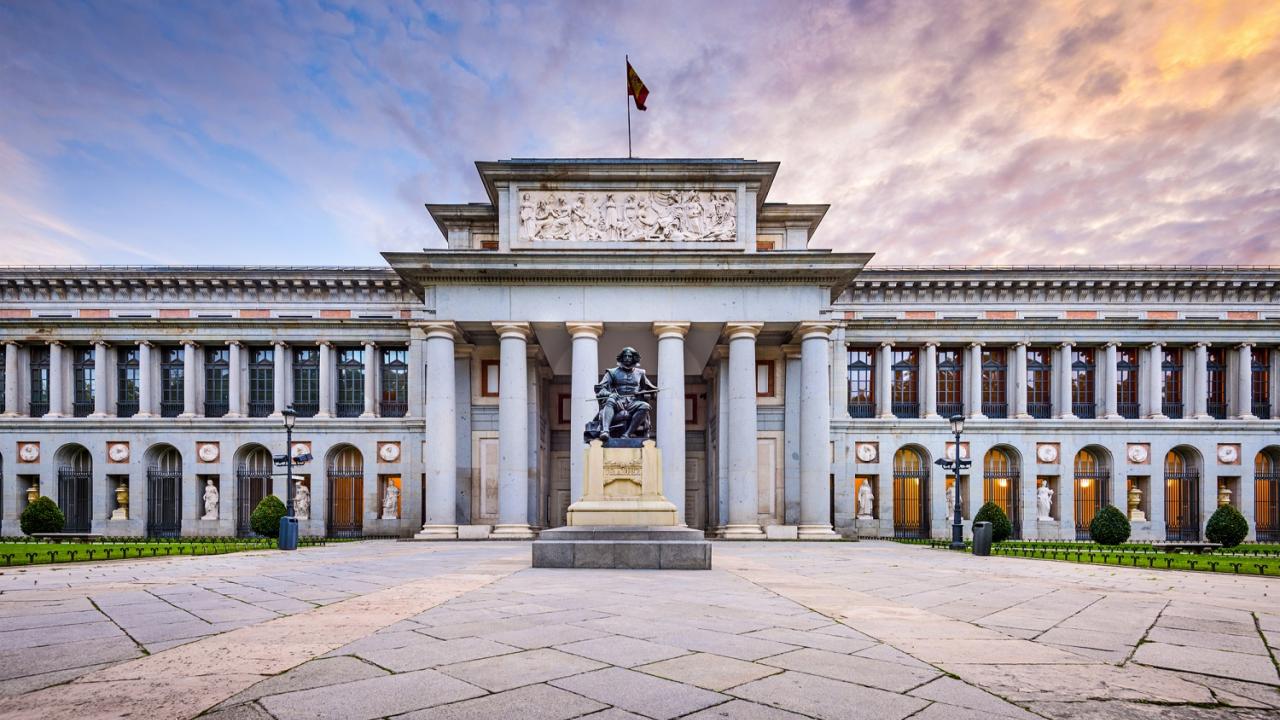
The Landscape of Light: A Journey Through the Art Walk and Buen Retiro Park
The Landscape of Light is a collection of natural and cultural assets located in the heart of Madrid and was declared a UNESCO World Heritage site on July 25, 2021. It is the first site in the city of Madrid to receive this recognition, joining the four others already located within the region (San Lorenzo de El Escorial, Alcalá de Henares, Aranjuez, and the Hayedo de Montejo beech forest).
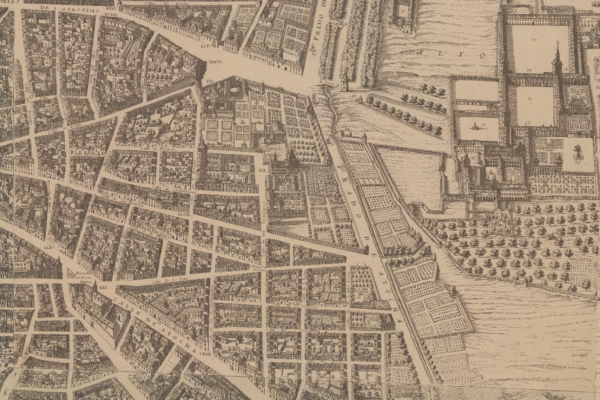
Spanning 200 hectares, the area integrates 109 elements distributed across the Paseo del Prado, the Buen Retiro Gardens, the Jerónimos neighborhood, the Royal Botanical Garden, and surrounding areas. These elements are grouped into three categories: 41 monuments, 48 buildings, and 20 unique trees, forming an exceptional ensemble where nature, art, science, and urban life have been in dialogue for centuries.
The Paseo del Prado is considered the prototype of the 16th-century Hispanic alameda: a tree-lined avenue conceived as a public space for citizen leisure and recreation within an urban setting. It was the first wooded promenade of its kind among European capitals and became a universal model, spreading throughout the Iberian Peninsula and Latin America between the 17th and 19th centuries.
In the 18th century, under the Enlightenment-driven impulse of Charles III, this urban axis was transformed into the backbone of Spanish science. Institutions such as the Cabinet of Natural History (now part of the Prado Museum), the Royal Astronomical Observatory, and the Royal Botanical Garden emerged, creating a space where knowledge, nature, and the city were integrated into an innovative urban project.
Alongside the Buen Retiro Gardens, this urban axis has evolved into a unique cultural landscape, designed and transformed over time. It concentrates institutions dedicated to education, research, and science, as well as museums and cultural centers that beautify the city and keep its Enlightenment spirit alive.


Madrid Itineraries
Exploring the Spanish capital is like stepping into a living museum, and nothing beats the freedom of self-guided routes to discover every corner at your own pace. If you want to experience the very best of the city, your journey should begin with the Essential Madrid route, a vibrant axis that connects the majesty of the Royal Palace with the endless energy of Puerta del Sol, the city’s symbolic heart.
For history and literature lovers, the Literary and Golden Age route is a must. This fascinating walk through the Literary Quarter (Barrio de las Letras) reveals the legacy of writers such as Lope de Vega, while literary quotes engraved in the streets transport you back to Spain’s Golden Age.
No itinerary is complete without immersing yourself in the charm of Habsburg Madrid (Madrid de los Austrias), ending at the iconic Plaza Mayor, the arcaded square where architecture, history and city life come together in one of Madrid’s most emblematic settings.


What to Eat in Madrid

A journey through Spanish and Madrid culinary tradition
Under the arches of Plaza Mayor, in the narrow streets of La Latina, or along the historic arcades of Puerta del Sol, Madrid’s historic restaurants are far more than places to eat. They preserve over 200 years of city life, serving unforgettable dishes while telling the story of Madrid through steaming kitchens, tradition and endless conversations.
The undisputed star of these tables is Cocido Madrileño, Madrid’s most iconic traditional dish. Its aroma of chickpeas, meats and cured sausages defines the very essence of castizo Madrid cuisine, deeply rooted in the city’s identity.
The best historic tapas bars in Madrid
For a classic tapas experience, few places compare to Cervecería Alemana in Plaza de Santa Ana (since 1904), where writers such as Hemingway and Antonio Machado once gathered over plates of garlic shrimp and perfectly prepared Spanish omelettes.
On Calle Tetuán, Casa Labra (1860) is still famous for its crispy fried cod and croquettes—the very same place where Pablo Iglesias founded the PSOE. Meanwhile, Casa Alberto on Calle Huertas (1827) continues to attract generations of literary visitors with its legendary Madrid-style tripe (callos a la madrileña), one of the pillars of traditional local cuisine.
Historic restaurants to try authentic Cocido Madrileño
Among Madrid’s traditional restaurants, Sobrino de Botín (1725) holds the Guinness World Record as the oldest restaurant in the world. Here, roast suckling pig is famously cut with a plate, and lamb is slow-cooked until it melts in your mouth.
However, to experience Madrid’s national dish in its purest form, Lhardy (1839) is an essential stop. This historic restaurant elevates Cocido Madrileño to an art form, serving its traditional “three courses” (soup, chickpeas with vegetables, and meats) in elegant, aristocratic dining rooms. Nearby, in Plaza Mayor, Los Galayos (1894) offers traditional dishes such as oxtail stew and veal offal in an atmosphere reminiscent of Madrid’s Golden Age.
Castizo desserts: churros with chocolate at San Ginés
For dessert, a must-visit is the legendary Chocolatería San Ginés (since 1894). In this historic passageway, freshly fried churros are dipped into thick, rich hot chocolate 24 hours a day, making it the perfect late-night stop after theatre shows or traditional Madrid festivities.
These living culinary landmarks turn every meal into a journey through Madrid’s history. The city is a true gastronomic temple, where historic taverns and century-old restaurants continue to preserve the soul of Spanish cuisine.

