

Art Museums in Madrid
Madrid’s Exceptional Art Museum Scene
Discover Madrid's unique art museum offerings.
The Community of Madrid boasts an exceptional artistic heritage, spearheaded by the four major museums: the Prado Museum (universal Spanish masters), the Thyssen-Bornemisza Museum (a chronological journey through the History of Art), the Reina Sofía Museum (20th-century avant-garde with Guernica), and the spectacular Royal Collections Gallery (royal jewels never before seen in the Royal Palace).
Complete tour of the region
The offerings are further enhanced by unique treasures: the Cerralbo Museum (a 19th-century aristocratic mansion), the Lázaro Galdiano Museum (15,000 privately owned pieces), the Sorolla Museum (Valencian Impressionist light), the Museum of Romanticism (19th-century bohemian salons), the Picasso Museum (early works by the Málaga-born genius), the National Museum of Decorative Arts (historical functional elegance), and the Alcorcón Glass Art Museum (contemporary creations).
The 4 Must-Visit Art Museums in Madrid
Madrid offers one of the most impressive art museum scenes in Europe, combining world-class collections, historic landmarks, and a strong cultural identity. The city is home to museums that appeal to all kinds of visitors, from classical art lovers to those interested in modern and contemporary works. What makes Madrid especially appealing is the variety: major institutions, smaller specialized spaces, and excellent temporary exhibitions all contribute to a rich and rewarding experience. For travelers planning a cultural visit, Madrid stands out as a destination where art is not limited to one museum or one style, but is woven into the life of the city itself.


More Art Museums in the Community of Madrid
Madrid is famous for having four essential art museums that every visitor should know: the Prado Museum, the Reina Sofía Museum, the Thyssen-Bornemisza Museum, and the Sorolla Museum. Together, they offer a complete journey through Spanish and European art, from Old Masters to modern masterpieces and the intimate world of Joaquín Sorolla. Each museum has its own character and highlights, making them ideal for travelers who want to experience the best of Madrid’s cultural heritage. If you are looking for the top art museums in Madrid, these four are the perfect place to begin.

Cerralbo Museum
The Cerralbo Museum is one of the most unique and fascinating cultural spaces in the city and stands as one of the premier art museums in Madrid It offers visitors a rare opportunity to step inside a perfectly preserved aristocratic residence, filled with masterpieces and historical artifacts. Located just steps away from the city center, this palace blends the opulent atmosphere of a 19th-century mansion with a vast collection of decorative arts. To organize your visit, we recommend checking the schedule on the museum’s official website.

Lázaro Galdiano Museum: An Artistic Treasure in the Heart of Madrid
Located in the Salamanca neighborhood, the Museum houses a large collection of works assembled by the editor José Lázaro Galdiano. It exhibits authors such as Goya, Hieronymus Bosch and Zurbarán, as well as weapons, medals and ceramics of great value.
The Lázaro Galdiano Museum opened its doors to the public on January 27, 1951 and its inauguration was a pleasant surprise for the public and professionals related to culture, both due to the richness and variety of the collections, as well as the innovative museography used for its exposure.
Inside you will find works by Hieronymus Bosch, Velázquez and Goya, among other great artists, as well as an interesting collection of miniatures, armor, jewelry, sculptures, drawings, etc. A very complete option in the center of Madrid.
The museum also has a cell phone application to access multimedia guides, with free and paid options. You will find more information about the visit at: www.flg.es/your-visit-to-the-museo-lazaro-galdiano

Sorolla Museum in Madrid: The Painter’s House and Masterpieces
Located in the Chamberí district, in what was the residence and studio of the painter, it was created at the request of Joaquín Sorolla's widow, who bequeathed her assets to the state for the foundation of a museum in memory of her husband. The museum houses the majority of the objects that Joaquín Sorolla gathered during his lifetime. The artist's work predominates, both in painting and drawing, making it the most extensive and representative collection preserved.
It is the house-studio where Joaquín Sorolla lived until the end of his days, donated to the state by his widow, Clotilde García, and inaugurated as a museum in 1932. This Sorolla house-museum was built between 1910 and 1911 and was occupied by the artist and his family at the end of the year.
In the museum, you will find most of the objects Sorolla collected in his lifetime, as well as the majority of his outstanding paintings: "Swimmers," "Stroll by the Sea," "The Siesta," "The Child with the Boat"... You will also find a variety of works acquired by the Spanish State.
The museum's mission is the conservation and public exhibition of authentic works executed by Sorolla, as well as any paintings, art objects, furniture, etc., existing in house 37 on Paseo del General Martínez Campos, and those acquired in the future for said museum. The works collected here come from donations made by his wife and children to the Spanish State to create the museum, and were further augmented in 1951 with the donation of all his assets by Sorolla's son, Joaquín Sorolla García.
In the house-museum, you can see the three gardens, Sorolla's workspace, and the family's living area.

Museum of Romanticism: A Journey to 19th Century Spain
The Museum of Romanticism, housed in a 19th-century building in the heart of Madrid, offers a fascinating window into the life and culture of the Romantic period in Spain (1833-1868). Through its rich collection of works of art, historical objects and period furniture, the museum transports you to an era of contrasts, where passion, imagination and individualism flourished alongside the turbulent social and political realities of the time.
The museum houses a notable collection of Spanish romantic painting, with works by artists such as Antonio Gisbert, José de Madrazo, Francisco Pradilla Ortiz and Federico de Madrazo. These works capture the essence of Romanticism, with their dramatic themes, evocative landscapes, and emotionally charged portraits.
The sculpture collection includes pieces by prominent artists such as Piquer y Pellicer, Gutiérrez de la Vega and José Álvarez Cubero. These sculptures represent heroic figures, mythological scenes and allegories, reflecting the ideals and values of Romanticism.
The museum has a wide collection of decorative arts, such as porcelain, tapestries, fans and furniture. These pieces offer a valuable perspective on the daily life and aesthetic taste of the Romantic era. In addition, it preserves an important collection of historical documents, such as letters, diaries and manuscripts. These documents provide first-hand information about the political, social and cultural events of romantic Spain.

Picasso Museum in Buitrago del Lozoya
Located in Buitrago de Lozoya, the Picasso Museum houses a unique collection based on the friendship between two Spanish exiles: the artist Pablo Ruiz Picasso and his hairdresser Eugenio Arias. The collection was donated by Eugenio Arias to the Provincial Council of Madrid in 1982.
This peculiar collection, made up of 75 pieces, comes from the works that Picasso gave to his friend and confidant as a token of his affection. Picasso's barber wanted the collection to remain in his homeland, Buitrago del Lozoya, giving up his collection to create a space dedicated to Picasso. This collection, of a very varied nature, brings together drawings, graphic works, ceramics, posters, dedicated books and other unique items such as a pyrographed box of hairdressing tools. A perfect plan if you decide to visit one of the most beautiful towns in the Community of Madrid and visit the only museum dedicated to art and friendship.
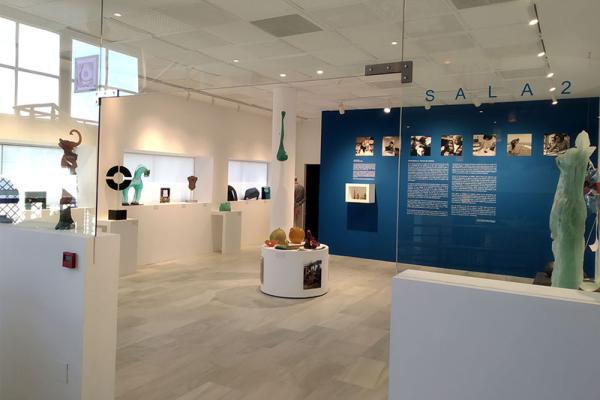
Glass Art Museum of Alcorcón (MAVA)
The Alcorcón Glass Art Museum (MAVA) is a hidden gem for contemporary art lovers. Located in the Castillo Grande de Valderas, this museum immerses us in a universe of color and light, where glass is transformed into a creative tool without limits.
The MAVA was born in 1997 thanks to the initiative of the sculptor Javier Gómez, who dreamed of creating a space dedicated to showcasing the infinite possibilities of glass in contemporary art. His vision became a reality thanks to the generosity of collectors such as Takako Sano and Aldo Bellini, who donated part of their collections to the museum.
The MAVA's permanent collection is made up of more than 200 works by artists from around the world. Sculptures, installations and artistic objects created with glass in all its forms: blown, cast, flat... Each piece is a masterpiece that invites us to reflect on light, transparency and fragility.
The MAVA is not only a museum, but also a center for experimentation and creation. Through workshops, conferences and temporary exhibitions, the museum encourages research and innovation in the field of glass. In addition, the educational workshop equipped with melting furnaces allows visitors to discover the secrets of this fascinating material.

National Museum of Decorative Arts
Located in Madrid’s Golden Triangle of Art, the National Museum of Decorative Arts (MNAD) is one of the city's oldest and richest museums. Housed in a palace at 12 Montalbán Street—near Retiro Park and the Prado Museum—it offers a journey through the evolution of decorative arts, including furniture, ceramics, glass, and textiles, from the 15th to the 20th centuries.
This state-owned institution was established in 1912 as the National Museum of Industrial Arts and adopted its current name in 1927. Originally designed with an educational focus inspired by the Victoria and Albert Museum and the Musée des Arts Décoratifs, it moved in 1932 to the former summer palace of the Duchess of Santoña (built in 1878). The building was later expanded and declared a National Historic-Artistic Monument in 1962.
The museum features 60 exhibition rooms spread across five floors. Some rooms include recreations of historical settings, such as an 18th-century Valencian kitchen decorated with 1,536 tiles. While it houses nearly 70,000 objects, approximately 1,600 are currently on display. It is renowned for its collections of Spanish decorative arts and an extensive international inventory, particularly Oriental art from China (Ming and Qing dynasties), the Philippines, India, Indonesia, Japan, Nepal, and Thailand.
The collection spans from an 11th-century storage jar to European porcelain from Meissen, Delft, Limoges, Capodimonte, and Sèvres. A major highlight is the Italian tin-glazed pottery, bolstered in 2004 by the Enrique Scharlau Bellsch collection. Other notable pieces include 15th- to 17th-century carpets from Cuenca and Alcaraz, Spanish furniture dating back to the 14th century, works from the Buen Retiro Royal Hardstone Workshop, over 550 pieces of silverware, and historic clocks. It also preserves tapestries like The Vision of Ezekiel, textiles dating back to the 2nd century, and a vast glass collection featuring works by Émile Gallé and René Lalique.
Given the breadth and richness of its collections, the National Museum of Decorative Arts is one of Madrid’s most comprehensive cultural spaces. A visit allows you to discover vanished artisanal and industrial techniques while understanding the evolution of taste, design, and daily life over the centuries. It is an essential stop for anyone wishing to explore art and history from a unique perspective in the Spanish capital.


