Torrelaguna, a legacy worthy of admiration
Some things can’t be told; you have to go see them. It happens in a few places: almost everyone’s heard of them, but only a few actually know them. And that’s the big difference: really discovering them requires visiting them. Torrelaguna is one of those places.
Torrelaguna is one of the villages with the most history in the Autonomous Region of Madrid. The birthplace of Cardinal Cisneros, it reached its greatest prosperity in the late 15th and early 16th centuries, coinciding with the period during which the Cardinal was in power. It still has an enviable collection of stately homes, noble and clergy homes, palaces and convents. One could say that architecture made a fortune here or that some lucky ones dedicated a good portion of their tax revenue and ingenuity to build a legacy there worthy of admiration.
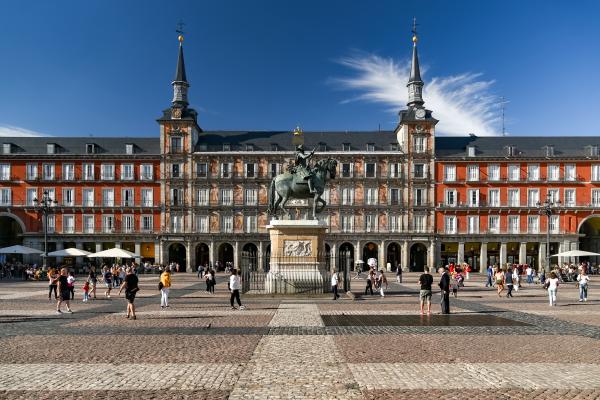
With a medieval feel, Torrelaguna invites travellers to enter its walled enclosure through the door of Santo Cristo de Burgos and to get lost in its streets visiting and admiring its Main Square, an outstanding example of that ancient splendour as well as the nerve centre of the town. You get to this monumental square by crossing through the remains of the old wall at the San Bartolomé arch or Puerta del Sol.
Cardinal Cisneros and Santa María de la Cabeza were both born in Torrelaguna, San Isidro Labrador lived there and the poet Juan de Mena is buried there. The historic centre lives up to such distinguished figures, which is more than noticeable as soon as you first step into the streets.

Church of Santa María Magdalena
Beginning to build itself in the early years of the fifteenth century would be in the times of Cardinal Cisneros when they finished their work.
At the foot of the temple and attached to the north wall, stands the church tower; and, next to it, the main door is placed, divided in three streets separated by buttresses. The lateral spans are pointed and the central one is a carpanel arch. The decorative theme represents the Imposition of the Chasuble to San Ildefonso.
A large baroque altarpiece from the second third of the 18th century, of churrigueresque type, attributed to Narciso Tomé, in gold and polychrome wood supported on a stone base presides the interior of the Temple. In the central street, a large hornacina houses the sculpture of penitent Mary Magdalene, made by Luis Salvador Carmona in the second third of the eighteenth century. In the lateral streets two other niches are opened where the images of San Isidro Labrador and of Santa Maria de la Cabeza rest, natural this one of Torrelaguna.
Inside it is worth stopping to contemplate the Christ of Cisneros, donated by the Catholic Monarchs, and the remains of the poet Juan de Mena. Also the five chapels on the sides of the church: baptismal (16th century), Assumption (17th century), San Gregorio (16th century), Annunciation (16th century) and San Felipe (17th century) ).
The visitor can leave the Temple by the southern portal known as 'the Resurrection or the Passover', with a pointed arch framed by a larger one with a conopial finish and decoration of florets and flaming geometric motifs reflecting the theme of the appearance of the Risen Christ to the Magdalena, although its iconography is very deteriorated.

Main Square of Torrelaguna
An outstanding example of this ancient splendor is its Plaza Mayor. The visitor will be able to access it through the remains of the old wall by the arch of San Bartolomé or the door of the Sun. Another interesting option is the gate of Buitrago that crosses the street of the Star to, leaving to the side the Alhóndiga, to end in her.
The Plaza Mayor gathers some of the most outstanding buildings of Torrelaguna such as the Town Hall, presided over by the cardinalicio shield of Cisneros, who founded it in 1514 to serve as a warehouse or grain store. There is also the church of Santa Maria Magdalena, Gothic style with Renaissance details, basilical plant of three naves, gothic cross vault and campanile tower of the fifteenth century in three bodies with a spire. Another outstanding building is the Abbey of Franciscan Discalced Conceptionists, founded by Hernando Bernaldo de Quirós and his wife around 1560, who rest in its interior. Finally, in the square you can see the Cross of Cisneros, built in 1802 on the place where the house where the Cardinal was born.
Gonzalo Jiménez de Cisneros was born around 1436 in Torrelaguna. In 1484 he became a friar of the Franciscan Observance. From 1492 he began to hold important positions as the royal confessor of Queen Isabella the Catholic, archbishop of Toledo, inquisitor general of Castile and regent of Spain to the death of King Ferdinand the Catholic. He died at Roa in 1517, when he was to meet the future King Charles, leaving innumerable examples of his connection with Torrelaguna; some of which are perfectly visible in the Plaza Mayor.

Town Hall
Presided over by Cardinal Cisneros’ coat of arms, he founded it in 1514 to be used as a granary or grain silo. The construction reflects Renaissance elements in addition to including a few Gothic elements such as the entrance door. The inside of the rectangular building with a gabled roof has been completely modified. Besides a granary, the building has been used for different purposes: the town council building, a primary school, a library and a telegraph station. It currently holds the Town Hall offices.

Cruz de Cisneros
Built in 1802, it’s located right where the Cardinal’s birthplace home once stood. Cardinal Cisneros made many contributions to his birthplace Villa. Worth mentioning are his contributions to the construction of the parish church, the foundation of a hospital, the water supply, the Franciscan convent of the Mother of God, and the granary, as well as charitable works and generous patronage.
Palacios y Casas Solariegas de Torrelaguna
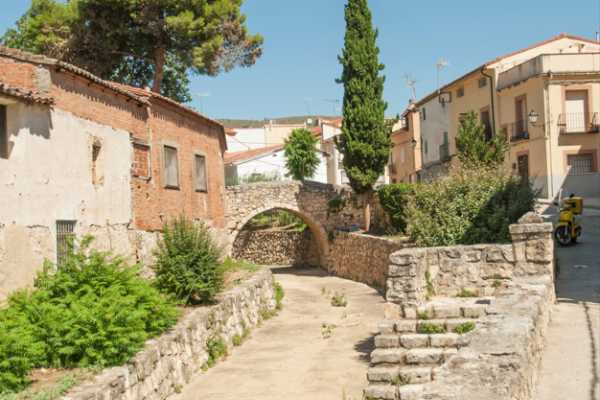
El esplendor civil de la villa se manifiesta en edificios como el Palacio de Salinas, el Palacio de Arteaga o la Casa de los Vargas. Estas construcciones, con sus escudos heráldicos y patios interiores, muestran la pujanza de la nobleza local y la burguesía que floreció bajo el amparo de la corte y la iglesia.
A new window will open

The Alhóndiga
The Alhóndiga was built between the XIV and XV centuries as a market of supplies in the center of the old town of Torrelaguna. After the construction of the deposit and the transfer of the purchase of grain to the Plaza Mayor, it was transformed into a storehouse or salt store. For centuries, salt was the main preservative and ingredient of our more traditional dishes.
The building, with a rectangular shape and two bodies, is made of wood framing over sillarejo walls, all covered by lime and mortar lining, now painted to the old custom. Its interior consisted of small storage rooms that looked out onto a covered patio, perimetered by wooden struts with a corridor on the upper floor, where the storage was counted. The wooden gates that close the entrance maintain different elements of different influence and are a reflection of the popular craftsmanship of the XIV to XVI centuries.
The most characteristic element of this building is the massive body that floats over its walls, supporting the upper roof of Arab tile and all the viguería of the upper floor.
Converted in a restaurant, this has become a benchmark of traditional and creative cuisine in Madrid.
Concepcionistas Franciscanas Descalzas Convent and Abbey
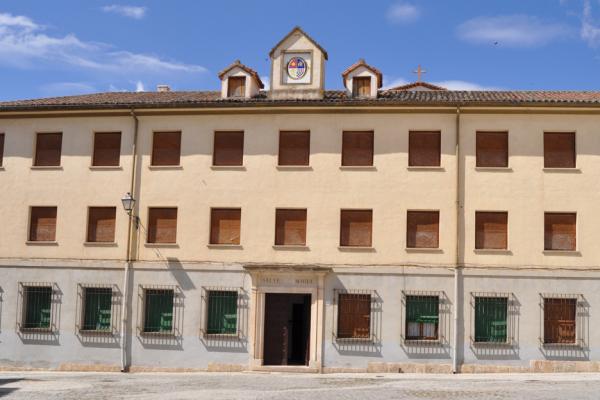
The convent was founded circa 1560 by Hernando Bernaldo de Quirós and his wife, who lay to rest inside. Its origins date back to the Council of Trent era when it was under the Order of Santa Beatriz de Silva. There is almost nothing left of the primitive structure because it was heavily damaged by a bomb during the Civil War. It was rebuilt circa 1960 by the Spanish National Patronage for Devastated Regions. The only outstanding aspect of the entire complex is the chapel with a 17th century altarpiece featuring the Immaculate Conception, the work of sculptor Michael Tomas.
Mural "Milagro de Santa María de la Cabeza" de Román Linacero
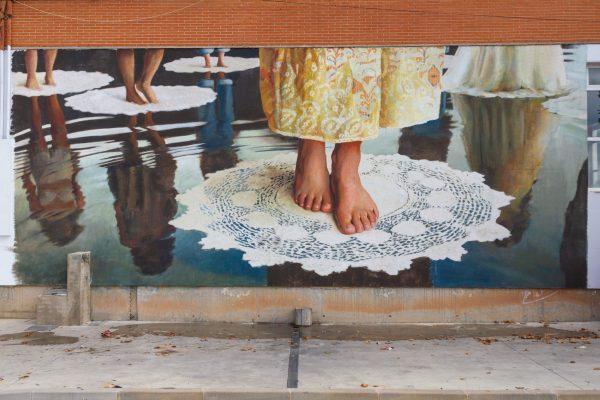
En la pared lateral del Polideportivo (la que da a la calle Camino del Molino de Aceite), se encuentra esta joya, cuyo diseño está basado en una interpretación del milagro de Santa María de la Cabeza, esposa de San Isidro Labrador y uno de los personajes clave de la historia de nuestra Villa. Este mural formal de Román Linacero forma parte del proyecto Paredes que Hablan gracias al cual cada municipio de la Sierra Norte cuenta con una obra de arte mural que no te dejarán indiferente.
Otros imprescindibles que ver en Torrelaguna
Completar la visita a la villa implica asomarse a esos rincones que, aunque alejados del bullicio de la Plaza Mayor, custodian la esencia más profunda del territorio madrileño. El privilegio de explorar otros imprescindibles de Torrelaguna permite descubrir la Atalaya de Arrebatacapas, una torre vigía del siglo IX que formaba parte del sistema defensivo andalusí y que hoy ofrece una de las mejores panorámicas de la Sierra Norte. No menos fascinante es el rastro del Canal de Cabarrús, una obra de ingeniería ilustrada que transformó la economía de la zona
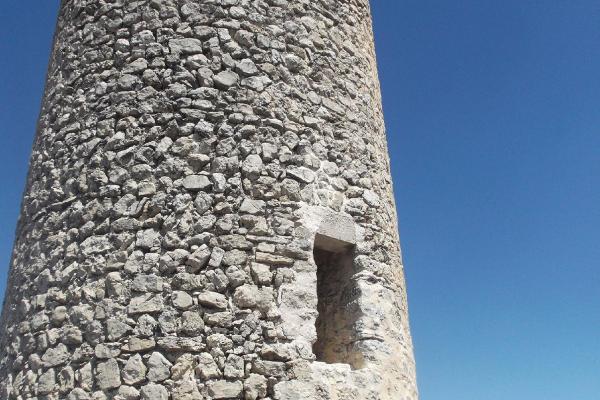
Atalaya Arrebatacapas
You can get to this structure situated over a promontory via the road to El Berrueco. It is part of a group of six watchtowers built by the Muslims in the 9th and 10th centuries and in Vega del Jarama to protect Toledo. It’s a circular watch tower with an outside perimeter of 19 metres and an approximate height of 12 to 13 metres originally although it is now a bit shorter. It is built with rows of irregular masonry and mortar mixed with stone to fill the walls. The inside is divided into three floors. Danger was communicated between the watch towers through camp fires which quickly warned the people and the main area, Talamanca.

Wall Remains and Arco de Burgos (Arch)
It is not clear exactly when construction of the wall began. Some historical sources date it back to the medieval era either of Muslim origin or a result of the Reconquest. One thing is sure though and that is the fact that part of it was begun prior to 1390, possibly taking advantage of some type of previous defensive system. Construction ended in the early 15th century. The wall remained intact until at least the 17th century as reflected in a 1629 engraving. Perhaps all the destruction from the War of Independence began its deterioration, which subsequently increased meaning only some remains may be recognized nowadays yet enough to rebuild the original layout.

Puente Medieval (Medieval Bridge)
In addition to admiring the urban area, it is worth taking a walk through neighborhoods such as La Redondilla which features a lovely hundred-year-old pine tree. Leaving the walled grounds through the Berrueco gate and crossing the Matachivos stream over one of the medieval bridges, you’ll come to the neighbourhood of Arrabal. It grew around the so-called Fuente Gorda or Hontanilla, a watering hole for transhumant cattle with steep, narrow streets that have maintained their charm over the centuries.

Arco de San Bartolomé
La Puerta de Montalbán, also known as Arco del Coso or de San Bartolomé, is located in the square with the same name. It’s made of stone and brick and comprised of two bodies: the upper one, the current headquarters of the «Manuel Vidrié» bullfighting club; and the lower one or the actual arch which is formed by two openings. It was built in the early 20th century to annex the neighbourhood outside the walls yet maintaining the aesthetic identity of the wall construction elements and doorways.

Centro Montalbán – Library
It was built as a primary school in 1915 in accordance with instructions left in 1860 in the will of Mr Juan Manuel Montalbán, the Dean of the Central University of Madrid. The original use was maintained until the construction of new schools. It is now a ceremonial hall and multi-purpose venue. Since 2011 and following the remodelling work done by the Town, it now houses the “Juan de Mena” municipal library.

Carmelitas Convent
Inaugurated in 1905, it was initially a charity foundation working to teach poor children as promoted by Queen Isabel II and her husband, Francisco de Asís. It was financed with the legacy of the Montalbán brothers who chose to be buried inside.
It’s comprised of a Neogothic style church, convent house, classrooms and a residence. The church has a single nave which is covered with cross vaults. Standing out on the inside are the choir at the foot of the temple and the semi-hexagonal apse-shaped headboard.
The amazing bell gable and linteled doorway stand out on the outside. With a rose window and bell gable, the facade was recently restored.

Ermita de la Soledad (Chapel)
When visiting Torrelaguna, it’s well worth the time to walk to the larger chapel. The current Baroque style building, with a Latin cross floor plan and a single masonry nave made of stone and brick, was erected in different phases starting in the 16th century. That was when the rest of the transept was built. The Virgin's dressing room was built in the 18th century and it’s located behind the presbytery, decorated with a painted vault. Stored inside are the different saints the locals carry in procession such as the Laying Christ, a 16th century gem.
Encuentra los imprescindibles de Torrelaguna de un vistazo
Localiza fácilmente los principales atractivos turísticos de Torrelaguna en un solo vistazo. Este mapa te permite identificar de forma clara los puntos de interés más destacados del municipio y planificar tu visita de manera sencilla y eficiente.
Much more in our Tourism Office
Visit us and we’ll tell you all you need to know
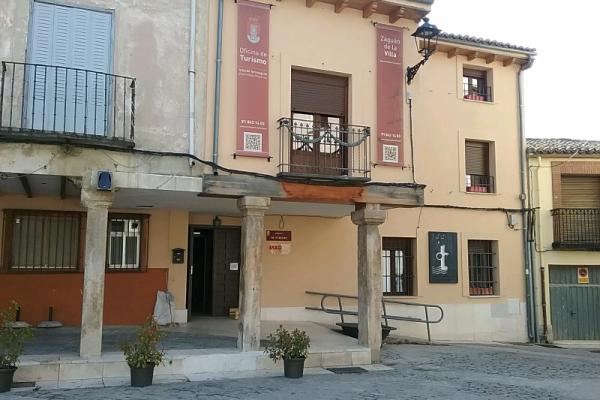
Oficina de Turismo de Torrelaguna
Sumérgete en la historia viva de la Villa de Torrelaguna comenzando tu aventura en el corazón de su Plaza Mayor. El punto de partida ideal es su Oficina de Turismo, donde descubrirás que cada rincón de este municipio tiene una historia que contar. Allí recibirás todos los detalles para explorar su impresionante legado, desde la majestuosidad de sus edificios civiles y religiosos hasta los ecos medievales que aún resuenan en los restos de su antigua muralla.
Si levantas la vista hacia los cerros que abrazan la población, podrás seguir el rastro de las antiguas atalayas de origen árabe, como la emblemática Atalaya de Arrebatacapas, que antaño vigilaban estas tierras. Para quienes prefieren una experiencia más profunda y enriquecedora, nada supera el reservar una visita guiada por la Villa o adentrarse en los secretos arquitectónicos de la Iglesia de Santa María de la Magdalena.
Pásate por la Plaza Mayor, 8, o asómate a su web oficial para diseñar una escapada perfecta donde la cultura y el patrimonio se dan la mano.

Hospital – Casa de la Cultura
The old Hospital de la Santísima Trinidad, now the Casa de la Cultura cultural centre has a complete and interesting history. It is believed to have been a mosque in the 10th century under Muslim rule yet a synagogue following the Christian reconquest in the 11th century and a benefactory hospital founded by the Bernardo de Quirós family in the 15th century. The building was used as such with a few interruptions up to 1967, the year in which it closed as a hospital. It remained abandoned until the Town Council converted it into a cultural centre at the end of the 20th century.
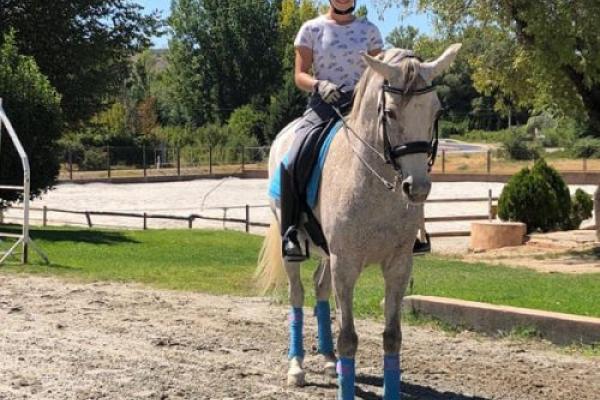
Paseos a Caballo o en Pony
Explora la Sierra Norte a lomos de un caballo en Finca Equilibrium. Ubicados en la histórica Villa de Torrelaguna y a un paso de la capital, te ofrecemos la escapada perfecta para desconectar.
Si buscas qué hacer en Madrid, la Sierra Norte es tu destino ideal: desde turismo activo y rutas familiares hasta delicias gastronómicas y rincones de paz para meditar. Descubre el lado más auténtico y cultural de nuestra sierra.
A new window will open

Calendario de Fiestas y Eventos
Sumergirse en el calendario de fiestas y eventos de Torrelaguna es la mejor forma de conectar con el alma de una villa que ha sabido preservar sus tradiciones a lo largo de los siglos. La vida festiva de la localidad tiene su punto álgido el primer fin de semana de septiembre con las Fiestas Patronales en honor a la Virgen de la Soledad, unos días donde la Plaza Mayor se transforma en el epicentro de la celebración con su emblemática caldereta popular, encierros, festejos taurinos y una variada programación de conciertos y actos culturales.
El privilegio de vivir estas tradiciones alcanza una dimensión histórica y literaria cada mes de enero con la representación del Auto de los Reyes Magos, considerada la primera obra teatral escrita en castellano, a cargo de los propios vecinos en la Iglesia Parroquial. La primavera trae consigo la singular Fiesta de las Cruces a principios de mayo, una jornada de convivencia donde los barrios se engalanan con flores y los vecinos comparten limonada y viandas, seguida de las festividades de las Hermandades locales y la Romería de Santa María de la Cabeza en junio, que rinde homenaje a la santa nativa de la villa.
Desde el recogimiento de la Semana Santa y el alfombrado floral del Corpus Christi, hasta la magia de la Noche de San Juan con sus hogueras en la Plaza Mayor, cada evento es una oportunidad única para descubrir el carácter hospitalario de este destino. Para no perderte ninguna cita, desde los homenajes poéticos a Juan de Mena hasta la solidaria carrera de San Silvestre, te recomendamos consultar el calendario oficial de eventos de Torrelaguna, la guía imprescindible para planificar tu escapada y disfrutar de la historia viva de la Comunidad de Madrid.
Rutas por Torrelaguna
Patrimonio, Peregrinaje y Cicloturismo
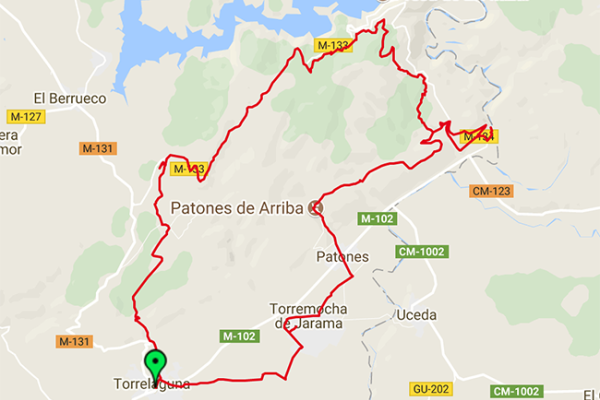
Explorar las rutas por Torrelaguna es descubrir un territorio donde la historia se funde con la orografía de la Sierra Norte, ofreciendo itinerarios que van mucho más allá de su emblemático centro urbano. Este entorno invita a recorrer la ruta de Torrelaguna Imprescindible, un paseo por los hitos arquitectónicos que definen la identidad de la villa, o a aventurarse en el trayecto de largo recorrido que conecta San Lorenzo de El Escorial con Torrelaguna, una travesía que permite contemplar la diversidad de paisajes de la Comunidad de Madrid.
El privilegio de caminar por estas tierras alcanza su dimensión más espiritual e histórica al seguir las dos etapas del Camino Mendocino, un ramal del Camino de Santiago que atraviesa la villa uniendo el patrimonio de los Mendoza con la ruta jacobea. Por su parte, los aficionados a las dos ruedas encuentran su espacio ideal con las dos etapas del Gran Tour de CiclaMadrid, que consolidan a la zona como un referente del cicloturismo de calidad.




Gastronomía: ¿Dónde comer en Torrelaguna?
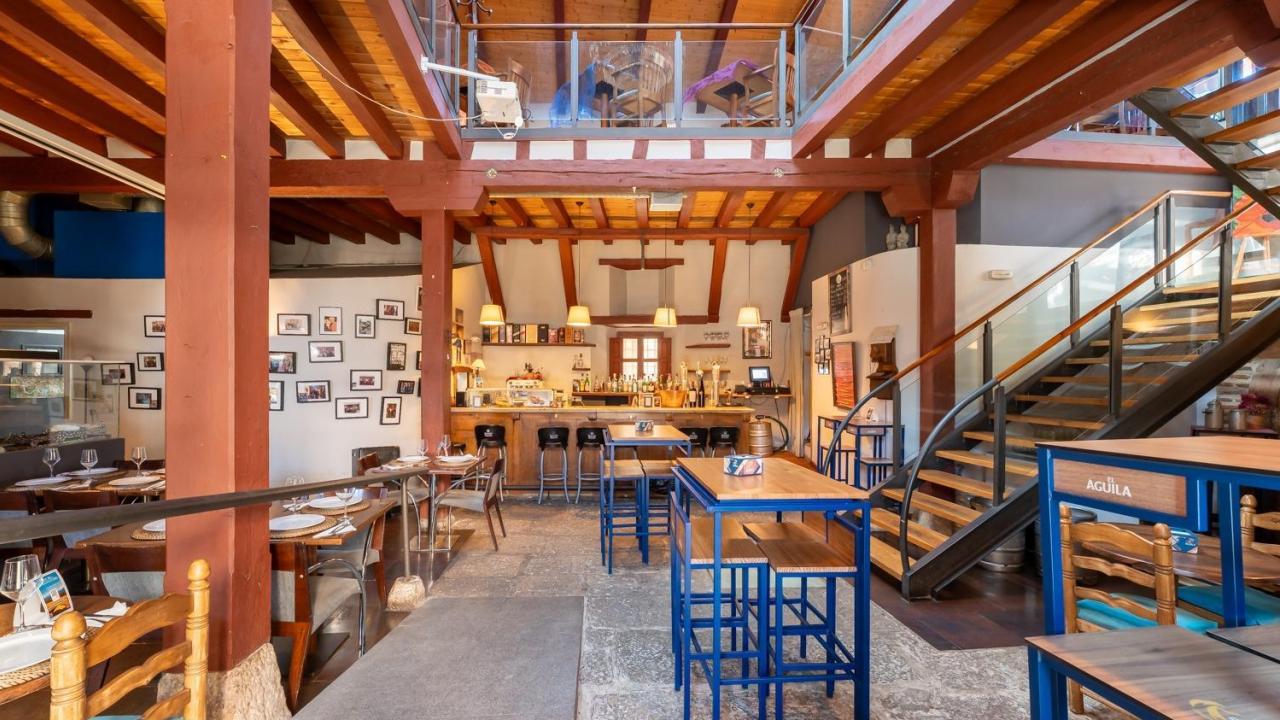
Hablar de la gastronomía en Torrelaguna es rendir homenaje al recetario castellano más auténtico, donde el aroma a leña de encina guía al comensal hacia experiencias culinarias inolvidables en sus asadores tradicionales. La experiencia de comer en esta villa tiene su epicentro en los mesones cercanos a la Plaza Mayor, donde el cordero y el lechazo asado son los protagonistas indiscutibles junto a platos reconfortantes como las migas o los judiones. El privilegio de degustar estos manjares alcanza su máxima expresión al maridarlos con los vinos de la región o al finalizar la jornada con su pastelería tradicional. Este legado artesano cobra vida en dulces como los pestiños o los productos de repostería que endulzan el paseo por sus calles empedradas y cierran con broche de oro cualquier banquete torrelagunense.
Para garantizar una visita perfecta y descubrir todos los rincones donde saborear estos platos y dulces típicos, te recomendamos consultar el listado oficial de restaurantes de Torrelaguna, una guía imprescindible para elegir entre los establecimientos que mejor preservan la herencia culinaria de la zona.
Alojamiento: ¿Dónde dormir en Torrelaguna?
Elegir dónde dormir en Torrelaguna es la mejor forma de completar una inmersión total en la calma de la Sierra Norte, permitiendo disfrutar del patrimonio de la villa con total serenidad una vez cae el sol. La oferta de alojamiento destaca por su capacidad de fusionar el confort moderno con edificios cargados de historia, desde acogedores apartamentos turísticos en pleno casco antiguo hasta hoteles rurales con encanto que ocupan antiguas casonas rehabilitadas con vigas de madera y muros de piedra originales. Ya sea que busques un refugio familiar o una escapada romántica, la hospitalidad local garantiza una estancia inolvidable.
Para encontrar la opción que mejor se adapte a tus necesidades y asegurar tu reserva en los establecimientos más auténticos, te recomendamos consultar el listado oficial de alojamientos de Torrelaguna, una guía esencial para planificar tu descanso en la cuna de Cisneros.
¿Cómo llegar a Torrelaguna?
Descubre como llegar y moverte por Torrelaguna fácilmente
Torrelaguna goza de una ubicación estratégica en el nordeste de la Comunidad de Madrid, actuando como puerta de entrada a la Sierra Norte. Su excelente conectividad facilita el acceso desde la capital y otros puntos de la región, ofreciendo diversas alternativas tanto para quienes optan por el vehículo privado como para los usuarios del transporte público.
Acceso por carretera
Para quienes viajen en coche, la principal vía de comunicación es la Autovía del Norte (A-1). El acceso más habitual se realiza a través de la salida 50, conectando con la carretera N-320, que conduce directamente al municipio. Asimismo, la M-103 ofrece una ruta alternativa y paisajística a través de Algete y Fuente el Saz de Jarama. La fluidez de estas vías permite situarse en el centro de Madrid en un tiempo estimado de cuarenta y cinco a cincuenta minutos, conectando además la villa con la vecina provincia de Guadalajara.
Transporte público interurbano
La conectividad con Madrid y los municipios de la sierra está garantizada mediante una red de autobuses interurbanos que enlazan el casco histórico con los principales intercambiadores y nodos de transporte.
- Conexión con Madrid: Desde el intercambiador de Plaza de Castilla, parten de forma regular las líneas 197 y 197C. La línea 197 es la principal arteria de transporte, ofreciendo un servicio frecuente que une la capital con el municipio.
- Conexiones transversales y de sierra: Torrelaguna funciona como un nodo de transporte para la Sierra Norte. Líneas como la 197A, 197B, 197D y 197E enlazan la localidad con núcleos cercanos como Uceda, El Berrueco, Valdepeñas de la Sierra o La Cabrera. Además, la línea 913 conecta el municipio con el enclave del Pontón de la Oliva y Patones.
- Servicio nocturno: Para los desplazamientos durante la madrugada, el servicio nocturno de la línea N103 facilita la movilidad desde Madrid, asegurando el retorno a la localidad fuera del horario diurno.
Movilidad interna y accesibilidad
Una vez en la villa, el movimiento por su conjunto histórico, declarado Bien de Interés Cultural, se realiza de forma cómoda y peatonal. Las paradas de autobús están ubicadas estratégicamente para facilitar el acceso a la Plaza Mayor, la Iglesia de la Magdalena y los servicios municipales. Para quienes acceden en vehículo privado, el municipio dispone de zonas de aparcamiento en las inmediaciones del centro histórico para evitar la saturación de las calles de origen medieval, permitiendo una experiencia turística y residencial más fluida.
Para planificar su viaje con mayor precisión y conocer la ubicación exacta de las paradas y frecuencias, descarga los mapas de transporte oficiales disponibles en esta sección. Contar con estos planos en su dispositivo le permitirá optimizar sus desplazamientos y disfrutar de la villa de Torrelaguna con total comodidad
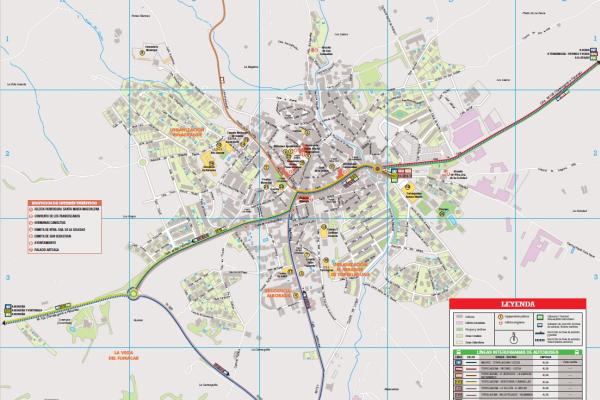 Mapa de Torrelaguna
A new window will open

The villas invite you to disconnect
Find a plan tailored to you