Cocido madrileño is one of the most iconic traditional dishes in Madrid and a key part of the city’s culinary identity. More than just a recipe, it represents a deeply rooted social tradition connected to family life and local culture. Recognized as part of the intangible cultural heritage of the Madrid region, this hearty chickpea stew reflects centuries of history, customs and shared experiences. Discover why cocido madrileño is one of the must-try food experiences in Madrid.
What is Cocido Madrileño
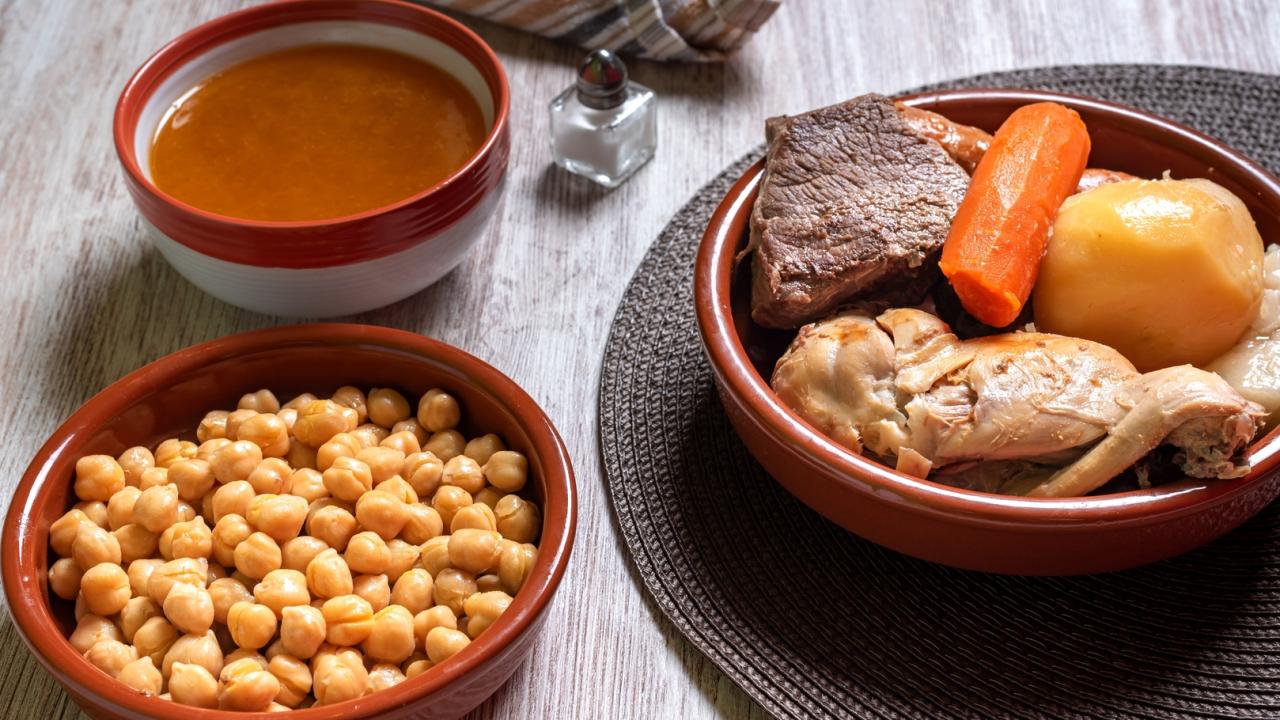
Cocido madrileño is a traditional chickpea stew from Madrid, typically made with a combination of meats, vegetables and a rich broth. It is traditionally served in vuelcos (separate courses), allowing diners to enjoy the soup first, followed by chickpeas and vegetables, and finally the meats.
Beyond its ingredients, cocido madrileño is deeply connected to social and family traditions, making it much more than a dish—it is a symbol of shared meals, slow dining and collective identity in Madrid.
Why Cocido Madrileño Matters in Madrid

A traditional dish with social meaning
Cocido madrileño has long been associated with family gatherings, Sunday meals and special occasions. It plays an important role in everyday life, bringing people together around the table and strengthening social bonds across generations.
A symbol of Madrid’s culinary identity
Cocido madrileño is one of the most representative dishes of the Madrid region, enjoyed both in the city and in surrounding areas. Its strong presence in restaurants, homes and local traditions makes it one of the most recognizable symbols of Madrid’s food culture and a must-try for anyone exploring what to eat in Madrid.
The History of Cocido Madrileño
From olla podrida to cocido madrileño
The origins of cocido madrileño can be traced back to olla podrida, a traditional Spanish stew documented as early as the 16th and 17th centuries. Over time, this dish evolved by adapting to local ingredients and customs, eventually developing into a distinct Madrid-style version centered around chickpeas and a specific mix of meats.
From noble tables to popular Madrid
Originally linked to noble and upper-class dining, cocido gradually spread across all social classes. By the 19th century, it had become a staple in inns, taverns and traditional eateries, establishing itself as a defining dish of Madrid’s popular cuisine.
A dish rooted in everyday life
During the 20th century, cocido madrileño became a common meal in working-class households, especially as a traditional Sunday dish. Its nourishing and hearty nature helped secure its place as a cornerstone of Madrid’s everyday food culture.
Cocido Madrileño as Intangible Cultural Heritage
Intangible heritage in the Community of Madrid
Cocido madrileño is recognized as part of the intangible cultural heritage of the Madrid region. This status highlights its importance not only as a traditional recipe but also as a cultural expression that reflects social practices, identity and historical continuity.
A living tradition, not just a dish
The dish is deeply embedded in local customs, language and traditions. It represents shared habits and collective memory, making it a living part of Madrid’s cultural landscape rather than just a culinary preparation.
A tradition with local variants
While cocido madrileño has a well-defined core, there are variations across the region depending on local ingredients and traditions. These differences reinforce its status as a living tradition that continues to evolve while preserving its cultural roots.
Cocido Madrileño in Madrid Today
A dish still served in traditional Madrid restaurants
Cocido madrileño remains widely available in traditional restaurants across Madrid, where it continues to be prepared using time-honored recipes and cooking techniques. Its presence on menus today highlights its role as a living and relevant culinary tradition.
Festivals, food routes and where to try cocido madrileño
Cocido madrileño continues to play an active role in Madrid’s food scene through culinary events and seasonal menus, including the well-known “Ruta del Cocido Madrileño,” which brings together restaurants across the region.
Some of the best places to try cocido madrileño in Madrid include historic and traditional establishments known for preserving classic recipes:
- Lhardy – Carrera de San Jerónimo, 8, Madrid
- Taberna La Bola – Calle de la Bola, 5, Madrid
- Malacatín – Calle de la Ruda, 5, Madrid
- La Daniela – Calle de Cuchilleros, 9, Madrid
These restaurants are widely recognized for serving authentic cocido madrileño using traditional methods, making them ideal stops for visitors interested in experiencing Madrid’s classic cuisine.
FAQ about Cocido Madrileño
What is cocido madrileño?
It is a traditional Madrid stew made with chickpeas, meat and vegetables, typically served in separate courses known as vuelcos.
Why is cocido madrileño important in Madrid?
It is a key part of the city’s culinary identity and a social tradition linked to family meals, gatherings and everyday life.
Is cocido madrileño part of Madrid’s cultural heritage?
Yes. It is recognized as part of the intangible cultural heritage of the Madrid region due to its historical and cultural significance.
What makes cocido madrileño different from a recipe page?
It represents more than ingredients or preparation—it reflects traditions, social customs and shared experiences that define Madrid’s culture.
Where can you try cocido madrileño in Madrid?
Visitors can enjoy it in traditional restaurants and historic eateries such as Lhardy, La Bola or Malacatín, as well as through food routes and culinary events dedicated to this iconic dish.