Teatro Real of Madrid: The Grand Temple of Opera in Plaza de Oriente
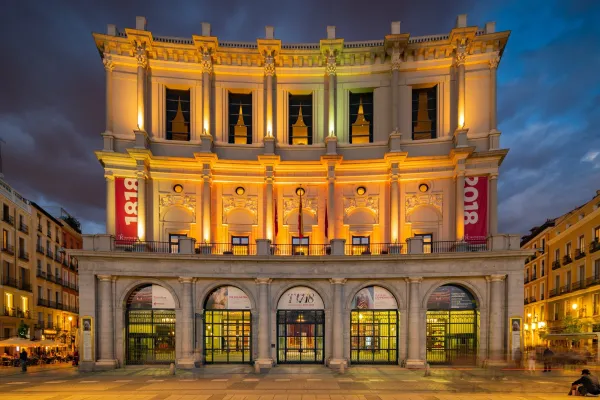
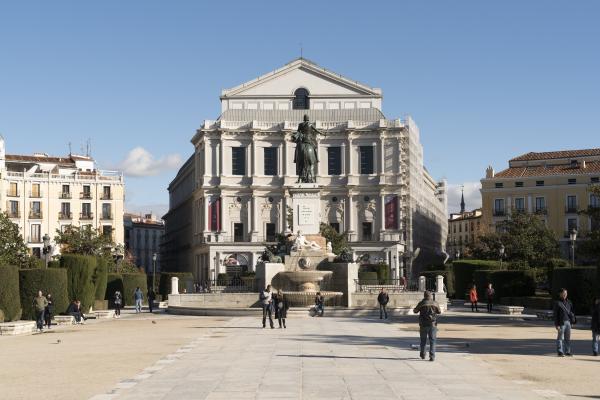
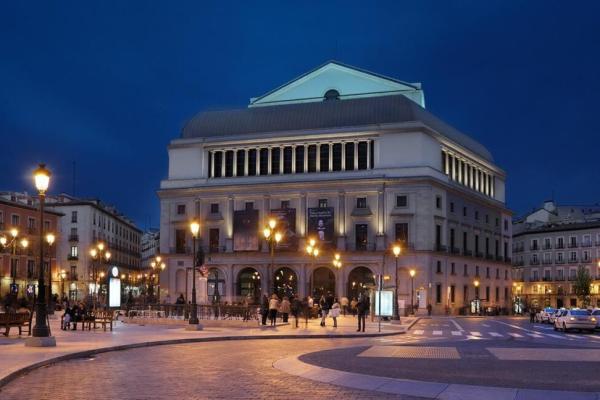
In the heart of Madrid, facing the Royal Palace and next to the historic Austrias neighborhood, stands the Teatro Real, one of Europe’s leading opera houses and Spain’s premier institution for performing arts and music. With more than 150 years of history, this iconic building blends tradition, monumental architecture, and cutting-edge technology.
The story of the Teatro Real began in 1818, when King Ferdinand VII commissioned the construction of a grand opera house in Plaza de Oriente. The project was designed by architect Antonio López Aguado, who envisioned an irregular hexagonal building with its main façade facing the square.
After decades of delays and modifications, the theater was finally inaugurated on November 19, 1850, by Queen Isabella II. The opening performance was Gaetano Donizetti’s opera La favorita, performed by prominent international artists of the time.
During the second half of the 19th century, the Teatro Real enjoyed a period of great splendor, becoming one of Europe’s leading lyrical stages. The theater hosted renowned singers and conductors, and Madrid audiences experienced works by composers such as Donizetti, Bellini, Rossini, and Verdi, whose visit in 1863 was a major social event.
After decades of projects and renovations, the building reopened in 1966 as a concert hall, serving for years as Madrid’s principal symphonic venue, welcoming some of the world’s most prestigious orchestras and conductors. Finally, in 1997, the Teatro Real reopened as a fully operational opera house, restoring Madrid’s access to one of its most important cultural institutions.
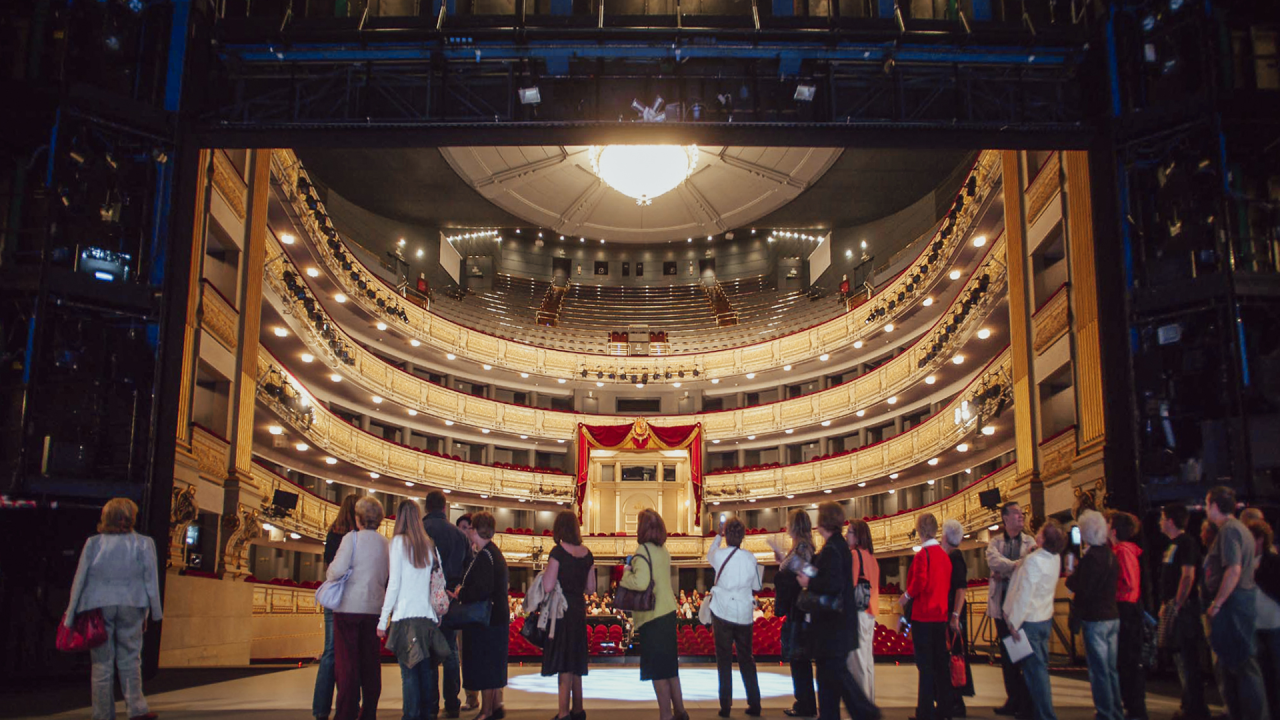
The Teatro Real can accommodate up to 1,958 spectators. Its Main Hall, in the Italian style, reproduces the original 19th-century theater layout and preserves its elegant historical décor.
Behind the stage lies one of the most advanced stage systems in Europe, featuring an innovative stacked platform mechanism that allows multiple sets to be prepared simultaneously and switched quickly during performances.
Beyond the auditorium, the building houses numerous distinctive spaces, including historic second-floor salons that recreate the 19th-century opera atmosphere and display important works of art from Spain’s National Heritage and the Prado Museum.
Today, the Teatro Real offers an intense artistic program, with around 180 opera and ballet performances per season, alongside concerts, recitals, and cultural events. Since 1998, its resident orchestra has been the Madrid Symphony Orchestra.
The theater also runs educational programs and outreach initiatives, bringing opera closer to children and young audiences through specialized pedagogical activities.
In recent decades, the Teatro Real has hosted major cultural and social events, including the 1969 Eurovision Song Contest, the 2011 Goya Awards, and the Extraordinary Christmas Lottery since 2012.
Visiting the Teatro Real is not only an opportunity to admire one of Madrid’s most emblematic buildings, but also to experience a unique cultural space where history, art, architecture, and music come together in the heart of the city.
Discover the Teatro Real in Pictures