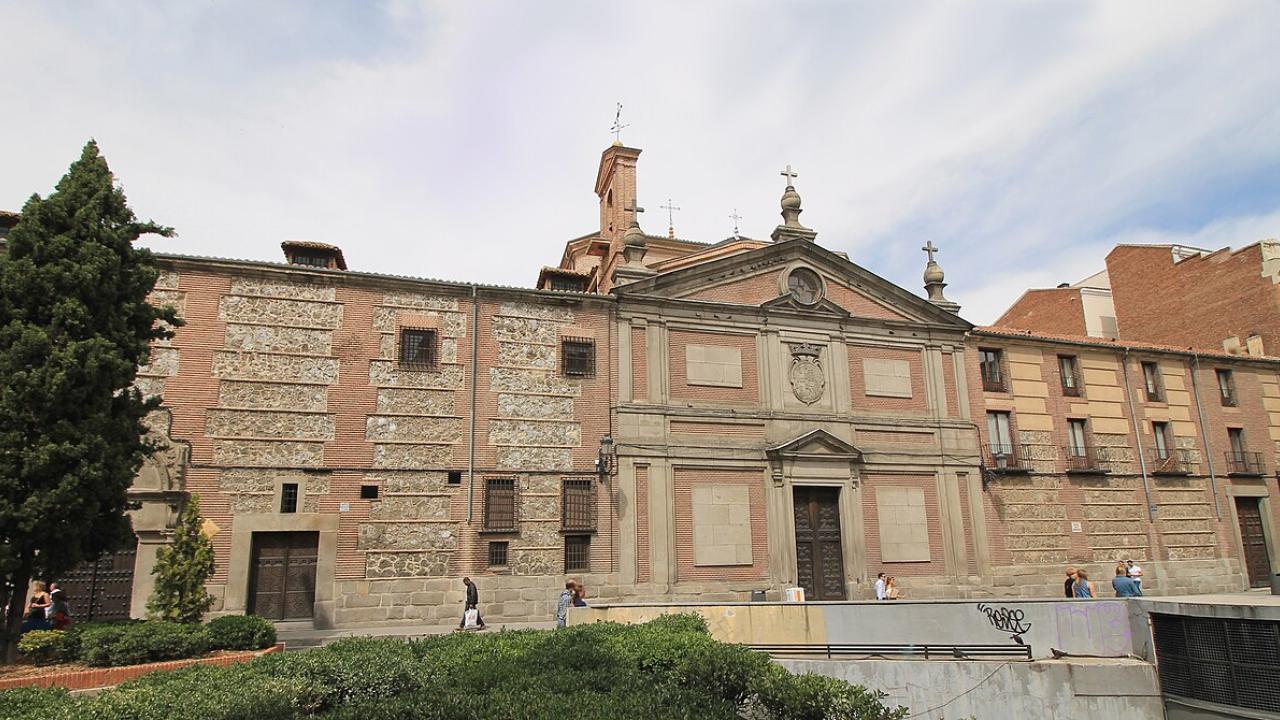
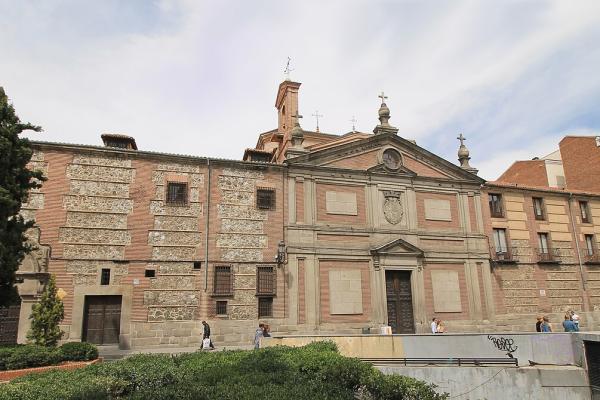
Monastery of the Descalzas Reales
Monastery of the Descalzas Reales: History, Art, and Spirituality in the Heart of Madrid
In the very center of Madrid, close to Puerta del Sol and Calle de Preciados, stands the Monastery of the Descalzas Reales, one of the city’s most distinctive historic and artistic landmarks. This cloistered monastery, officially known as the Monastery of Our Lady of the Visitation, was founded in 1559 by Joanna of Austria, sister of Philip II of Spain and widow of the Portuguese prince João Manuel, Prince of Portugal. Today, in addition to its religious function, part of the building is open to visitors as a museum.
The monastery stands on the site of a former palace linked to the nobility and the royal court since the Middle Ages. This residence belonged to the imperial treasurer Alonso Gutiérrez de Madrid, and it was here that Joanna of Austria herself was born. After becoming a widow, she decided to transform the family residence into a convent.
The foundation of the monastery was celebrated in 1559 with a solemn procession attended by Philip II of Spain and members of the royal family. Over the centuries, many women from royal and aristocratic families entered the convent. Thanks to their donations and patronage, the monastery accumulated an extraordinary artistic heritage that remains one of its main cultural attractions today.
Among the historical figures associated with the Descalzas Reales, one of the most notable is Maria of Austria, sister of Philip II and widow of Maximilian II, Holy Roman Emperor. The empress retired to the monastery in 1580 with her daughter Margaret, who became a nun there. Maria of Austria spent the final years of her life in the convent and helped enhance its prestige.
The monastery was also connected with important cultural figures. The Renaissance composer Tomás Luis de Victoria served as chaplain to the empress and later as organist of the monastery until his death in 1611.
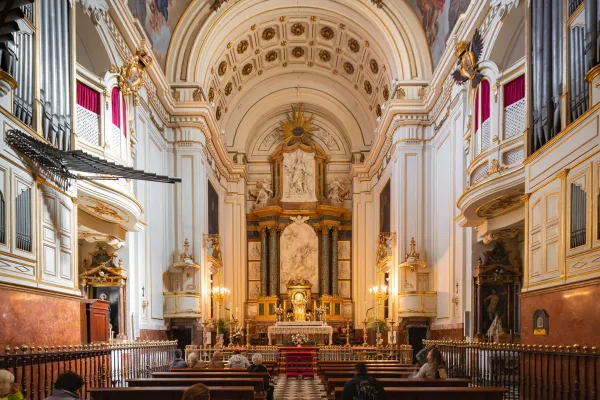
The monastery church was completed in 1564. Its exterior has traditionally been associated with the architect Juan Bautista de Toledo, while the interior design is attributed to the Italian engineer Francesco Paciotto.
Among the artworks displayed in the church is the kneeling statue of Joanna of Austria, sculpted in marble by Pompeo Leoni and placed within a small temple designed by Jacopo da Trezzo.
The monastery’s cloister is one of its most emblematic spaces. During Holy Week, solemn processions are held there, including the Good Friday procession, accompanied by early music dating back to the time of the convent’s foundation.
This space also displays some of the monastery’s artistic treasures. Particularly notable is the series of tapestries known as The Eucharistic Apothesis, produced in Flemish workshops from designs by the painter Peter Paul Rubens. This Baroque ensemble is considered one of the artist’s most ambitious projects.
For centuries, the cloister also housed an Annunciation by Fra Angelico, which is now preserved in the Museo del Prado.
One of the most striking features of the monastery is its main staircase, built in the 16th century and decorated with murals completed in 1661. Its ornamentation reflects the influence of the Italian artists Agostino Mitelli and Angelo Michele Colonna.
Court painters such as Francisco Rizi, Juan Carreño de Miranda, and Dionisio Mantuano also contributed to the decoration, creating a pictorial scenography that surrounds the entire staircase.
Another notable space is the Chapel of the Miracle, built at the initiative of John of Austria the Younger to house a painting of the Virgin attributed to Paolo de San Leocadio. Its illusionistic decoration includes paintings by Francisco Rizi and architectural trompe-l’œil effects by Dionisio Mantuano.
The Monastery of the Descalzas Reales is much more than a convent. Its close connection with the Spanish monarchy, the richness of its artistic collections, and its location in the heart of Madrid make it an essential visit for anyone wishing to discover one of the city’s most remarkable historical treasures.
Visit the Monastery of the Descalzas Reales
Visit the official website and book your tickets to discover the Monastery of the Descalzas Reales.
Discover the Monastery of the Descalzas Reales in Pictures