

Discover Sierra de Guadarrama
The Sierra de Guadarrama is one of the most important natural areas near Madrid, offering mountain landscapes, forests and scenic routes just a short distance from the city. Located between Madrid and Segovia, the Sierra de Guadarrama is home to the Sierra de Guadarrama National Park, one of Spain’s most important protected natural spaces.
It is an ideal destination for visitors looking for nature near Madrid, whether for hiking, outdoor activities or a peaceful mountain escape. The area combines natural heritage, mountain villages and scenic landscapes, making Sierra de Guadarrama one of the most visited regions in the Community of Madrid.
Why visit Sierra de Guadarrama
Sierra de Guadarrama offers a diverse natural landscape with mountains, pine forests, valleys and high-altitude lagoons that change throughout the seasons. Its proximity to Madrid makes it one of the most popular destinations for day trips and weekend escapes, combining fresh air, outdoor activities and panoramic views.
In addition to its natural beauty, the region is home to some of the best-known mountain villages in the Madrid region, where local traditions, gastronomy and outdoor experiences are an essential part of the visit.
Sierra de Guadarrama National Park and outdoor activities
Sierra de Guadarrama National Park
The Sierra de Guadarrama National Park is the main natural landmark of the region and one of the most important national parks in Spain. Its high mountain landscapes, Scots pine forests and granite rock formations make it one of the best places to enjoy nature near Madrid.
The park’s biodiversity and easy access from the capital make it a perfect destination for hiking, nature escapes and outdoor activities throughout the year.
Mountain sports and winter activities
Sierra de Guadarrama is one of the top mountain destinations near Madrid for hiking, mountain trails and outdoor activities. Its network of paths and scenic routes crosses forests, mountain passes and natural viewpoints with some of the most spectacular landscapes in central Spain.
During winter, areas such as Navacerrada and Cotos become popular destinations for snow activities and mountain tourism, keeping the Sierra active in every season.
Sierra de Guadarrama train
One of the most distinctive ways to reach the mountains is through the historic railway connecting Cercedilla with Navacerrada and Cotos. This scenic train route provides direct access to the national park and makes it easy to organise hiking trips and nature excursions without a car.
What to see in Sierra de Guadarrama
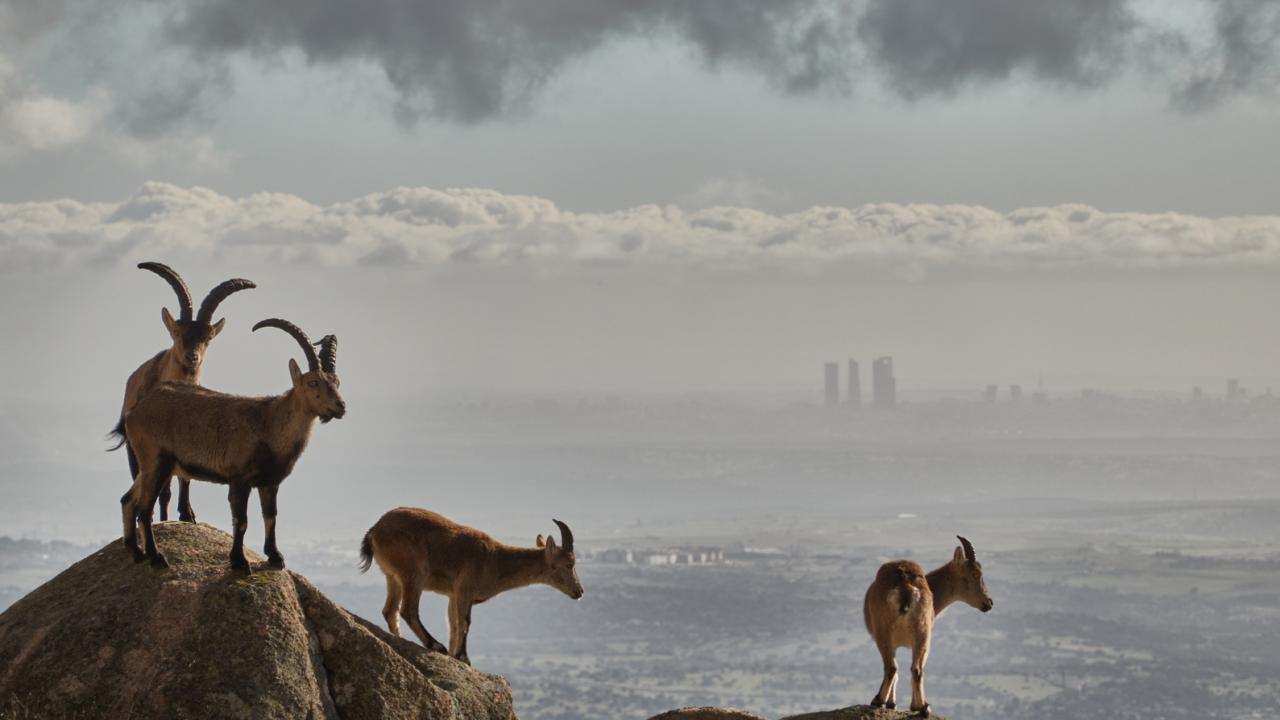
Nature and heritage villages in the Sierra
Sierra de Guadarrama is home to some of the most visited mountain villages in the Community of Madrid. Destinations such as Cercedilla, Navacerrada, Manzanares el Real and Guadarrama stand out for their natural surroundings and direct access to hiking routes and protected areas, although many other villages in the region also offer strong tourist appeal.
Main villages to discover in Sierra de Guadarrama
Cercedilla is one of the main gateways to the national park and one of the most popular destinations for hiking and outdoor activities. Its mountain routes and railway connection make it a strategic base for exploring the Sierra.
Navacerrada is known for its mountain scenery and its strong connection to snow and winter tourism. Its proximity to mountain passes and natural routes makes it one of the best-known destinations in Sierra de Guadarrama.
Manzanares el Real offers privileged access to La Pedriza and some of the most spectacular landscapes in the national park. Nature, heritage and outdoor activities make this village one of the highlights of the Sierra.
Guadarrama has long been associated with mountain tourism and nature escapes near Madrid. Its natural surroundings and connection to mountain routes make it a popular destination for outdoor activities.
Other interesting villages in Sierra de Guadarrama
Beyond the best-known destinations, Sierra de Guadarrama includes many charming villages where visitors can enjoy mountain landscapes, heritage and a peaceful atmosphere.
Alpedrete is known for its stone-working tradition and its proximity to some of the Sierra’s main natural areas.
Becerril de la Sierra combines mountain charm, nature routes and panoramic views.
El Boalo, Cerceda and Mataelpino are villages located next to La Pedriza, highly appreciated by hikers and nature lovers.
Collado Mediano preserves the traditional atmosphere of mountain villages and provides access to several hiking routes and natural spaces.
Guadalix de la Sierra stands out for its open landscapes and peaceful atmosphere in the heart of the Madrid mountains.
Hoyo de Manzanares combines natural heritage with proximity to protected areas of high ecological value.
Miraflores de la Sierra is one of the best-known villages in northern Madrid, famous for its natural surroundings and mountain routes.
Los Molinos offers a peaceful setting surrounded by nature and a strong mountain heritage.
Natural areas near Madrid in Sierra de Guadarrama
Forests, valleys and mountain landscapes
Sierra de Guadarrama features some of the most spectacular mountain landscapes near Madrid, including extensive pine forests, glacial valleys and granite rock formations characteristic of central Spain.
Hiking routes and scenic trails near Madrid
The Sierra offers numerous hiking routes and scenic trails that lead to natural viewpoints, mountain passes and protected landscapes just a short distance from Madrid.
How to plan your visit to Sierra de Guadarrama
How to get to Sierra de Guadarrama from Madrid
Sierra de Guadarrama is located less than one hour from Madrid and offers excellent connections by both car and public transport, making it ideal for day trips and weekend escapes.
By car, the main access routes are the A-6 and the M-607, which connect directly with towns such as Guadarrama, Cercedilla, Navacerrada and Manzanares el Real.
It is also possible to reach the Sierra by public transport using Cercanías commuter trains and intercity bus lines from Madrid. The C-8 train line connects the city with mountain villages such as Cercedilla and Los Molinos, while the historic mountain railway continues to Navacerrada and Cotos in the heart of the national park.
For visitors looking for hiking routes and nature experiences without using a car, public transport makes Sierra de Guadarrama one of the most accessible natural destinations near Madrid.
Best areas for hiking, heritage and viewpoints
Cercedilla, Navacerrada, Manzanares el Real and the surroundings of the national park include some of the best hiking routes, viewpoints and natural landscapes in the Sierra.
A day trip or a weekend in the Sierra
Its proximity to Madrid makes Sierra de Guadarrama perfect for both short escapes and full weekend trips combining nature, gastronomy and mountain villages.
What to eat in Sierra de Guadarrama
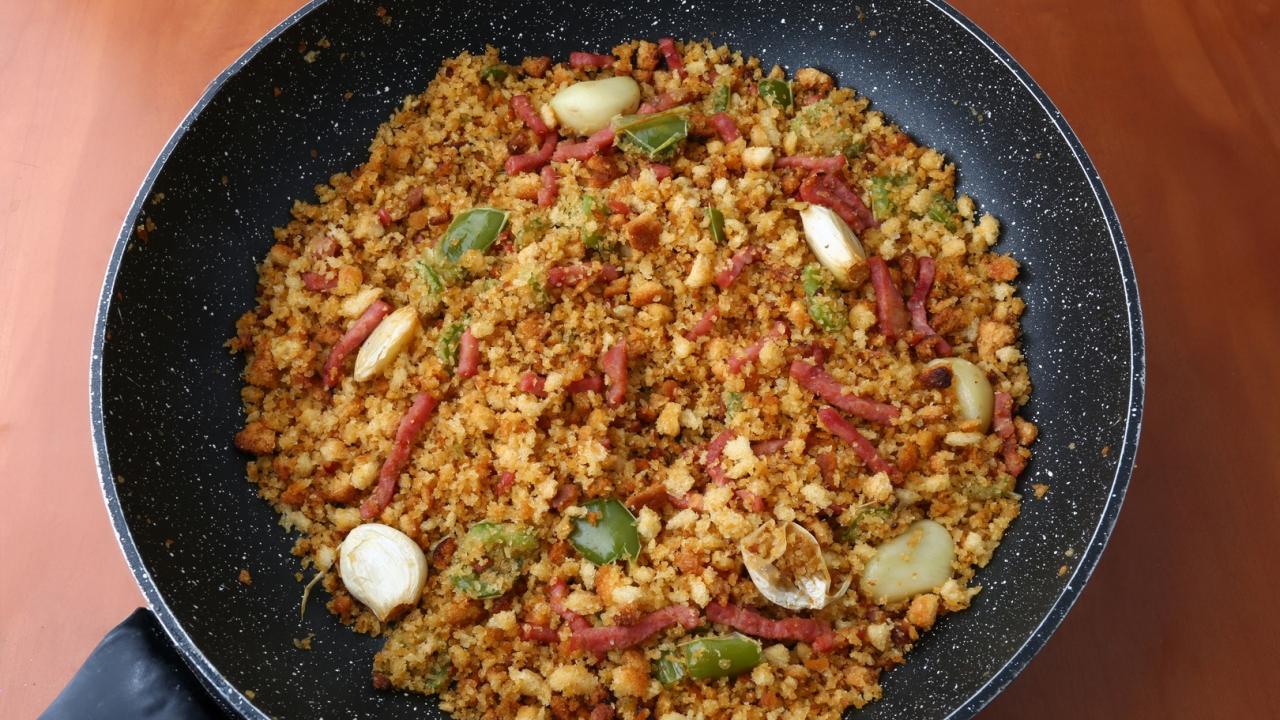
The gastronomy of Sierra de Guadarrama is an essential part of the mountain experience. Traditional cuisine combines local products and recipes historically linked to rural life and the climate of the Sierra.
Typical dishes include roast meats, mountain stews, migas and Castilian soup. Many villages also feature restaurants specialising in traditional Madrid cuisine and mountain gastronomy.
Villages in Sierra de Guadarrama with strong gastronomic traditions
Several mountain villages are especially known for their traditional cuisine and restaurants, where mountain gastronomy remains a key attraction.
Guadarrama and traditional mountain cuisine
Guadarrama has a long gastronomic tradition linked to mountain cuisine, with restaurants specialising in roast meats and traditional dishes from the Sierra de Madrid.
Cercedilla and mountain gastronomy
In Cercedilla, visitors can find many restaurants connected to nature tourism and traditional mountain cuisine.
Navacerrada and mountain restaurants
Navacerrada is one of the most popular destinations to enjoy mountain gastronomy near Madrid, especially during winter and the snow season.
Frequently asked questions about Sierra de Guadarrama
What is Sierra de Guadarrama and why visit it from Madrid?
Sierra de Guadarrama is a mountain range and protected natural area near Madrid, ideal for nature escapes, hiking routes and outdoor activities.
What are the best natural areas near Madrid in Sierra de Guadarrama?
The Sierra de Guadarrama National Park and its mountain landscapes are among the best natural areas to explore near Madrid.
Which villages should I visit in Sierra de Guadarrama?
Cercedilla, Navacerrada, Manzanares el Real and Guadarrama are some of the main villages to discover in Sierra de Guadarrama.
Can I reach Sierra de Guadarrama by train from Madrid?
Yes. A railway connection links Cercedilla with mountain destinations such as Navacerrada and Cotos.
What outdoor activities can I do in Sierra de Guadarrama?
Visitors can enjoy hiking, mountain trails, scenic walks and snow activities depending on the season.
Discover the villages of Sierra de Guadarrama
Heading towards Navacerrada, we come across the Roman road between Cercedilla and the Fuenfría Pass. Cercedilla, in the heart of the Sierra de Guadarrama National Park, is a beautiful mountain village surrounded by diverse vegetation and natural pools. The Fuenfría Pass is a well-known crossroads for hiking enthusiasts. Near this pass are the Navacerrada and Valdesquí ski resorts, and a little further on, the old Cotos ski resort. Visit Navacerrada, one of the most important towns in the Sierra, and explore this charming village with its cobbled streets and mountain setting. Continuing south, we reach Becerril, a major tourist destination in the Community of Madrid. The granite rock formations, the pastures, and the livestock are all part of a landscape well worth experiencing. In El Boalo, you can hike and enjoy beautiful viewpoints or explore its churches and its centuries-old hermitage, the most famous in the Sierra.
The star product of the Sierra de Guadarrama's gastronomy is its Protected Designation of Origin (PDO) beef. Enjoy this and many other products in the numerous steakhouses you'll find as you explore the region.

Alpedrete
The first settlements in Alpedrete took place approximately 4,000 years ago. This is attested by the megalithic remains found in the municipality.
The main trades of the inhabitants of Alpedrete were agriculture, livestock, charcoal and quarrying. The latter had great repercussion because stone from Alpedrete was used in the construction of the Monastery of San Lorenzo de El Escorial, the Palacio de Oriente in Madrid, the New Ministries and the Valley of the Fallen, among others.
Within the artistic heritage of Alpedrete stands out the Church of the Assumption, built with ashlars in the late fifteenth century and masonry in the reforms made in the twentieth century. Its exterior is striking because it resembles a fortress. It has a carved parapet at the height of the belfry, which gives access to the interior through a door with a Romanesque arch. The stone chancel with ball decoration and its Mudejar coffered ceiling are a reflection of the primitive church and are of great value. Also noteworthy is the spiral staircase, built in stone, which gives access to the bell tower and the choir. The church is located in the Plaza de la Villa and forms an elegant architectural ensemble with the Town Hall, built in 1959 in the Escorial style.
A new window will open

Becerril de la Sierra
The natural wealth of Becerril is due to its geographical location in the Sierra de Guadarrama. The Puerto de Navacerrada, the Pico de la Maliciosa and the mountains of Alto del Hilo and Cabeza Mediana surround the municipality. Also noteworthy are the granite quarries and the large amount of water present in the municipality. Those who want to enjoy the environment from a different point of view can do so thanks to the paragliding and hang gliding activities available. For those who prefer to walk, it is highly recommended to take a stroll in the surroundings of the town center.
Although there was a great variety of trades, the inhabitants of this locality were mainly dedicated to agriculture, shepherding and cattle breeding. In fact, 11 cattle trails run through the municipality that facilitated the transit of cattle.
The Parish Church of San Andrés Apóstol -from the end of the XVI and beginning of the XVII century- is of rural baroque style with Herrerian influences. It has a rectangular nave with some irregularities and stands out for its tower of three bodies separated by imposts and for its portico on Tuscan columns.
The Church of Our Lady of the Valley was built in the second half of the twentieth century on the initiative of a group of people who spent part of their vacations in Becerril. The structure of the church and the colors of the concrete symbolize the landscape of the town.
A new window will open

El Bolao-Cerceda-Mataelpino
The municipality is formed by three towns: El Boalo, Cerceda and Mataelpino. These were founded by shepherds, mostly from Segovia, who were looking for pastures and a better climate for their livestock on the southern slopes of the Sierra de Guadarrama.
Those who wish to see the natural wealth only have to walk the existing routes and observe from some of the viewpoints, such as the Ponzonilla. Geology lovers can visit the Gruta de la Calera, in Cerceda.
The artistic heritage of El Boalo-Cerceda-Mataelpino has great relevance and the Church of Nuestra Señora de la Blanca, in Cerceda, stands out. This is a National Historic Monument, it belongs to the second half of the 16th century, it is built in ashlar and is of Avila Gothic style. Inside the church there is a Renaissance font and a Herrerian altarpiece.
Other examples of the richness of this municipality are: the Church of San Sebastián Mártir -from the 17th century-, in El Boalo; the Hermitage of San Isidro Labrador -built with granite masonry of the area-, also in El Boalo, and the Necropolis -of which some remains are preserved.
A new window will open

Cercedilla
The exceptional beauty of Cercedilla and its natural wealth made it a stop for the Royal Court on its way from La Granja to Madrid and vice versa until the opening of a new road through Navacerrada.
The development of Cercedilla and its privileged geographical location have turned the town into a place for tourism, recreation and summer rest for many people and the headquarters of sports, cultural and scientific associations. The municipality is also home to the Puerto de Navacerrada, a strategic point of communication between the plateaus and a reference point for outdoor activities and skiing.
The natural wealth of Cercedilla is enviable, with abundant water and varied flora and fauna that have a magnificent representation in the Fuenfría Valley. Cercedilla offers the possibility of enjoying nature thanks to the existing viewpoints and routes in the municipality.
The artistic and cultural heritage of the town is very remarkable. In addition to the Roman remains such as the road and bridges, there are also religious buildings such as the Church of San Sebastian and the Hermitage of Santa Maria -of the seventeenth century and showing the popular architecture. Inside the church there is a Churrigueresque altarpiece from 1612 that decorates the head of the church.
In Cercedilla there are also relevant constructions of the late nineteenth and early twentieth centuries, among which are the Summer Colonies, the Railway Station, the Fábrica de la Luz, the Sanatorium of Fuenfría, the Club de Mayores and the Plaza de Toros.
A new window will open

Collado Mediano
The town is located on the slopes of the Sierra de Guadarrama, which makes it enjoy geological, scenic and environmental wealth that can be known by walking or cycling routes. In addition, these lands are watered by three streams.
The religious artistic heritage is another of Collado Mediano's attractions thanks to the Church of San Ildefonso and the Old Cemetery. The Church was built in 1782 with stone remains of an old Church and the Chapel of San Juan and was restored in 1942. Inside there is a late 17th century altarpiece from the Convent of the Mercedarian Sisters of Madrid.
The Old Cemetery began to function during the War of Independence, it has a square floor plan and its walls are made of masonry. Access is through a door with a pointed arch supported by circular columns crowned by capitals representing human forms. This cemetery also has a late Romanesque chapel, dating from the end of the 12th century, which was the main chapel of an old church whose materials were used to build the Church of San Ildefonso.
A new window will open

Guadalix de la Sierra
Guadalix has abundant pastures and trees, water is also very present thanks to the Guadalix and Miraflores rivers, numerous streams and the Pedrezuela reservoir.
In this municipality was filmed in 1953 one of the classics of the Spanish cinema: "¡Bienvenido, Mister Marshall!" directed by Luis García Berlanga and in which many of the neighbors of the municipality took part as extras.
In Guadalix there are three equestrian centers that offer horseback riding in the surroundings of the municipality. There is also a Nautical Club located in the Pedrezuela Reservoir, where the members of the Olympic sailing team have trained. Around the municipality there are multiple routes and trails ideal for hiking. Finally, you cannot leave Guadalix without tasting its gastronomy or buying meat with the Sierra de Guadarrama Denomination of Origin.
The main example of the municipal artistic heritage is the Church of San Juan Bautista, from the 16th century. The three-bodied tower -built with ashlar masonry and topped by a capital- stands out. It also presents the access to the church through a pointed arch doorway with several archivolts and decoration of thistle leaves and animals. The chevet and the transept are also of ashlar masonry and the interior is covered with a ribbed vault. In the Church, likewise, the main altarpiece - with the image of San Juan Bautista Niño - and the altarpiece of San Antonio - from the XVII century - made of plaster imitating marble, stand out.
A new window will open

Guadarrama
Its physical and natural environment is deeply linked to the mountains, with peaks, slopes, and river valleys that stand out. An ideal place for outdoor activities such as hiking, horseback riding, cycling, and winter sports...
The arrival of the railway and the improvement in means and communication routes made Guadarrama a destination for people who came to rest or to recover from respiratory problems, which is why the service sector was promoted. The healing of these problems was due to the excellent location of the municipality.
The Peña del Arcipreste de Hita - declared a Natural Monument of National Interest in 1930 -, the Jarosa Reservoir and its surroundings - a mountain pine ecosystem -, the Cabeza Líjar viewpoint - the junction point between Madrid, Ávila and Segovia - and the Alto del León are examples of the natural wealth, which is completed with abundant vegetation and fauna.
Guadarrama also offers important cultural and artistic samples, among which the following stand out: The Tower of the old church - now a cultural center -, from the 15th or 16th centuries, preserves the wall and the main chapel; the Fuente de Piedra, from 1785, in neoclassical style; the Church of San Miguel Arcángel, built in the 18th century on the site of the former Royal Granaries and the Royal Granary of the Town and Court of Madrid; and the Puente del Rosario, from the 18th century, made of granite blocks fitted together.
A new window will open

Hoyo de Manzanares
Hoyo de Manzanares: Outdoor activities and cultural heritage
Outdoor activities in its surroundings will show you its natural wealth, and it also has an important cultural heritage.
The municipality has great geological wealth. Nature is very present in the municipality. Outdoor activities around the town center allow you to observe, with the naked eye, part of the natural environment.
Hoyo de Manzanares also offers an important cultural and artistic heritage: The old Church of Nuestra Señora del Rosario is made of granite and began to be built in the 15th century and was completed in the 18th century. In one of its latest renovations, the building has been converted into a cultural center although the chapel continues to host religious events.
Other examples of heritage are the Plaza Mayor - a Castilian porticoed square, built entirely of granite, which houses the Town Hall -, the Fuente del Caño - from 1845, made of granite - and the Monumento a los Canteros - a stone obelisk to honor the stonemasons -.
As for festivities, the Fiesta de la Caldereta, on September 9th. It is a festival that has been celebrated for decades, although its origins date back centuries. Residents and visitors gather in the town's Plaza Mayor as in the past around the famous cauldrons of bull stew, a stew that was a tradition among Segovia's ranchers and shepherds. The recipe for fighting bull meat stew was cooked back then as it is today at the dinner in the Plaza - with lean bull meat, garlic, oil and cognac - but with some other ingredients and this is one of the town's best kept secrets.
A new window will open

Manzanares el Real
Manzanares El Real is one of the most attractive towns of the Madrid Region and it is situated in the truly privileged environment. It is located at the foot of the Pedriza, in the Regional Park of the Upper Manzanares Basin -that is declared a Biosphere Reserve by UNESCO-. Manzanares El Real has a historical heritage that ranges from fountains, chapels and Roman roads to medieval castles and cave paintings. All within a natural setting of landscapes of incomparable beauty.
If there is one thing that identifies it, it's the 'Castillo de los Mendoza', although alongside it there are interesting samples of historical and cultural heritage, as well as an environment that invites you to visit it on foot or by bicycle.
A new window will open

Miraflores de la Sierra
Legend has it that when Queen Isabel de Borbón passed through the town, she was impressed by the amount of flowers and exclaimed: "Look at the flowers!" Nature and artistic heritage are its main tourist attractions.
Nature and artistic heritage are among the main attractions of Miraflores. The main activities that can be carried out while in contact with the natural environment are hiking, cycling or horseback riding, multi-adventure and air sports such as hang gliding and paragliding.
In relation to the artistic heritage, it is worth mentioning the Church and the Grotto of Our Lady of Begoña. The Miraflores Church dates back to the 15th century but has undergone renovations throughout history. At present it has the tower, the presbytery and transept, three naves, two porticoes and a series of chapels attached to both sides of the aisles. Inside the church there is a baptismal font from 1492. La Gruta is a very welcoming place founded in 1952 by Julián Reyzábal Delgado, a devotee of Our Lady of Begoña and also of Miraflores de la Sierra.
Other samples of the municipality's heritage are found in the many existing fountains, among them is the emblematic Fuente Nueva -built in 1791 and successor of an old fountain from the 15th century-. Also worth a visit is the Town Hall, located in an arcaded building with eight columns and crowned with a narrow tower with a clock.
A new window will open

Los Molinos
Outdoor activities in its surroundings will show you its natural wealth, it also has an important cultural heritage.
The municipality has great geological wealth. Nature is very present in the municipality. The outdoor activities in the surroundings of the town center allow you to observe, at a glance, part of the natural environment.
Hoyo de Manzanares also offers an important cultural and artistic heritage: The old Church of Nuestra Señora del Rosario is made of granite and its construction began in the 15th century and was completed in the 18th century. In one of its latest renovations, the building has been converted into a cultural center although the chapel continues to host religious events.
Other examples of the town's heritage are the Plaza Mayor -a Castilian arcaded square, built entirely of granite, which houses the Town Hall-, the Caño Fountain -from 1845, made of granite- and the Monumento a los Canteros -a stone obelisk to pay tribute to stonemasonry.
As for festivities, the Fiesta de la Caldereta, on September 9. It is a festivity that has been celebrated for decades, although the antiquity goes back centuries. Neighbors and visitors gather in the Plaza Mayor of the village as in the old days around the famous caldereta de guiso de toro, a stew that was a tradition among Segovian herdsmen and shepherds. The recipe for the stew of fighting bull meat was then cooked just as it is today at dinner in the Plaza - with lean bull meat, garlic, oil and cognac - but with a few more ingredients and this is one of the best kept secrets of the town.
A new window will open

Moralzarzal
For outdoor activities enthusiasts, the surroundings of the municipality are magnificent for hiking and horseback riding or mountain biking.
The settlement of a stable population in Moralzarzal was made by shepherds from Segovia at the time of the Reconquest, although there are indications that previously there was already a human presence in these lands. The area was the object of disputes between Madrileños and Segovians and the municipality was included in El Real de Manzanares. In 1636 it obtained the title of Villa and in 1833 it was included in the province of Madrid after having been part of the province of Guadalajara. Before having the current name, the town seems to have had two population centers: Fuente del Moral -it was the main one- and Zarzal, which was constituted as a neighborhood or district of the previous one and that ended up joining together.
The location of the municipality in the Sierra de Guadarrama makes it enjoy a characteristic climate with cold winters and dry and hot summers. This also influences the nature, which has an abundance of water -with the Navacerrada river, springs and streams-, pine, oak, poplar, broom, ash, rockrose and thyme, as well as more than 2,000 ha of pastures for cattle. Of pastures for livestock. It also had six cattle routes, among them the Cañada Real Segoviana. Precisely, livestock was one of the main activities of the inhabitants of Moralzarzal along with agriculture, beekeeping and the sale of stone, firewood and charcoal. These trades had an impact on the municipal urban architecture, which features rural and urban-rural dwellings, agricultural and livestock outbuildings -some annexed to the houses forming mixed complexes- and recently constructed buildings.
The main example of the artistic heritage of the town is the Church of San Miguel Arcángel, from the XVI and XVII centuries. It is built with masonry except for the tower, which is of ashlar masonry with two bodies separated by an impost decorated with balls. The church has a nave with a square chancel and the sacristy attached to it. In the interior it emphasizes the holy water font, of the XVI century, ornamented with Gothic motifs.
Another outstanding patrimonial element is the 1886 clock known as Frascuelo thanks to the bullfighter Salvador Sánchez, who donated it to Moralzarzal. For those who like outdoor activities, the surroundings of the municipality are magnificent for hiking and horseback riding or mountain biking.
A new window will open

Navacerrada
Just 60 kilometers from Madrid, there is an unparalleled natural treasure: the Puerto de Navacerrada. This enclave, located in the heart of the Sierra de Guadarrama National Park, offers you a unique experience to enjoy with family, couples or friends.
In winter, Navacerrada becomes a paradise for lovers of skiing and snowboarding. Its slopes, suitable for all levels, will allow you to glide through the snow and enjoy the impressive beauty of the landscape.
But Navacerrada is not just a winter destination. In summer and spring, it becomes the perfect place to enjoy nature in its purest state.** You can go hiking or mountaineering through the different trails that run through the park, contemplate the native fauna and flora, or simply relax in a unique natural environment.
In addition to outdoor activities, Navacerrada also offers you a rich cultural and gastronomic offer. You can visit the Visitor Center of the Sierra de Guadarrama National Park, taste the delicious typical cuisine of the region in one of its restaurants, or enjoy the festivals and events that are organized throughout the year.
A new window will open

Soto del Real
Its origin dates back to the Reconquest, when shepherds from Segovia settled in some huts they had built. For a long time Soto was called "Chozas". In 1959 it changed its name, by popular vote.
Although some remains from the Bronze Age have been found, the origin of Soto del Real is in the time of the Reconquest, when shepherds from Segovia created some huts to settle. These constructions gave the name to Soto, which for many years was called Chozas. During the 13th century, territorial disputes took place to gain control of the lands of the region. Chozas achieved the title of Villa in 1578. Another historical milestone for the municipality came in 1959 when it proceeded, by popular vote, to change its name. There were three options: Soto del Real, Alameda de la Sierra or keep the historical name. The population opted for the first, which refers to the trees and groves of the town and also to its former affiliation with El Real de Manzanares.
Natural Heritage
Nature is, therefore, one of the signs of identity of Soto del Real. The vegetation changes as the altitude increases: at 900 meters there are pastures and meadows; at approximately 1,100 meters and above, there is a proliferation of honey oaks, junipers, hawthorns, pines, Montpellier maples and blackthorns; and at higher altitudes it is possible to find broom oaks. As for the fauna, birds -larks, kestrels, tits, kites, kites, cuckoos and birds of prey-, mammals, reptiles and insects stand out.
Historical and Artistic Heritage
The Church of the Immaculate Conception is one of the main examples of Soto's artistic heritage. It was built in stages so it presents several architectural styles. The chevet, the upper part of the church and the transept date from the 16th century, while the central nave is from the 18th century. The tower comes from a primitive church and is joined to the nave by the Parish House. Inside the church there are baroque altarpieces from the 18th century and the altar table is decorated with plateresque motifs.
Other patrimonial examples are the Romanesque Bridge -from the medieval period and built in stone- and the Paralelepiped -from between the I and II centuries-, which is one of the first written samples of the history of Soto del Real since there are inscriptions in Latin with names of old inhabitants of the municipality.
A new window will open
A new window will open


