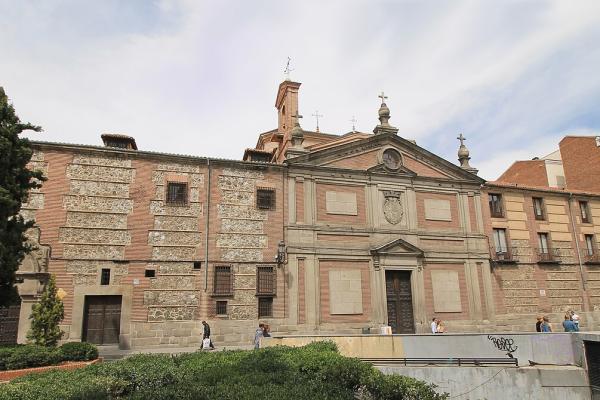
Discovering Nuevo Baztán means stepping into a landmark of Spanish heritage. This monumental town was the ambitious dream of Juan de Goyeneche, a visionary who transformed a barren landscape into a pioneering industrial hub designed to attract Europe’s finest talent. More than just a village, Nuevo Baztán is a standout member of the prestigious "Villas de Madrid"—a collection of the region's most authentic and charming towns.
Nuevo Baztán represents a masterclass in 18th-century urban planning and design. It was born from the collaborative genius of Goyeneche and the legendary architect José Benito de Churriguera, who placed Spain at the global forefront of industry. Here, master artisans produced everything from fine textiles and spirits to blown glass that rivaled the artistry of Murano.
Today, exploring the Goyeneche Palace and its Interpretation Center is a must for architecture enthusiasts. The estate serves as a monumental oasis, framed by a quintessential Spanish landscape of ancient olive trees, holm oaks, and almond groves. To truly unlock the secrets of this National Historical-Artistic Site, we recommend a guided experience with the experts at the Tourist Office, conveniently located in the heart of the palace.
Must-See Landmarks in Nuevo Baztán
Step into Goyeneche’s Enlightenment Dream
Exploring Nuevo Baztán is like stepping into a sensory time capsule from the Age of Enlightenment. Every corner of this town reveals the ambition of an unprecedented urban project in the Madrid region. When travelers ask what to see in Nuevo Baztán, the answer goes beyond mere monuments: it’s about discovering a National Historical-Artistic Site masterminded by the legendary José Benito de Churriguera. Here, the solemn beauty of Castilian Baroque meets the cutting-edge functionality of an 18th-century industrial hub.
From the imposing presence of the Goyeneche Palace-Church to the rational grid of its plazas and historic workers' quarters, this enclave offers a truly immersive experience. Walking its streets, you’ll relive an era when Nuevo Baztán produced Spain's finest glassware and most exquisite textiles for the Royal Court—all set against a serene backdrop of ancient holm oaks and olive groves.
Just a short drive from the capital, this "monumental oasis" offers an atmosphere of absolute peace. Below, we break down the must-see highlights that make this villa one of the most fascinating cultural getaways in Spain.

Palacio de Goyeneche
The building was the residence of Juan de Goyeneche, Navarrese born in the valley of Baztán that developed his race in the court of Carlos II. Goyeneche built Nuevo Baztán as an industrial complex that included this palace-church-quadrangular square, a set of dwellings and factories of glass, fabrics, etc.
The palace is of rectangular plant and presents / displays two plants, organized in architectures separated in the facades by a flat cornice. It is flanked, in its northwest corner, by a quadrangular turret. Away from the typically baroque ostentosidad is rather a peasant villa where are visible the cushions 'a la rustica', typical of the Italian villas of the Renaissance.
The main door is presided over by a carabinier, whose cover highlights the head of a roaring lion that holds the checkered shield of the Baztan Valley. This gate is crowned by the coat of arms of the Goyeneche.
The vestibule of the Palace gives way to a beautiful inner courtyard with a well, being lined with galleries with semicircular arches.
On the top floor are located the noble rooms of a palatial building. The palace communicates with the church through a passage located on the upper floor that leads to the rostrum located on the side of the Gospel (left), from where the presbytery and its main altarpiece are widely displayed. They are also worth visiting the wineries that are located under the Palace that now house the Interpretation Center.
It was restored between 1974 and 1985 by the architect Fernando Chueca Goitia and opened to the public in 2012 thanks to the Community of Madrid.

Iglesia de San Francisco Javier (Church)
Located next to the Palacio de Goyeneche, the church of San Francisco Javier was granted the status of Monument of Historical-Artistic Interest in 1941. It is the main landmark of Nuevo Baztán, around which the urban layout of the entire complex gravitates. The church is devoted to San Francisco Javier, the patron saint of Navarra, where Juan de Goyeneche, the developer of the Nuevo Baztán industrial complex in the 17th century, was originally from. Small in size and built in the Herrerian style, it is almost merely a private chapel instead of a church. It is made up of a short central nave, a wide transept and a square-shaped presbytery. Its main façade is made up of a portal and two 27.5 m high towers in the Herrerian style, which flank each side and double the height of the palace, with which it is connected through a direct access that starts from the choir. Thus, they form a single architectural and visual structure. The access to the church is flanked by two pilasters and four columns, leading to a profusely decorated space. Of particular note is the main altarpiece presided over by a sculpture of Saint Francis Xavier, both executed in Cuenca marble by Churriguera. The other altarpieces that can be found in the temple are made of wood using the finto-marmo technique. Visitors will surely be amazed by its two tribunes and the choir, as well as by the semicircular dome -which consists of two spans and eight windows. The church features a number of fine Filipino ivory sculptures from the Goyeneche period. The most popular one is the one representing the Cristo del Socorro, main saint of the Way of the Cross of the Javierada pilgrimage, organised each year by the Association of Navarros of Madrid, sponsored by the Real Congregación de San Fermín de los Navarros. The sculptures of Saint John the Baptist, the Holy Family and the Virgin and Child are also to be admired. Finally, the church has two crypts in bare red brick.

Plazas de Nuevo Baztán
The five harmoniously simple main squares of Nuevo Baztán bring unity to the urban plan designed by Churriguera to make Juan de Goyeneche's enlightened dreams come true. Walking around them puts you right in History. As mute testimony to its splendour, the old quarter still reflects the original style. When touring it, visitors perceive urban unity in a grid - the epicentre of which is the Goyeneche Palace - where the squares serve to divide Nuevo Baztán into three areas: the monumental complex; the residential area; and the group formed by industrial buildings, workshops, warehouses and granaries.
Between the Lonja, Palace-Church and Casa de Distinción it opens onto the Plaza de la Iglesia, Plaza del Jardín or Plaza Mayor. With a quadrangular floor plan, the central point converges with the Fuente de los Tritones fountain. Heading clockwise from there, we’ll arrive at Plaza de las Fiestas or the Plaza de Toros. With a rectangular floor plan and a typical Madrid look, it was the true centre of the town of Nuevo Baztán. Shops and artisans set up nearby.
The third most important square is del Mercado or del Secreto which is simply used for trade purposes. It originally featured stone supports where the wooden columns held up the roof so that travellers and merchants could find shelter. The textile or cloth factory is located there, which was the first and the most important in Nuevo Baztán due to traffic and income from the population.
This journey ends with a visit to the Plaza de la Forja, the starting point of the road to La Olmeda, which gets its name from all the forges set up there to manufacture all the iron needed by industry. Finally, there’s the Plaza de la Cebada, on the way to Valverde de Alcalá where farmers lived with their animals and work tools.

Interpretation Centre
Opened in 2003, it is located in the old wine cellar of the industrial complex of Nuevo Baztán. The Interpretation Centre brings us closer to the figure of Juan de Goyeneche, visionary developer of the project that gave birth to the town. It was created with the aim of promoting the conservation, research and dissemination of the historical, anthropological and natural heritage of the Autonomous Region of Madrid. Therefore, it shows, in an attractive and educational manner, the lifestyle and customs of the inhabitants of the urban complex of Nuevo Baztán during the 18th century. Besides, year after year, it offers an ambitious cultural programme: exhibitions, cinema, theatre, design and live performances. Once we get to know the figure of Juan de Goyeneche (1656–1735), we learn that he was an editor, journalist and politician from Navarra, who, inspired by Colbert's ideas, materialised in Nuevo Baztán an ambitious project aimed at changing the Spanish productive system and contributing to the boosting of national industry, while at the same time slowing down rural depopulation. The contents of the exhibition that can be found in the Centre for Interpretation include the presentation of Juan de Goyeneche and the historical context in which his ideas were developed. It also describes the production system used by the industries that were established there, whose aim was to achieve full use of the materials, their processing and subsequent marketing, in the form of products such as textiles, paper, fine glass, soap, wax, confectionery, wine and spirits. This part of the exhibition not only includes period clothing, but also the tools and utensils of the different trades used for their manufacture. Likewise, there are different models of the architectural complex designed by Churriguera, explanatory panels on the project, and an interesting audiovisual show that graphically explains the life and work of Juan de Goyeneche and the link between both men and Nuevo Baztán.

Centenarian Elm Tree
Very close to the complex, in the passage, the old elm tree can be found, the only survivor of the ones planted by Juan de Goyeneche so that travellers could find shade in hot days.
Encuentra los imprescindibles de Nuevo Baztán de un vistazo
Localiza fácilmente los principales atractivos turísticos de Nuevo Baztán en un solo vistazo. Este mapa te permite identificar de forma clara los puntos de interés más destacados del municipio y planificar tu visita de manera sencilla y eficiente.
Things to Do in Nuevo Baztán: Immersive Experiences in a Living Landmark
Beyond its stunning stone facades and grand architecture, the Villa of Nuevo Baztán offers a vibrant, multi-sensory agenda designed for every traveler. Your journey begins at the Interpretation Center, where you can dive into the town’s fascinating industrial past, uncovering the 18th-century secrets that once made this a pioneering hub for European talent.
But the legacy of Goyeneche’s dream isn’t just found in history books—it’s something you can taste. Wine enthusiasts can indulge in authentic Spanish Enotourism, savoring local labels under the prestigious D.O. Vinos de Madrid designation, all while surrounded by the very vineyards and olive groves that have defined this landscape for centuries.
For those seeking a more personal connection to the past, history truly comes to life through theatrical guided tours and immersive family workshops. Whether you are wandering through its historic plazas or participating in an interactive craft session, Nuevo Baztán seamlessly blends 18th-century grandeur with modern cultural charm, making it one of the most captivating and complete getaways just a short drive from Madrid’s city center.

Tourism Office of Nuevo Baztán
Located in the ground floor of the Palacio de Goyeneche, it offers visitors a chance to be in an open and dynamic space where they can find different options and services: - models of the complex so that they can place each site; - digital access point for the searching of tourist and cultural resources, both in Nuevo Baztán, as well as in the whole region; - resting and waiting area; - a place to read and consult books and texts about Nuevo Baztán; tourist promotion materials about the town and the Autonomous Region of Madrid; and exhibition and display of artisan products from Nuevo Baztán. In fact, if you’re a craftsperson living in Nuevo Baztán and you’d like to display here any sample of your product, please contact the Tourism office.

Theatrical guided tours
The Nuevo Baztán Interpretation Center invites you to uncover the fascinating legacy of Juan de Goyeneche and his visionary industrial masterpiece. Through captivating theatrical guided tours, history truly comes to life—allowing you to experience firsthand the origins and evolution of this one-of-a-kind Enlightenment enclave.
Family Fun & Hands-On Workshops
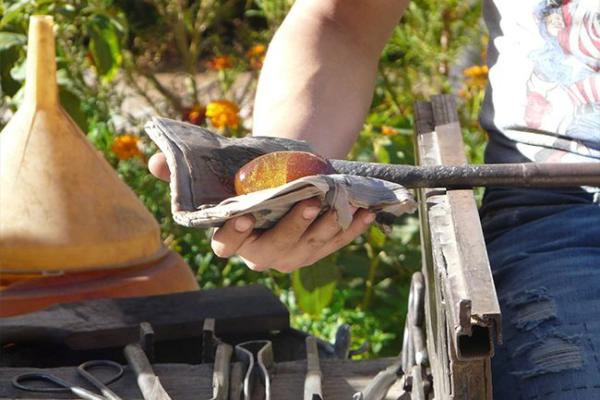
Turning history into an adventure is the specialty of Nuevo Baztán, a destination where family workshops and activities come to life under the majestic shadow of the Goyeneche Palace. More than just an open-air museum, this enclave is a vibrant, interactive space designed for young explorers to discover the 18th century through play and hands-on experience.
The educational programs at the Nuevo Baztán Interpretation Center offer a unique opportunity for both children and adults to become master artisans for a day. Through engaging workshops, families can recreate the town’s historic industries—from crafting aromatic soaps and molding glass to the delicate art of handmade papermaking. It’s an immersive journey that transforms a history lesson into a lasting family memory.

Cuarto Lote Winery
The vineyards have been located in the Valmores Valley since 2002, with an area of around 10 hectares, offering varieties of Tempranillo, Syrah, Merlot and Cabernet Sauvignon, set out in trellises and double channels and equipped with a drip irrigation system, producing crops of around 6,000 kilos per hectare. The winery, which was granted the denomination of origin “Wines from Madrid” in 2014, belongs to the sub-area of Arganda del Rey. Located in the south-east area of the region, it is the largest of the 4 sub-areas, covering 30 towns and 37 wineries which made up the D.O. Wines from Madrid. It is in this area where we can find 55.5% of the wine-growing area of the Autonomous Region of Madrid and where approximately 60% of the annual production is processed by 65% of wine growers. For the time being, the Winery is open from Monday to Sunday, from 10 am until 2 pm, for the sale of products. However, a visiting and wine tasting schedule will soon be set, previous booking being necessary.
Events & Festivals: A Year-Round Cultural Calendar
The Town of Nuevo Baztán offers a curated blend of culture, education, and sensory delight. Beyond its monumental architecture, the town maintains a vibrant agenda that honors its unique identity through events that evolve with the seasons.
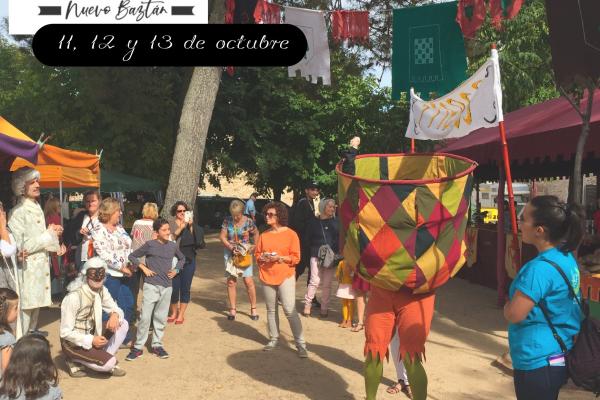
In March, the town embraces its founder’s roots with La Javierada, a traditional Navarrese-inspired pilgrimage that fills the streets with history and spirit. As the weather warms, the "Veranos de Nuevo Baztán" (Nuevo Baztán Summers) take center stage. Organized with meticulous care by the local Town Hall, this summer festival transforms Churriguera’s historic plazas into magical open-air theaters. Under the Spanish stars, visitors can enjoy outdoor cinema, dance performances, and classical music concerts, all set against the stunning acoustics and sober elegance of the Baroque estate.
As the year draws to a close, the Foundation Festivals in October recapture the spotlight. These celebrations feature grand historical reenactments that transport you back to the Age of Enlightenment. In Nuevo Baztán, history isn’t found in dusty textbooks—it is something you touch, taste, and experience in every corner of the Villa.
A new window will open
Explore Nuevo Baztán: Curated Routes & Itineraries
Discover Nuevo Baztán: From Baroque Jewels to the Rolling Landscapes of Alcarria
Step into the history of Nuevo Baztán, a one-of-a-kind landmark meticulously designed in the 18th century by the legendary José de Churriguera. Beyond its breathtaking palatial architecture, this destination offers a curated selection of experiences that blend heritage, nature, and deep-rooted winemaking traditions through itineraries tailored for every traveler.
For those seeking the essentials, "Essential Nuevo Baztán" leads you through the majestic Goyeneche Palace and the Church of San Francisco Javier, revealing the ambitious industrial past of this "Villa de Madrid."
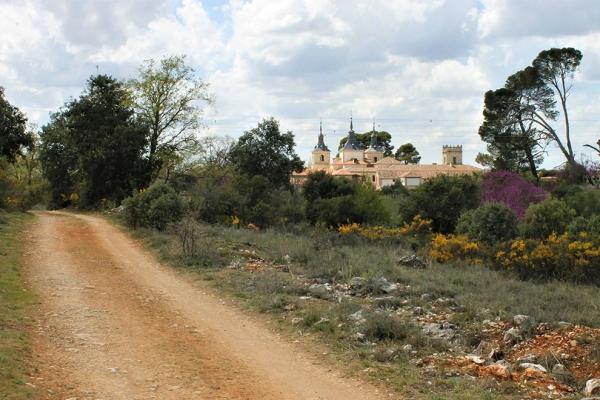
If you prefer to pair heritage with the great outdoors, the Valmores Trail offers a fascinating circular hike through the valley, winding past ancient holm oak groves and the atmospheric ruins of historic factories. Meanwhile, the Nuevo Baztán to Tielmes Wine Route invites connoisseurs to explore a landscape of rolling vineyards and boutique wineries under the prestigious D.O. Vinos de Madrid designation.
From its monumental heart to its scenic nature trails and gourmet experiences, Nuevo Baztán stands as a destination of stunning contrasts—where Baroque history and the rustic beauty of the Alcarria Madrileña countryside merge into an unforgettable getaway.



Dining in Nuevo Baztán: Where to Eat & What to Savor
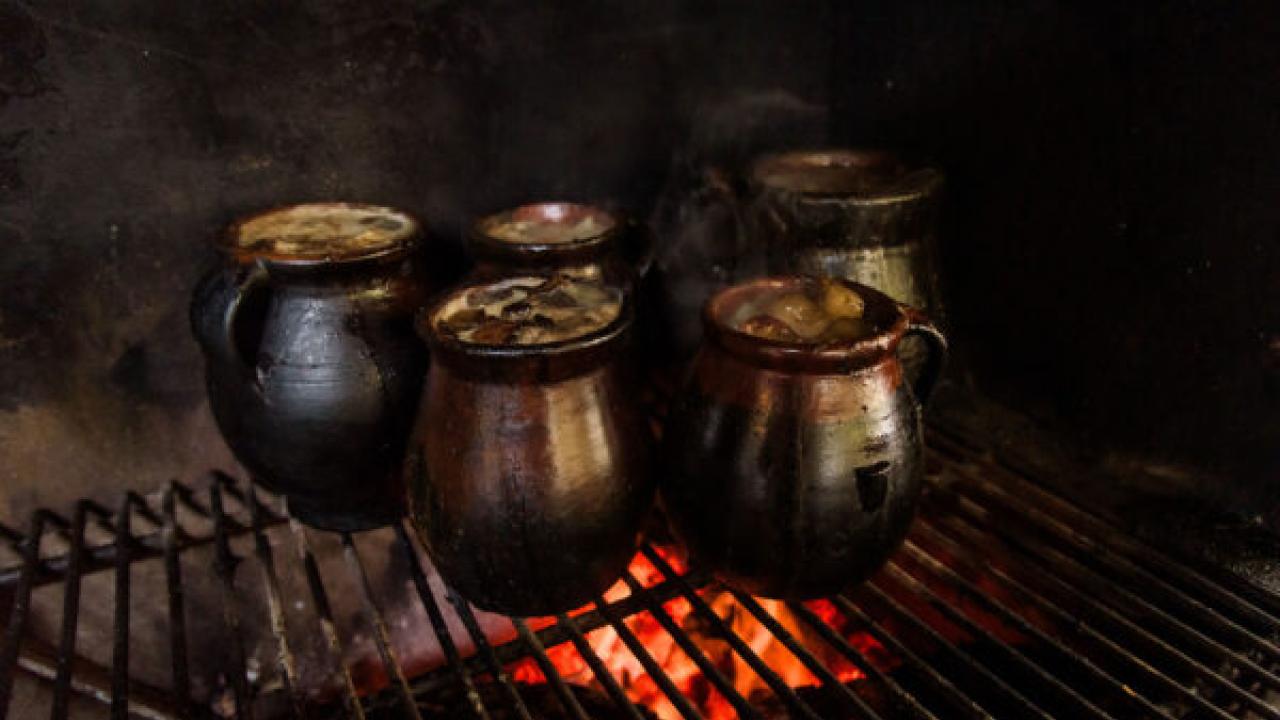
A visit to the Villa is not complete without discovering its rich culinary heritage—a deep-rooted Castilian kitchen that celebrates fresh, local ingredients. To dine here is to indulge in the absolute soul of Spanish comfort food: from succulent wood-fired roasted lamb to artisanal sheep’s milk cheeses and traditional cured meats (embutidos). These flavors find their perfect match in the robust D.O. Vinos de Madrid wines produced in the town’s own boutique cellars.
Whether you are enjoying a traditional multi-course menu in the historic mesones (rustic taverns) of the town center or picking up gourmet local products in specialized shops, eating in Nuevo Baztán is a chance to savor the essence of the Alcarria Madrileña in an incomparable monumental setting.
[Explore our Updated Guide to Restaurants & Taverns] Find the complete dining directory for both the Historic Center and the Eurovillas area, including direct contact info for reservations and opening hours.
Accommodation: Where to Stay in Nuevo Baztán
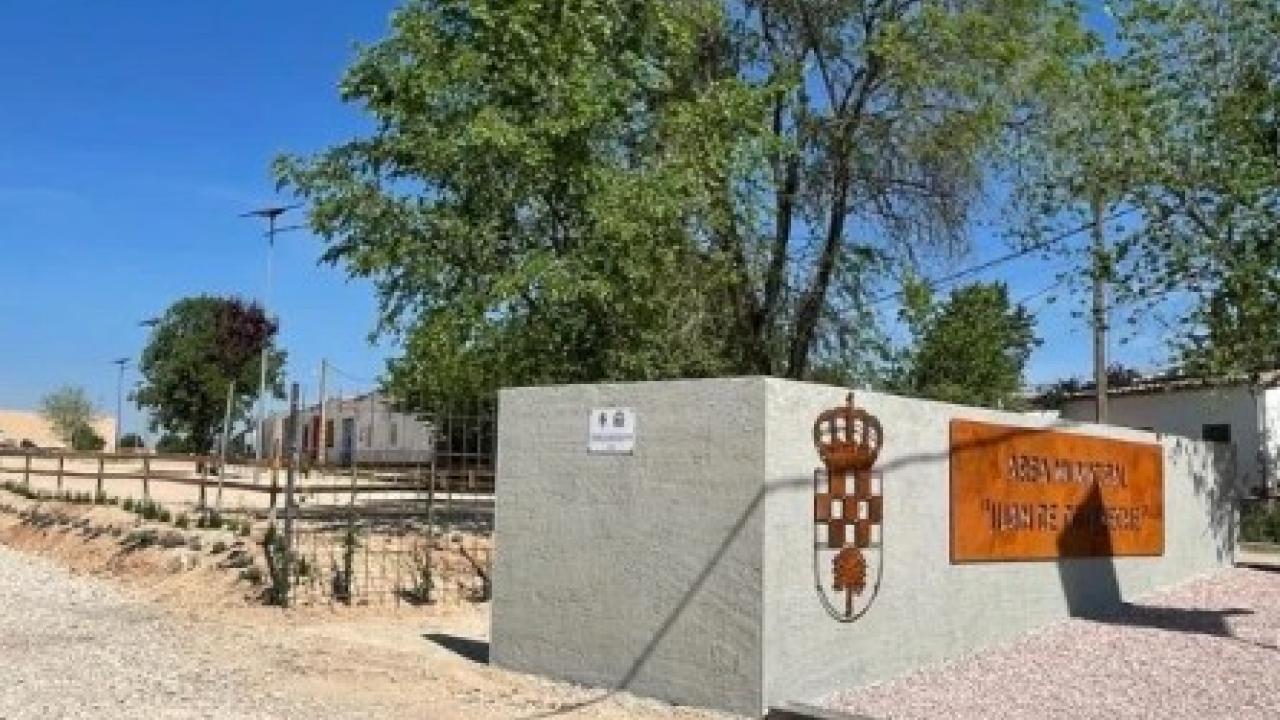
For travelers exploring Spain’s historic routes with the freedom of the road, the Juan de Goyeneche Motorhome Area offers the perfect dedicated space. Strategically located just steps away from the monumental complex, this fully equipped area allows you to stay overnight in the heart of history. Best of all? The service is completely complimentary.
Staying at this service area allows travelers to embrace the nighttime serenity of the Alcarria Madrileña, making it the ideal starting point for your adventures
How to Get to Nuevo Baztán: Your Gateway to Baroque History
Getting There & Getting Around: Discover Nuevo Baztán with Ease
Este texto es la pieza final del rompecabezas logístico para https://www.visitmadrid.es. Para el viajero de EE. UU., la claridad en el transporte es vital, ya que suelen tener dudas sobre cómo moverse fuera de las grandes ciudades como Madrid.
He adaptado términos como "intercambiador" (transport hub) y "ciudad complutense" (historic Alcalá) para que sean más descriptivos y útiles.
Getting There: Connecting Madrid with the Alcarria Heritage
Nuevo Baztán is strategically located in the eastern region of the Community of Madrid. It offers a unique monumental escape with easy access whether you are traveling by private vehicle or using the public transport network that connects the capital with the scenic Alcarria countryside.
By Car: A Scenic Drive
For those driving, the two main routes offer a quick and beautiful journey:
- Via A-3 (Autovía del Este): Take Exit 22 (Arganda del Rey) and follow the M-300 and M-204.
- Via A-2 (Autovía del Nordeste): Take the detour toward the M-300 in Alcalá de Henares and continue on the M-204.
- Travel Times: You can reach the heart of Madrid in approximately 45 minutes and the UNESCO city of Alcalá de Henares in just 20 minutes, driving through landscapes of great natural beauty.
Public Transport: Intercity Bus Network
Excellent connectivity is guaranteed through a reliable bus network linking the Historic Complex and residential areas with Madrid’s main transport hubs.
- Connection to Madrid: Line 261 departs from the Avenida de América Transport Hub, providing a direct link between the capital and Nuevo Baztán.
- Connection to Alcalá de Henares: Line 232 connects the town with the historic city of Alcalá, providing easy access to the Cercanías Renfe (commuter train) network and the Príncipe de Asturias University Hospital.
- Other Routes: Line 321 links the municipality with Arganda del Rey, where you can connect to Metro Line 9, a key option for those traveling toward the southeast.
Local Mobility & Residential Areas
Nuevo Baztán blends a historic core (declared a Site of Cultural Interest) with large residential areas like Eurovillas—one of the largest developments in Europe—and Las Villas. The bus service features strategic stops throughout these areas, making it easy for visitors to access municipal services, the Goyeneche Palace, and local shopping districts without needing a car.
Traveler Tip: To plan your journey with precision, we recommend downloading the Official Transport Maps available in this section. Having these schedules on your device will help you optimize your trip and enjoy the historic richness of Nuevo Baztán with total comfort.
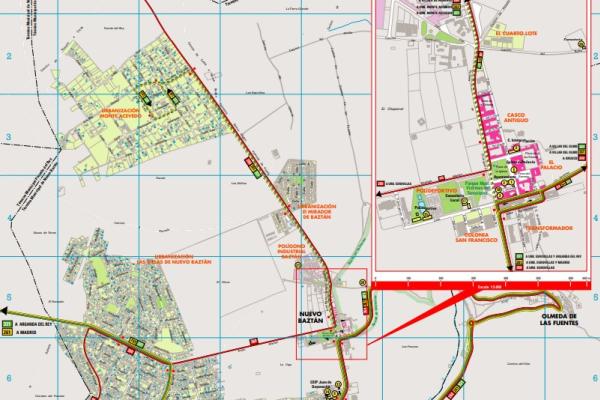 Nuevo Baztán Map
A new window will open