

San Martín de Valdeiglesias
You cannot miss San Martín de Valdeiglesias. A town in the southwest of the region, known for its medieval castle and its proximity to the reservoir of San Juan.
San Martín de Valdeiglesias, the kingdom of Coracera
Legend has it that Don Álvaro de Luna ordered the Coracera castle be built. This was after purchasing the village and feudal estate of San Martín de Valdeiglesias in ridges of the Gredos mountains for 30,000 maravedies. That was back in 1434. It seems as though at least one turret existed at the time on this promontory. In any case, the Coracera castle has reigned over the urban area of San Martín de Valdeiglesias ever since one can remember.
The counterpoint of such an outstanding position lies in the San Martín Obispo church. It was built over the ruins of a small temple following a complaint by the locals in the 17th century. Those receiving the tithes were accused before the Council of Castile of not fulfilling their obligation of maintaining the temple.
Yet San Martín, which loves and looks after its castle and church, has been able to grow in many other ways. Perhaps the most outstanding of all would be its vine growing and ability to transform the vines into carefully-made and highly-appreciated wines - not to mention its livestock raising. With a decisive desire to bring peace to this rivalry, the local restaurant owners have the solution: there’s no better pleasure in San Martín than a good roast accompanied by a local wine.

Castillo de la Coracera
El Castillo de la Coracera fue construido por Don Álvaro de Luna, valido del rey Juan II, en 1434. El condestable de Castilla compró por 30.000 maravedíes el pueblo y señorío de San Martín de Valdeiglesias a los monjes del cercano monasterio de Santa María la Real, dueños de las tierras de abadengo. Sirvió de residencia temporal de la reina Isabel la Católica al ser proclamada heredera de Castilla en la Jura de Guisando. Tras la ejecución de don Álvaro, el castillo pasó a ser propiedad de Gonzalo Chacón y más tarde de la casa ducal del Infantado hasta el siglo XIX, que quedó en manos del barón de Sacro Lirio, quien acometió reformas e integró algunos elementos ornamentales procedentes del palacio de Villena, otra de las propiedades de don Álvaro de Luna en el vecino municipio de Cadalso de los Vidrios. El castillo se encuentra en un magnífico estado de conservación y la visita cuenta con un sistema audiovisual que nos trasladará hasta el final del Medievo.

Iglesia de San Martín Obispo (Church)
Located on one side of Plaza Real, San Martín church owes its origins to an interesting anecdote as it was built following a complaint lodged with the Council of Castile by the locals back in the 17th century. It’s dedicated to San Martín de Tours -immortalized by El Greco in 1597- the patron saint of welders, weavers, traders in general and textile manufacturers. The local festival is on 11 November. The work on the current building began in 1634 after the locals began a long legal proceeding (1622-1628) with the Court of Castile against those receiving the tithes. They were accused of not fulfilling their obligation of maintaining the temple. Due to financial hardship, only one-third of the project would ever be finished. The Herrerian style building has a very sombre yet monumental floor plan with three naves and a barrel vault ceiling. There is a seven-metre-high central dome over the transept. On the inside is a Baroque high altarpiece with a painting attributed to Rivera’s disciple, Lucas Jordán, which represents Saint Martin sharing his cape with a poor man. One of the chapels features a 15th-century altarpiece with the Virgen de la Nueva, the town’s patroness. Visitors can also see the Romanic style baptismal font and the Gothic style ivory carving of Nuestra Señora de la Estrella. At just 4 centimetres, this carving was owned by Alphonse X until he lost it during a hunting expedition in the area. At least that’s what’s written in "Las Cantigas”. The organ in the temple was built in 1894 by José Marlasca.

Pantano de San Juan (Reservoir)
Although Madrid is a landlocked city, its rivers and reservoirs make it possible to enjoy a wide range of nautical sports. There are conducted water activities such as canoeing, sailing, rowing and rafting, among others.
Madrid’s largest reservoir is the Pantano de San Juan. It is home to the Royal Nautical Club of Madrid, which has nautical and sailing schools where you can obtain
official sailing certificates. This is the only sailing area and one with a Blue Flag certification in the Region of Madrid. Considered “Madrid’s beach”, it was built in 1955 to provide water and power to the south-east of the region. Located within the municipalities of San Martín de Valdeiglesias, El Tiemblo, Cebreros and Pelayos de la Presa, it is part of the River Alberche.
Visitors can enjoy 14 km of beach area only 70 km away from Madrid, in a superb natural environment, with quiet pools and small beaches of rocks and sand, surrounded by large pine and holm oak groves where they can have a well-deserved rest. The most visited zones are the “Cerro de San Esteban” and “El Yelmo”, and the best recreational areas are “Virgen de la Nueva” and “El Muro”.
The reservoir of San Juan has quays, restaurants, sailing clubs, camping areas, seasonal bars with open-air seating and even a nudist beach. Its waters conceal two important historical constructions that are part of the cultural heritage of San Martín de Valdeiglesias: a medieval bridge with eight arches that united the two banks of the river, and the ruins of the original shrine dedicated to La Virgen de la Nueva. You can spend the entire weekend in one of the many hotels in the area, or in a camping spot, if you’d like to have greater contact with nature. Enjoy one of the most refreshing ways to explore the Region of Madrid!

Ermita del Ecce Homo (Chapel)
The Ecce Homo chapel was previously dedicated to Jude the Apostle as it held a relic of this saint on the inside. It disappeared at the end of the 18th century. This 15th century chapel was restored in the final decades of the 20th century. Here, there’s a large-sized cubicle with openings on the sides. The openings, which allow a great deal of light to enter, are arranged with two pointed arches and an octagonal central column. Yet the entrance door is an immense pointed arch with barely any decoration. The only thing visible are the little holes where the beams were inserted for the construction work. At the top, there’s an overhang decorated with stone balls surrounding the entire building which is covered by a hipped roof. An image of Cristo Ecce Homo is found before a granite altar on the inside. It’s protected by glass panels allowing views of the image. It now opens each Palm Sunday for palm leaf, olive branch and rosemary blessings.

Embalse de Picadas
The Picadas reservoir is quite close to the San Juan reservoir yet they are very different. Unlike the San Juan reservoir -which is wide and open-, the morphology of Picadas is much narrower and longer. This is because it is enclaved between two hillsides that stake out the river course over this stretch. These heavily inclined hillsides are covered with pine trees so it’s a very attractive sight. There’s a forest trail all along the reservoir which can only be done on foot or on bike. The entire area offers any visitors a place for recreation, especially families looking to get some contact with nature.
Tips for visiting San Martín de Valdeiglesias
To get to San Martín de Valdeiglesias from Madrid, you have to cross a territory that has a name: the Sierra Oeste. One of the most spectacular landscapes of the Community of Madrid and surprisingly well preserved. We are talking about the domains of the Iberian imperial eagle, no less, which predisposes us to think about going beyond the village and visit the Enchanted Forest, the reservoirs of San Juan and Picadas, or any of the wineries that are in its surroundings. Continue read
Much more at the Tourism Office
Visit us and we’ll tell you all you need to know

Tourism Office of San Martín de Valdeiglesias
The Coracera castle has its own tourism office. There, they can inform you of plans, routes, restaurants and accommodation in San Martín de Valdeiglesias and the nearby area.

Centro Cultural La Estación (Cultural Centre)
The number of buildings projected and constructed for the San Martín Station included four shelters for travellers, the dock, the garage and the toilets; a water tank and a moat for the swing bridge were also designed. There is now only one passenger building, the now "La Estación" Cultural Centre, where a multitude of exhibitions and important socio-cultural work is done for the locals. The garage is also still standing and being reused as a children's shelter. The passenger building has partially followed the 1884 project yet with a few changes. The main difference lies in the turret, which should have been added from the second floor yet was actually individualized from the ground floor and set back in accordance with the rest of the building. Marked externally by the large concrete blocks, the building rises above the level of the road (where the track was located) which is why several entrances to the station were created. The compositional and formal quality that railway company buildings generally have is not observed at the San Martín Station. It is not known whether this is because of the number of changes to the project or because there was an attempt at an architecture of greater significance since it is one of the main towns on the line. A small amphitheatre was added at the bottom.

Café Teatro
In the mid-19th century, a group of residents of San Martín de Valdeiglesias took the initiative of building a casino; in other words, a social venue for gatherings, debates, theatrical performances and concerts, among other activities. This was the "Sociedad Café-Teatro” of San Martín de Valdeiglesias. In the 1960s, the casino stopped operating and, at the initiative of the Town Hall and with the support of the Region of Madrid, it was recovered in the year 2000 and rebuilt to house a theatre room for up to 200 people, two exhibition rooms and a cafeteria.
Essential wineries
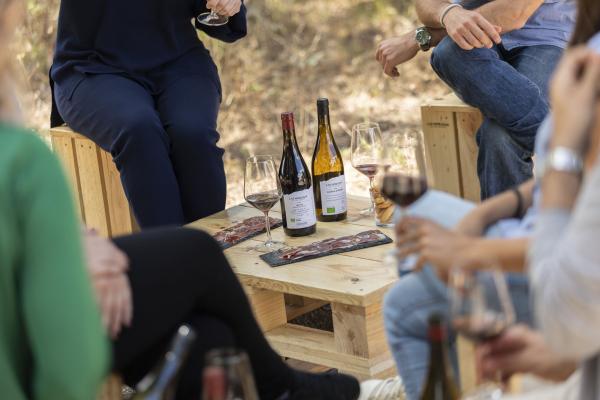
The wineries Bodegas de Las Moradas de San Martín, Bodega Bernabeleva, Bodega Marañones, Bodegas Don Álvaro de Luna, Bodegas y Viñedos Valleyglesias, and Las Bodegas Ca´di Mat offer evidence of the winemaking vocation of San Martín de Valdeiglesias and the areas surrounding it. The hillsides are covered in vines with the winding streams supplying the necessary water and the hundred-year-old techniques for winemaking are combined with the most up-to-date knowledge of viticulture. What happens is a real spectacle on the palate of whomever tests the result. White, rosé and red wines made with the Albillo Real and Garnacha varieties, among others. These wines are difficult to imitate and easily recognizable due to the characteristics. Some of them have a specific wine tourism offer. An option that will meet the expectations of the best sybarites.

The Enchanted Forest
In the town of San Martín de Valdeiglesias, 75 km from the capital, you can find The Enchanted Forest, a surprising botanical garden, the first of its kind in Europe. Its originality lies in its insertion in the middle of nature. Here you can lose yourself in its many paths and enjoy the more than three hundred living sculptures of surprising sizes.
It is an ideal park to enjoy with the little ones. More than 500 plant species from around the world will transport you to a real enchanted forest, which also houses mazes, various exhibitions, aromatic plants, etc. Take the Cactus Route, the Jungle Route or the Arts Route and let yourself be amazed by the magic of this enchanted place.
You can stay nearby and plan a truly magical getaway. The A Orillas del Lago apartments are just 10 minutes from the site and offer comfortable family bungalows on the shores of the San Juan reservoir

Plaza de Toros
The locals in San Martín de Valdeiglesias began building their bullring in 1854, completely financing it by themselves: nearly 20,000 pesetas at the time. It was built over the former Convento de la Concepción convent once home to Franciscan nuns. Due to the ecclesiastical expropriation carried out by Juan Álvarez Mendizábal in the mid-19th century, this convent almost entirely disappeared when the land was sold. Still remaining today is the main door which is used as the “triumphant exit” for bullfighting. Made of granite, it forms a large arch framed within an alfiz. It was inaugurated in 1856 although the inaugural line-up is considered to have fought in 1859. The sign has been reproduced in ceramic and now hangs on the main facade. The ring has been at the centre of many relevant events throughout its history such as during the festivals of Virgen de la Nueva in 1860, when bullfighter Martina García, one of the first women in bullfighting, participated. It’s a third-class bullring with a deeply-rooted bullfighting tradition. The all-time greats of bullfighting have come here from José Antonio Suárez, Palomo Linares, Rivera Ordoñez to José Tomás, among others. Plus, it’s been used as the background to several films. Worth noting is the fact that the "Sociedad Taurómaca de San Martín de Valdeiglesias” was constituted in 1854 to carry out the construction. The ring suffered such deterioration in the beginning of the 1950s that the Town Hall decided to buy it. It did so on 5 November 1956. Wood was used to build it following the norms of the time with a capacity for 2600 seats and a ring with a diameter of 45 metres and a 2 metre-wide alley. It’s undergone several renovations over the years. Capacity was expanded to the current 3676 in 1990.
Each villa is a stage
A complete program in which you are the protagonist

Rutas por San Martín de Valdeiglesias
Recorrer San Martín de Valdeiglesias es descubrir un destino perfecto para los amantes del senderismo, el cicloturismo y el enoturismo. El municipio ofrece rutas señalizadas como San Martín de Valdeiglesias Imprescindible, un recorrido ideal para conocer sus principales atractivos patrimoniales.
A ello se suma una completa propuesta de rutas enoturísticas entre viñedos y bodegas de la D.O. Vinos de Madrid, así como su integración en grandes itinerarios como dos etapas del Camino de Levante y dos del Gran Tour de CiclaMadrid. Todas estas rutas pueden realizarse por libre gracias a la descarga de tracks, facilitando una experiencia autónoma y adaptada a cada viajero.


Gastronomía: ¿Dónde comer en San Martín de Valdeiglesias?
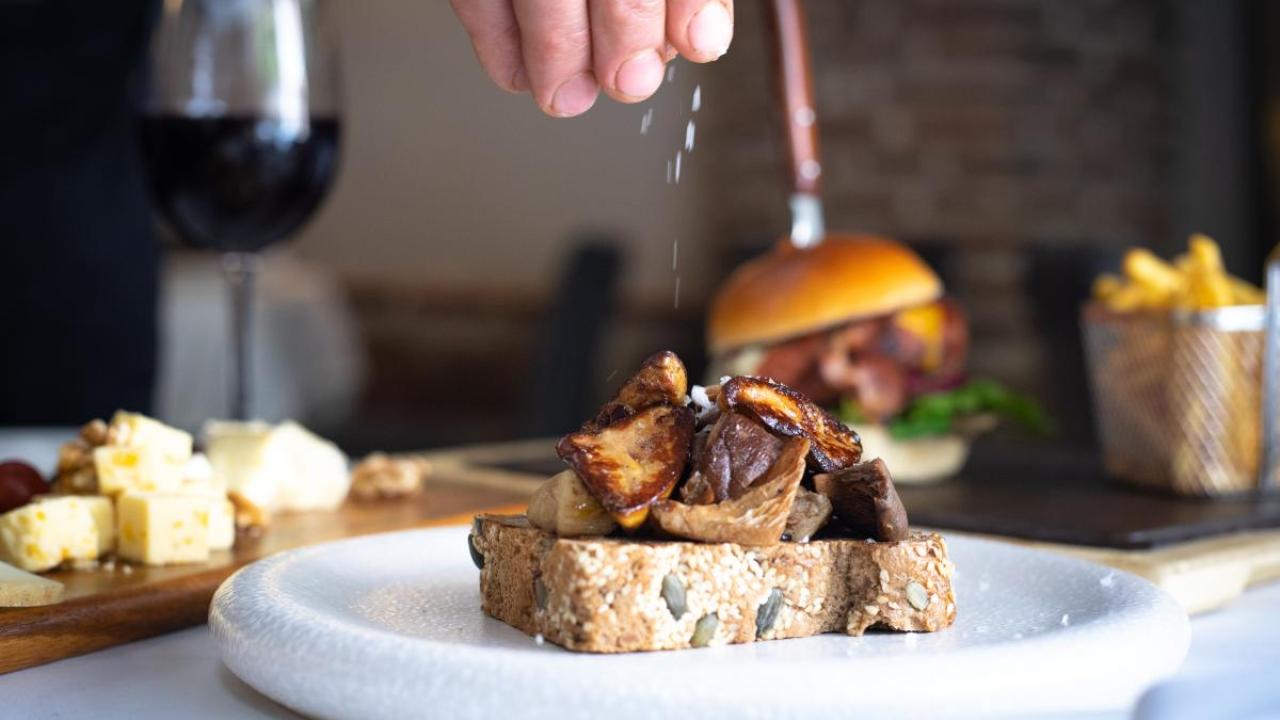
Hablar de la gastronomía de San Martín de Valdeiglesias es adentrarse en un mundo donde la sierra y el embalse de San Juan se funden en una cocina de carácter, marcada por los productos de temporada y el respeto a las recetas tradicionales. En sus restaurantes y asadores, el olor a brasa acompaña platos tan emblemáticos como el cordero asado, las carnes a la parrilla y los guisos de cuchara, donde legumbres y hortalizas de la zona adquieren un papel protagonista. Todo ello en un entorno que combina tabernas con encanto y terrazas que miran al paisaje natural.
A esta riqueza culinaria se suma una arraigada tradición vinícola, ya que la localidad forma parte de la D.O. Vinos de Madrid, con bodegas cercanas que elaboran excelentes tintos y blancos, perfectos para acompañar cada bocado y realzar los sabores de la tierra. El maridaje entre cocina serrana y vinos locales convierte cada comida en una experiencia completa y auténtica.
El recorrido gastronómico se completa con su repostería tradicional, en la que destacan dulces caseros que evocan la sencillez y el saber hacer de generaciones, poniendo el broche final a una propuesta que invita a disfrutar sin prisas. Pasear por sus calles, tras una buena mesa, es descubrir la esencia de un destino donde el sabor y la tradición caminan siempre de la mano.
Para garantizar una visita perfecta y descubrir todos los rincones donde saborear estos platos y dulces típicos, te recomendamos consultar el listado oficial de restaurantes de San Martín de Valdeiglesias.
Alojamiento: ¿Dónde dormir en Chinchón?
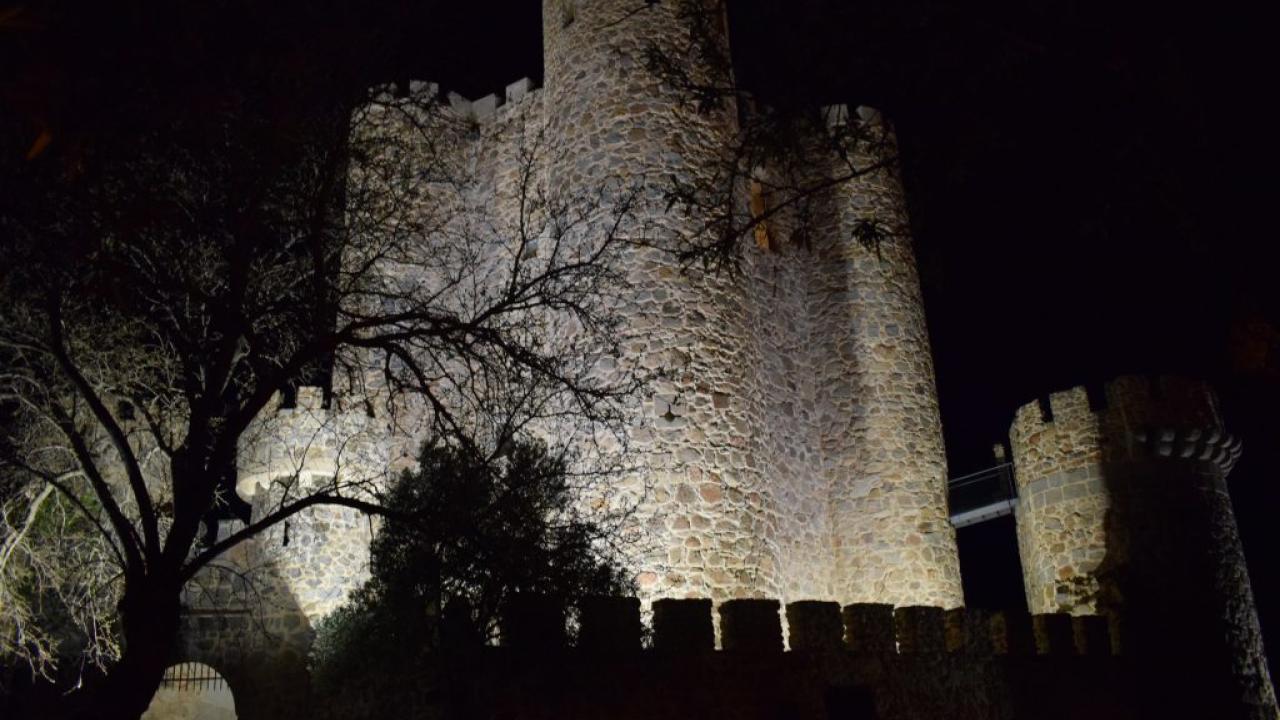
Elegir dónde dormir en San Martín de Valdeiglesias es la mejor manera de sumergirse en la serenidad de un entorno natural privilegiado, donde la sierra, los bosques y la cercanía del embalse de San Juan marcan el ritmo de la estancia. La oferta de alojamiento en la localidad combina a la perfección comodidad y autenticidad, con opciones que van desde acogedores hoteles rurales hasta casas con encanto integradas en el paisaje, pensadas para desconectar y disfrutar del entorno.
Entre sus propuestas destacan los alojamientos situados en fincas y antiguas edificaciones rehabilitadas, donde la piedra y la madera conservan el carácter tradicional, así como apartamentos turísticos con vistas a la naturaleza y pequeños hostales familiares que apuestan por una atención cercana. Todo ello sin renunciar a los servicios actuales que garantizan una estancia confortable en cualquier época del año.
El privilegio de alojarse en San Martín de Valdeiglesias reside también en la posibilidad de despertar rodeado de calma, explorar rutas naturales o disfrutar del ambiente junto al agua, convirtiendo cada noche en parte esencial de la experiencia. Ya sea buscando una escapada romántica, un refugio en plena naturaleza o una base para descubrir los tesoros de la zona, la hospitalidad local asegura momentos inolvidables en uno de los destinos más singulares del suroeste madrileño.
Para encontrar la opción que mejor se adapte a tus necesidades y asegurar tu reserva en los establecimientos más auténticos, te recomendamos consultar el listado oficial de alojamientos de San Martín de Valdeiglesias para planificar tu descanso en el corazón verde de la Comunidad de Madrid.
¿Cómo llegar a San Martín de Valdeiglesias?
Descubre como llegar y moverte por San Martín de Valdeiglesias fácilmente
Acceso por carretera
Para quienes viajen en coche, la principal vía de comunicación es la Autovía de los Pantanos (M-501), que conecta directamente la capital con el municipio. También cuenta con la carretera N-403, que enlaza la localidad con las provincias de Ávila y Toledo. La fluidez de la M-501 permite situarse en el centro de Madrid en un tiempo estimado de una hora, facilitando asimismo el acceso al Embalse de San Juan y a los entornos naturales de la Sierra Oeste.
Transporte público interurbano
La conectividad con Madrid y las poblaciones limítrofes está garantizada mediante una red de autobuses interurbanos que conectan de forma regular el municipio con los principales nodos de transporte de la región.
- Conexión con Madrid: Desde el intercambiador de Príncipe Pío, parten de forma regular los autobuses de la línea 551, que une la capital con San Martín de Valdeiglesias, continuando en algunos trayectos hacia El Tiemblo o Cebreros.
- Conexiones transversales: La línea 548 conecta el municipio con localidades vecinas como Aldea del Fresno y Villa del Prado, mientras que otras rutas locales facilitan la movilidad hacia los núcleos residenciales y áreas recreativas del entorno.
- Servicio de refuerzo: Durante la temporada estival y los fines de semana, los servicios incrementan sus frecuencias para absorber la demanda de viajeros que se desplazan a disfrutar de las zonas de baño autorizadas.
Movilidad interna y accesibilidad
Una vez en la localidad, el movimiento entre el casco histórico, donde destaca el Castillo de la Coracera, y los centros deportivos o comerciales se realiza de manera cómoda. Al ser un municipio que alberga urbanizaciones periféricas y zonas de gran afluencia como el Pantano de San Juan o el Bosque Encantado, las paradas de autobús están dispuestas para acercar a los usuarios a los puntos neurálgicos. Para quienes acceden en vehículo privado, existen áreas de estacionamiento habilitadas en los accesos del núcleo urbano y cerca de los principales atractivos turísticos.
Para planificar su viaje con mayor precisión y conocer la ubicación exacta de las paradas y frecuencias, descarga los mapas de transporte oficiales disponibles en esta sección. Contar con estos planos en su dispositivo le permitirá optimizar sus desplazamientos y disfrutar de San Martín de Valdeiglesias con total comodidad.
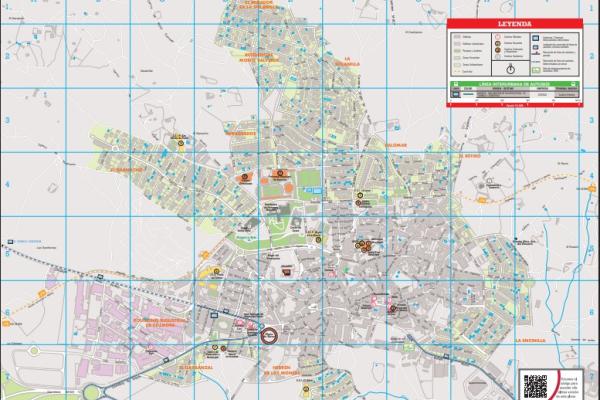 Mapa de San Martín de Valdeiglesias


