Navalcarnero
Navalcarnero, a town for families
Having been around for more than five centuries, Navalcarnero’s historical centre preserves the essence of a Castilian town that emerged at a crossroads and trading hub.
Its story is the story of Castile itself. Its most characteristic features are its architecture that attest to its origins, along with mural paintings and sculptures that are the products of its passage into modernity.
Before it was awarded the status of “Villa”, it was a place that subsisted on the labours of the countryside. It remained unnoticed for a long time, until the 17th century, when it hosted the union between Philip IV and Mariana of Austria. Now in illustrious company, it made progress, planted vineyards and produced wines, built farmhouses and manor houses based around the town church and the Castilian square. To walk through its streets is to enter into the history of a crossroads town that had tasted success and knew how to take advantage of it.
Enjoy the wines and culinary delights of Navalcarnero that come to your table directly from the fields: garnacha or malvar grapes in your glass and chickpeas or mutton on your plate.
But you can also get to know it fully in the company of an expert tour guide who’ll happily show you around.

Plaza de Segovia-Heritage Site
The complex that consists of the Plaza de Segovia and the church of Nuestra Señora de la Asunción was declared a Monument of Historical-Artistic Interest and later, a Site of Cultural Interest within the category of heritage sites. The Plaza de Segovia is a Castilian town square with an irregular layout and with porticoes on three of its four sides. The balconies and windows are built of wood and wrought iron and present a pleasing contrast with the granite pillars. It is an exceptional witness to the history and daily life of the inhabitants of Navalcarnero and was built between the 16th and 17th centuries. The most emblematic building in this site is the former Casa Consistorial, which dates back to 1588.

Iglesia Parroquial de Nuestra Señora de la Asunción (Parish Church)
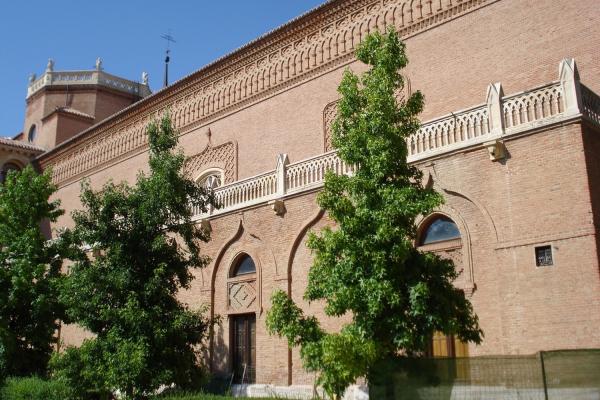
The parish church is the oldest landmark in Navalcarnero. Its architecture today is the result of almost 500 years of renovations, expansions, demolitions and restorations. It is a complex reality where various artistic styles intermingle. It houses a magnificent collection of altarpieces which attest to the evolution of Baroque Art in the region.

Navalcarnero Interpretation Center
The Interpretation Centre is a magnificent place to begin our visit, as it recreates the full expression of Navalcarnero’s culture of wine.
It is located in an original farmhouse which provides a unique setting: Navalcarnero, land of wine. You will learn about certain topics such as the winemaking system, the work in the cellar, the importance of the caves, the sale of wine, its transport and related trades.
Admission fee to the Interpretation Centre is €2 (reduced fee €1.50).

Ermita de San Roque (Chapel)
It is one of the four key shrines, along with those of San Juan, San Cosme and San Damián, and San Isidro. With the exception of the Shrine of San Isidro which was built much later, they were all built in the 16th century, although they have been extensively renovated. The Shrine of San Roque is especially important as it belonged to the family of Juan Antonio de Ribera, the court painter for Charles IV and Ferdinand VII, who embellished it with his paintings.

Optical illusions in Navalcarnero
One day, Navalcarnero decided to make over part of its façades to represent the creative work of an important painter and film poster designer named Alberto Pirrongelli.
His work is worth a look and therefore we recommend taking some time out to stroll through the streets of this Castilian town to contemplate the work of this unique artist. What Pirrongelli created in Navalcarnero was a fabulous open-air museum. Some of his frescoes, such as that of the church of San Pedro, deal with religious topics./n
His murals, which are able to deceive the most trained eye, make us see façades where there are only walls. And not just this:in these optical illusions, distributed all over the town, we also find the history of Navalcarnero, its inhabitants, and their main professions.
Otros imprescindibles que ver en Navalcarnero
Explorar la Villa de Navalcarnero en profundidad supone descubrir joyas del patrimonio menos conocidas pero igualmente fascinantes, como el Parque Histórico de San Sebastián, un pulmón verde emblemático que rinde homenaje a la identidad local y alberga rincones monumentales cargados de simbología e historia. El mapa patrimonial se enriquece con el Parque Museo Feliciano Hernández, un sorprendente espacio al aire libre donde la escultura contemporánea y las formas abstractas dialogan con el entorno, guardando la vanguardia artística entre parajes de tradición castellana.
En el tejido urbano sobresale la Casa de la Lonja, un edificio civil cargado de historia que evoca el antiguo pasado comercial y administrativo de la villa, y la encantadora Plazuela del Mercado, que hoy representa la arquitectura popular más noble y el dinamismo cotidiano de la localidad. Para quienes buscan la esencia del paisaje de la Comunidad de Madrid, la visita se extiende por sus calles y plazas descubriendo la hospitalidad de sus mesones tradicionales y su red de bodegas, que ofrecen el contrapunto enológico y cultural perfecto al recorrido por una de las más bellas e históricas Villas de Madrid.

San Sebastián Historic Park
The historical park of San Sebastián lies near the historical centre and was built with the goal of serving as a nexus between the past and the present and a meeting place for the town’s inhabitants. An area full of well-tended gardens for the pleasure of inhabitants and visitors alike, it hosts a collection of sculptures that represent some of the historical individuals that, at one time or another, have had links to the town. It is also a good place from which to view the sun set, as the last rays slip beneath the wall formed by the peaks of the Sierra de Gredos. The park is accessible by all.

Parque Museo Feliciano Hernández
An open-air space dedicated to the memory of the modern sculptor Feliciano Hernández, some of whose works are scattered all over the town. It consists of a small building that houses compositions that were created to be exhibited in interior spaces. The work of Hernández, who was originally from Avila but had lived in Navalcarnero since his childhood, is a part of the Constructivist movement and undoubtedly one of the most relevant examples of Spanish sculpture in the second half of the 20th century.

Casa de la Lonja
This is an old manor house that once had a more extensive façade that included the adjoining houses. What interests us are the decorations that include a coat of arms, balconies with 19th century wrought iron sections and a beautiful interior patio in the austere Toledo style. Over time, the ground floor of the building was used as a shop and was later renovated and used as a Museum.

Casa de la Cultura
It is a magnificent example of a Castilian manor house, owned by the Delgado family that traces its roots back to the 18th century. Its facade has wrought iron bars and the family’s coat of arms. It is currently used as a centre for cultural activities.
Plaza and Iglesia de San José (Church)
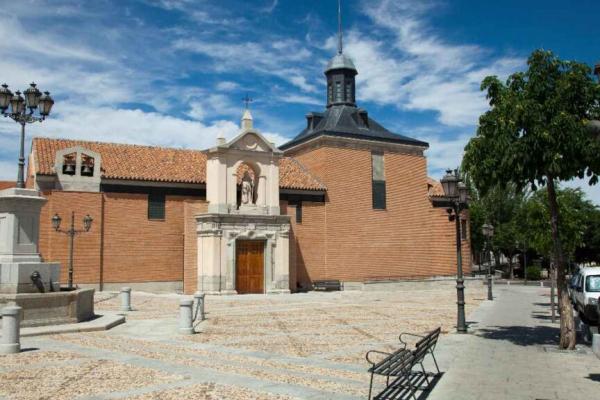
Although no trace remains of the former church which was built in 1657 on a small shrine, the Town Council of Navalcarnero has recently rebuilt it fully and made all attempts to faithfully recreate its historical appearance. This marks the recovery of one of the most characteristic symbols of the town, which was a hallmark of the identity of the inhabitants of the former quarter of Villarino.
Plaza de Alonso de Arreo and Plazuela del Mercado
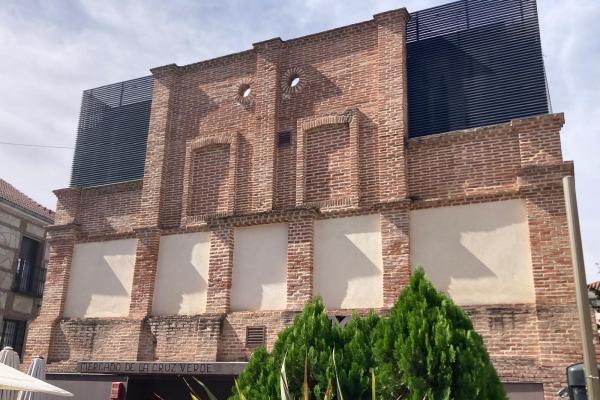
The Plaza de Alonso de Arreo is within the larger Plazuela del Mercado. It is a small square that was recently built and holds the mural paintings of Alberto Pirrongelli, with mythological scenes related to wine production. The Plaza Alonso de Arreo is dedicated to the eponymous governor and native of Navalcarnero who, in 1520, joined the revolt of the comuneros along with twenty armed men, an event that was immortalised by Alberto Pirrongelli in a large mural painting. The Museum of Wine is also located here but is currently closed for renovations. The squares are accessible by all.
Encuentra los imprescindibles de Navalcarnero de un vistazo
Localiza fácilmente los principales atractivos turísticos de Navalcarnero en un solo vistazo. Este mapa te permite identificar de forma clara los puntos de interés más destacados del municipio y planificar tu visita de manera sencilla y eficiente.
Much more at the Tourism Office
Visit us and we’ll tell you all you need to know.

Tourism Office of Navalcarnero
Located in the old town hall, it is undoubtedly the most representative building whose façade overlooks the Plaza de Segovia.
Since its establishment in May 1998, Navalcarnero has consistently worked to promote the town as a tourist destination, placing it as one of the most popular in the Autonomous Region of Madrid.
There you can obtain detailed information on all tourist and cultural resources Navalcarnero has to offer (main attractions, tourist routes, events, etc.). There are also guided tours for groups on working days, which include sites such as the Parish Church of Nuestra Señora de la Asunción or the Centre for Interpretation of Navalcarnero. Booking in advance is required to enjoy such visits. The shrine and trompe-l'œil routes, which take place every Sunday at 1 pm, must also be mentioned.

Plaza del Teatro
The Municipal Theatre, also called the Teatro Centro, is the principal element of the Plaza del Teatro which draws attention to the building’s main façade which is built of red brick. It was built in the early 20th century by the workers’ association Sociedad Centro Obrero, and it recalls a period of cultural splendour where the most lively sections of the town played important roles, against a backdrop of social strife all over Spain.

Muñoz Martín Wineries
The wineries are located at the heart of the old town of Navalcarnero. These wineries were founded around the year 1930. Today, the wineries are led by the 5th generation of vintners with the same enthusiasm and craftsmanship as ever. Inside the wineries, the cave and the roof made of old wooden beams are kept in perfect condition, in contrast with the new production systems.
The visit includes a tour of the winery and cave, with the possibility of visiting the vineyards, as well as the tasting of two of its wines accompanied by a tapa.

Andrés Díaz Winery
Bodegas Andrés Díaz invites you to enjoy a pleasant and entertaining time by taking a guided tour through its wineries, learning about the production and conservation process of its dÓrio wines. At the end of the visit you will be able to take part in a complete wine tasting.
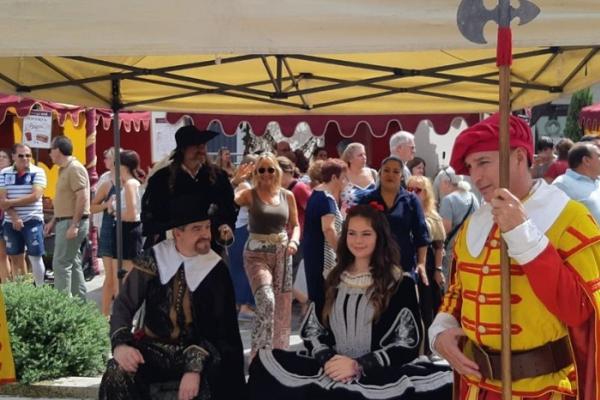
Calendario de Fiestas y Eventos en Navalcarnero
Descubrir la riqueza de las tradiciones de Navalcarnero es la mejor forma de conectar con la esencia de una villa que ha sabido convertir sus costumbres e hitos históricos en espectáculos de calado nacional. El evento más emblemático tiene lugar a finales de agosto con el Real Mercado del Siglo de Oro, declarado Fiesta de Interés Turístico; una sobrecogedora celebración que engalana por completo el casco histórico para recrear con rigor las célebres "Bodas Reales entre don Felipe IV y doña Mariana de Austria", acontecidas en la localidad en 1649, devolviendo a Navalcarnero su esplendor palaciego de la mano de comediantes, artesanos y caballeros. No menos espectacular es la consolidada Feria del Vino, celebrada habitualmente en primavera, donde la villa rinde homenaje a su arraigada identidad vitivinícola con catas, folclore y la apertura de sus históricas cuevas subterráneas.
La vida festiva también late con fuerza a principios de septiembre durante las Fiestas Patronales en honor a Nuestra Señora de la Concepción, que alcanzan su máximo fervor popular con emotivos actos religiosos, encierros taurinos de gran tradición y actividades tradicionales que congregan a vecinos y visitantes en sus plazas porticadas. El privilegio de vivir la tradición de la villa se completa a lo largo del año con un sugerente programa de recreaciones y citas culturales que mantienen viva la memoria de la localidad. Para planificar tu escapada en los momentos más vibrantes del año, te recomendamos consultar el listado oficial de eventos de Navalcarnero, una herramienta esencial para descubrir el alma de esta histórica e ilustre Real Villa.
Gastronomía: ¿Dónde comer en Navalcarnero?
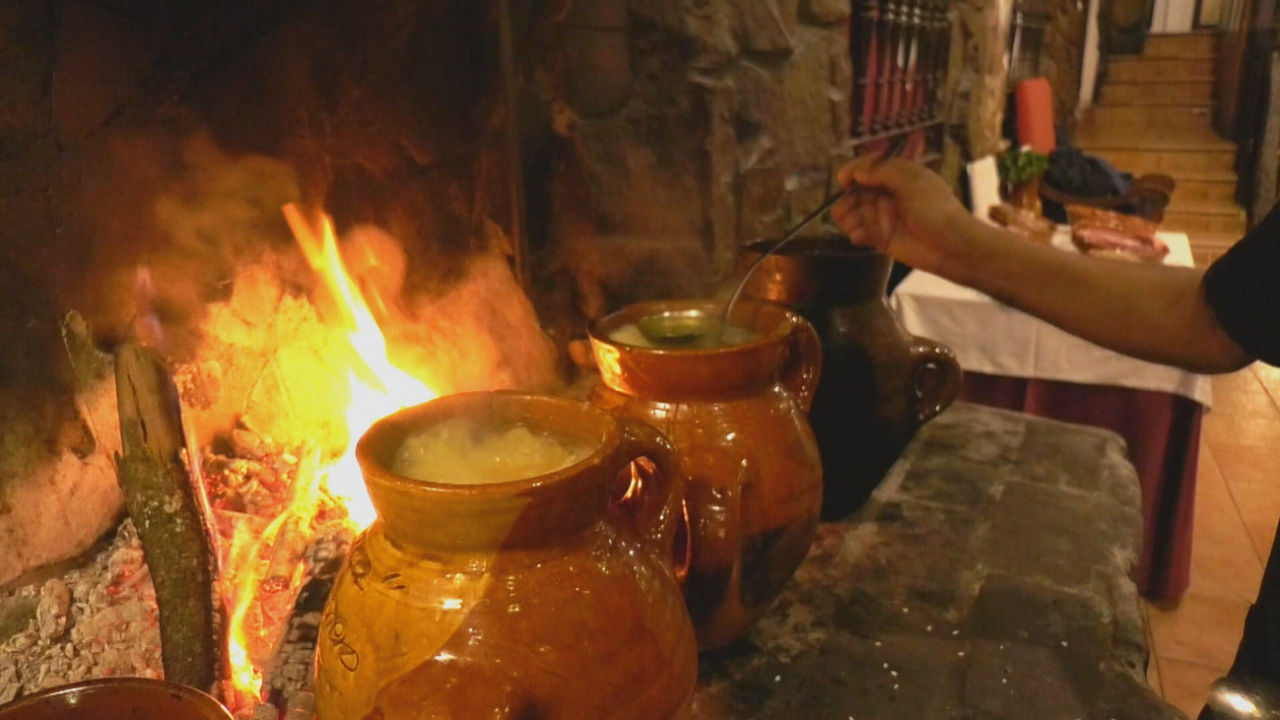
Sabor castellano, ollas tradicionales y herencia vitivinícola
Hablar de la gastronomía en Navalcarnero es rendir homenaje al recetario castellano más auténtico, donde el aroma a leña de encina guía al comensal hacia experiencias culinarias inolvidables en sus famosos hornos de asar. La experiencia de comer en esta joya de las Villas de Madrid tiene su epicentro en las cuevas subterráneas y mesones históricos que rodean la Plaza de Segovia, donde el cordero lechal, el cochinillo asado y la contundente Olla del Segador son los grandes protagonistas junto al extraordinario garbanzo de la comarca.
El privilegio de degustar estos manjares alcanza su máxima expresión al maridarlos con los celebrados caldos tintos y rosados de la D.O. Vinos de Madrid elaborados en la propia localidad, el preludio perfecto para descubrir su pastelería tradicional.
Este legado artesano cobra vida en su repostería típica con dulces de nombres tan singulares como los retorcidos, los asustados o los tradicionales corazones de la Virgen, elaboraciones que endulzan el paseo por sus calles porticadas y cierran con broche de oro cualquier banquete navalcarnereño.
Alojamiento: ¿Dónde dormir en Navalcarnero?
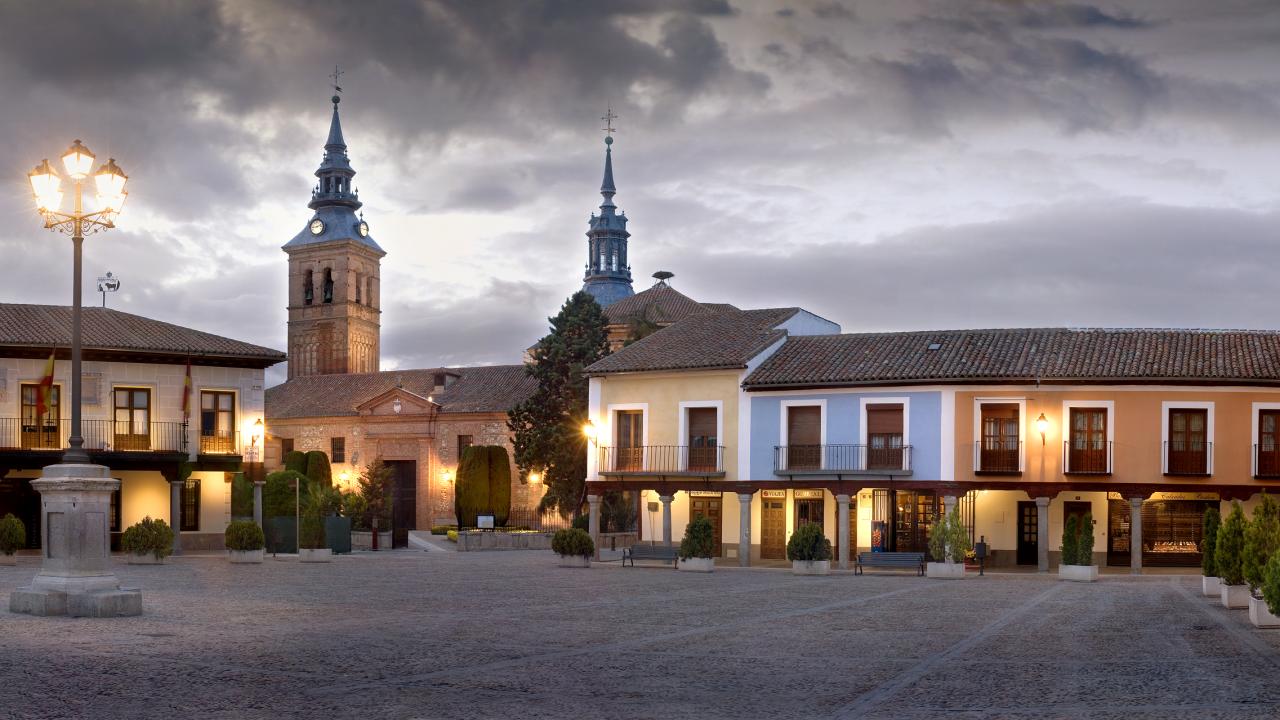
Elegir dónde dormir en Navalcarnero es la mejor forma de completar una inmersión total en la calma y el sosiego de esta villa histórica, permitiendo descubrir el encanto de sus plazas porticadas y sus trampantojos bajo la luz de los faroles. La oferta de alojamiento en la localidad destaca por su capacidad de fusionar el confort moderno con entornos cargados de tradición castellana, teniendo como máximo exponente sus hoteles y hostales con encanto, establecimientos situados estratégicamente para disfrutar del casco antiguo que ofrecen una atmósfera acogedora e íntima.
El privilegio de pernoctar en este entorno se extiende a una cuidada selección de casas rurales y apartamentos turísticos de la zona, muchos de los cuales ocupan antiguos inmuebles rehabilitados que conservan la esencia de la arquitectura civil y los patios de la comarca. Ya sea que busques una estancia con vistas privilegiadas a los monumentos del centro o un refugio tranquilo en los alrededores rodeado de viñedos, la hospitalidad navalcarnereña garantiza una estancia inolvidable.
Cómo llegar a Navalcarnero?
Descubre como llegar y moverte por Navalcarnero fácilmente
Navalcarnero goza de una ubicación estratégica en el suroeste de la Comunidad de Madrid, consolidada como una de las villas históricas más relevantes de la región. Su excelente conectividad facilita el acceso desde cualquier punto de la comunidad, ofreciendo diversas alternativas tanto para quienes optan por el vehículo privado como para los usuarios del transporte público.
Acceso por carretera
Para quienes viajen en coche, la principal vía de comunicación es la Autovía del Suroeste (A-5), que conecta Madrid con Badajoz. El municipio dispone de varios accesos directos, siendo las salidas 28, 29 y 31 las más utilizadas para entrar al casco histórico, a los nuevos desarrollos residenciales como El Pinar o a las áreas industriales. Asimismo, la M-600 une la localidad con municipios vecinos como Sevilla la Nueva y El Escorial, mientras que la M-404 facilita la conexión con Chinchón y el sur de la región. La fluidez de la A-5 permite situarse en el centro de la capital en un tiempo estimado de treinta y cinco minutos.
Transporte público interurbano
La conectividad con Madrid y las poblaciones del entorno está garantizada mediante una amplia red de autobuses interurbanos que conectan con los principales nodos de transporte del sur y el centro de la región.
- Conexión con Madrid: Desde el intercambiador de Príncipe Pío, parten de forma regular las líneas 528, 529, 529A, 530 y 531. La línea 528 es la más directa, comunicando el centro de la capital con el casco urbano de Navalcarnero en un tiempo competitivo.
- Conexiones con otros municipios: Navalcarnero actúa como nudo de transporte en la zona suroeste. Líneas como la 529H conectan el municipio con el Hospital de Móstoles, mientras que otras líneas enlazan la localidad con Móstoles Central (conexión con Cercanías C-5 y MetroSur), Alcorcón y localidades limítrofes.
- Servicio nocturno: Para los desplazamientos durante la madrugada, la línea N505 mantiene el servicio operativo desde Madrid, asegurando la movilidad durante toda la noche.
Movilidad interna y accesibilidad
Una vez en la villa, el movimiento entre los diferentes barrios, las zonas deportivas y el emblemático casco histórico se realiza de forma eficiente. El diseño de las paradas de autobús está orientado a facilitar el acceso de los vecinos y visitantes a la Plaza de Segovia y los museos locales sin necesidad de utilizar el vehículo propio. Para quienes acceden en coche, Navalcarnero dispone de amplias zonas de estacionamiento en las inmediaciones del centro histórico, lo que permite disfrutar de su gastronomía y patrimonio con total comodidad.
Para planificar su viaje con mayor precisión y conocer la ubicación exacta de las paradas y frecuencias, descarga los mapas de transporte oficiales disponibles en esta sección. Contar con estos planos en su dispositivo le permitirá optimizar sus desplazamientos y disfrutar de Navalcarnero con total comodidad.
 Mapa de Navalcarnero
A new window will open

The villas invite you to disconnect
Find a plan tailored to you