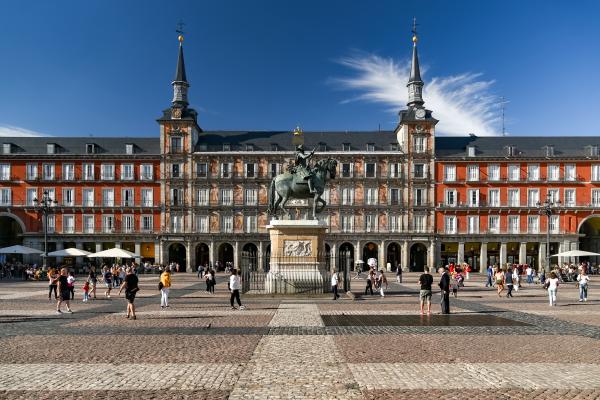
Manzanares El Real
Manzanares El Real, a town at the foot of a castle
Manzanares is a town of good fortune. It emerged right at the foot of the Pedriza peak and then immediately up sprang a castle, the old one and later on, another one that was as pretty as a picture, this castle of the Mendoza family, that is now a firm part of its identity. The River Manzanares, which gives the town its name, passes through soon after emerging from its source in the peaks of the Sierra de Guadarrama, in the midst of a National Park. What’s more, the reservoir of Santillana is home to an enormous colony of aquatic birds that live there.
The Mendoza family castle is the true emblem of Manzanares El Real. This building is the architectural embodiment of a society caught between two eras, the Middle Ages with its defensive elements such as the pre-wall or the bent entrance; and the humanist Renaissance with its large salons, decorated façades and magnificent lookout points, more suited to a palace.
But the granite colossus of La Pedriza is a castle in itself, an authentic fortress surrounded by apparently insurmountable barriers of granite. These are walls that have been carved by the effect of water, wind and sun, over thousands of years. Watchtowers stand on them or behind them, situated on other rocks. The highest tower is El Yelmo. These elevated locations are also the nesting sites of griffon vultures and home to mountain goats who maintain a constant watch. And within are a thousand natural labyrinths that one might suppose to be there with the express intention of dissuading occupying forces; hidden enclosures that can only be reached by means of sharply inclined stairways that seem to go on for every; vertical trails that lead to almost inaccessible heights.
Manzanares El Real, the castle of the Mendoza family, La Pedriza, the Sierra de Guadarrama National Park... A natural complex that only requires time and enthusiasm, nothing more.

Manzanares el Real Castle
In the Sierra de Guadarrama National Park, at the gates of La Pedriza, is the Manzanares el Real castle, also known as the Mendoza castle or new castle. This late medieval castle, built in the 15th century as a palatial residence for the powerful Mendoza family, is the best preserved in the Community of Madrid.
The Manzanares el Real castle was built on a Romanesque-Mudejar church and stands out for its mix of Elizabethan Gothic styles and Spanish-Muslim elements. It is the work of architect Juan Guas and served as a precedent for the Palacio del Infantado in Guadalajara.
It currently houses a Medieval Interpretation Center, as well as a collection of tapestries, paintings, armor and furniture from the 16th to 19th centuries. It was declared a Historical-Artistic Monument in 1931.
The castle offers guided tours and allows events to be held.
The dramatized visits to the Manzanares Castle are intended to bring us closer to the period of the time, through characters belonging to one of the most influential families of the time, the Mendozas. During the plot we will discover the history, architecture, uses and customs of the different rooms of the castle. In addition, you will be able to tour a large part of the castle, thus being able to see the connection of rooms and knowing the social provisions of each social group.
Without a doubt, the most educational and fun way to learn about the culture and history of Madrid.

Sierra de Guadarrama National Park: Adventure and Nature near Madrid
The Sierra de Guadarrama, declared a National Park, invites you to explore a world of wild beauty just a few kilometers from Madrid. Its mountainous landscapes, centuries-old forests, and green valleys will captivate you with their tranquility and rich biodiversity.

Iglesia de Nuestra Señora de las Nieves (Church)
The Church was built in the late 15th century, on the orders of a nobleman, II Duque del Infantado, Don Íñigo López de Mendoza y Luna. The same architects who built the 15th century castle, Juan Guas and Lorenzo Vázquez de Segovia, were given the commission. Its architecture is a blend of Gothic and Roman styles, while maintaining the characteristics of each. It is a church with three naves, separated by arches on stone columns. The central nave is Roman in style and headed by a pentagonal presbytery. The portico is located at the south of the building and was built in the mid-16th century in the Renaissance style with eight elliptical arches and one round arch. The building is accessible by all.

Ermita de Nuestra Señora de la Peña Sacra (Chapel)
Visitors can have a panoramic view of La Pedriza from this shrine which is located on the cliff of Peña Sacra. First built in the 16th century, it was subsequently added to in the 17th century. The image of the Virgen de la Peña Sacra is a modern copy of the original 19th century image which disappeared, with the exception of the Child, which is an original. Different works have drawn connections between the Peña Sacra and Druidic cults, owing to the presence of Celtic priests who celebrated their rituals in these forests in the 1st century BCE. In 1769 a fire that broke out on the Virgin’s feast day destroyed the church, with the exception of the sacristy. Although the shrine is not accessible, visitors may come to this location for the unforgettable views of the town and La Pedriza that the site provides.
Otros imprescindibles que ver en Manzanares El Real
Explorar la Villa de Manzanares El Real en profundidad supone descubrir joyas del patrimonio menos conocidas pero igualmente fascinantes, como el Castillo Viejo, la primitiva fortaleza de la localidad erigida en el siglo XIV que, con sus evocadores muros de granito, custodia el origen del poder señorial de la saga de los Mendoza en la sierra. El mapa monumental se enriquece con el histórico Puente de la Cañada (o Puente Viejo), una joya de la arquitectura civil medieval que cruza el río Manzanares y que guarda la memoria de la Mesta y el paso de los pastores transhumantes entre los bellos paisajes del Guadarrama.
Para quienes buscan la esencia del paisaje de la Comunidad de Madrid, la visita se extiende de forma obligada hacia las afueras con el majestuoso Embalse de Santillana, un auténtico oasis de biodiversidad y humedal protegido que ofrece un espectáculo visual único al reflejar el perfil de La Pedriza en sus tranquilas aguas, sirviendo como el contrapunto natural perfecto al recorrido histórico por una de las más bellas Villas de Madrid.

Old Castle of Manzanares El Real
The Old Castle lies on one end of a hill, on the banks of the River Manzanares and has magnificent views of the urban centre and La Pedriza, the most important granite structure in the Sierra de Guadarrama. Built as a fortress during the Reconquest and with links to the De la Cerda family through Leonor Núñez de Guzmán, in 1383 it was transferred to the Mendoza family by King Juan I of Castile. They erected the manor estate of Manzanares. Its use and splendour diminished in 1475 when this powerful family decided to build a new castle.
The difference between the old and the new castle built in a similar style, lies in the latter’s dimensions and the use that was made of it. Where the first was meant for defence, the new castle was also a palatial residence.
The remains are open to all, although its current state is in striking contrast to the magnificent restoration that was carried out on the neighbouring castle of the Mendoza family. Exploring the bases of the ancient castle walls evokes an idea of its splendour and defensive use. Also of a quadrangular layout, we can distinguish the bases of the old towers at the corners, three cylindrical structures, with the largest one serving as the keep. Its walls, some of which are still four metres high, were built in the Mudejar style with granite masonry and linked with brickwork. The shields of the families that, through matrimonial ties, owned this castle can still be seen: Mendoza, Velasco and Toledo.
It has been declared an Asset of Historical Interest within the Region of Madrid.

Embalse de Santillana (Reservoir)
The Santillana dam was built in 1908 and is part of a larger project initiated by the Marqués de Santillana. He sought to provide water and electricity to Madrid and nearby towns. The project consisted of several dams located at different points of the River Manzanares, the largest of which was the dam of Santillana. It was also the first one to be built. The dam is of historical interest as it recreates the architectural style of the castle of the Mendoza. The intake tower is the most characteristic element of the dam, both for its aesthetics and its height. It is also the only element visible in the flooded zone, with a height of 35 metres. It has an octagonal shape and is decorated with stone balls on the sides that are reminiscent of the castle, and may therefore, be considered as homage to the latter.

Puente de la Cañada Real - “Puente Viejo”
Its origins date back to the founding of the town, although it has a more modern look, thanks to multiple restorations and repairs that it has undergone throughout the 16th, 17th and 18th centuries. Juan de Herrera and Juan Bautista de Toledo are said to be responsible for its building. It is constructed of stone masonry, has just one arch and is perfectly adapted to the landscape. The importance of this bridge lies in the fact that it was an essential part of the former road called the Cañada Real Segoviana, used by the Mesta association of livestock owners to transport their animals in Spain. This was an important source of income for the town which charged a toll –called El Pontazgo– for the passage of animals and goods.

Fuente de las Ermitas (Fountain)
It is a fountain with a drinking trough, a distribution chamber and several canals (early 16th century). It was used by the Mesta in their passage along the Cañada Real. The fountain is built with large blocks of granite, topped by a pediment decorated with the coat of arms depicting the betrothal of Don Íñigo López de Mendoza and Doña María de Luna. The distribution chamber is a cubic structure of granite stones and mortar. It collects water from two canals and distributes and channels it into the fountain by means of a third canal located in the south, where a spout provides water for human consumption.
Encuentra los imprescindibles de Manzanares El Real de un vistazo
Localiza fácilmente los principales atractivos turísticos de Manzanares El Real en un solo vistazo. Este mapa te permite identificar de forma clara los puntos de interés más destacados del municipio y planificar tu visita de manera sencilla y eficiente.
Much more in our Tourism Office
We would love to assist you and make your visit as satisfying as possible.

Tourism Office of Manzanares El Real

La Pedriza Visitors’ Centre
The Visitors’ Centre is located at a distance of two kilometres from Manzanares El Real, along the trail that leads through Collado de Quebrantaherraduras and intersects with Canto Cochino.
It consists of two buildings. The main building, which is also the National Park’s area for environmental education, has a permanent exhibition titled Journey to the Sierra de Guadarrama, which takes visitors from the peaks to its valleys and offers innumerable trails and activities for all tastes, along with trails for the youngest visitors, workshops on amphibians, legendary trails or excursions to adjoining villages.
The outer section of the centre has nine thematic areas that depict different natural aspects of the Sierra de Guadarrama, with special emphasis on an itinerary for persons with visual disabilities. Both the centre and its facilities may be accessed by people with reduced mobility.
By means of trails that wind through peaks and paths, or routes of varied difficulty, we arrive at El Yelmo, Canto Cochino, El Tolmo, el Cancho de los Muertos or Cuerda Larga, natural spaces of undisputable beauty where visitors can spend a day hiking, rock climbing or bathing in the natural pools of Charca Verde or Tranco. It’s also possible to have a picnic on the banks of the river or the spot earmarked for this purpose near Canto Cochino. Above, in Prago Piluca is a shelter with the best views of La Pedriza.

CiclaMadrid in Sierra de Guadarrama: Manzanares El Real
This is a simple tour through some of the most beautiful places and villages in the Sierra de Guadarrama mountains. The area is just full of natural and scenic value. Because of the length and differences in level that must be overcome, using an electric bike is recommended for people not very accustomed to rather long trips. Nonetheless, it can also be done on a traditional bike. The bike route takes about 4 hours. Continue reading...

Birdwatching in the Santillana reservoir
It is a linear route, round trip and 4.1 km of low difficulty. From the Castle of Manzanares begins the route following the layout of the M-608. Part of the route is made by the Cañada Real Segoviana, via protected livestock, one of the four large royal canyons that cross the Community of Madrid. It is not necessary to leave it until the height of the Km. 20,500, where the Road of the Jaralón is taken towards the reservoir to finish the itinerary.
The Santillana reservoir dates back to 1907 when the old dam was built, whose last stone was laid by King Alfonso XIII in 1908. The present one, which regulates the flow of the Manzanares River, was completed in 1969. It has an area of 1052 hectares ( maximum) and the distance between opposing banks, 30 km, yields a total capacity of 91 hm³. In its waters, pike and carp predominate. It also has an outstanding ornithological interest, since there are many birds that take refuge there.
From any of the viewpoints enabled in its surroundings (such as the Peña El Gato or the Mirador del Embalse), you can see a rich and varied ornithological fauna among which stand out examples of mallard, common spoon, mallard frieze and duck Colorado. There are also other species such as common teal, tawny duck, lavanco loon or common grebe. Other common aquatic birds are the European porrón, the porrón, common coot, the large cormorant and the seagull gull.
The best time to travel the route is spring and winter, breeding and wintering seasons of waterfowl nesting there.
The web http://viaspecuariasdemadrid.org/ offers precise maps of this route.

Calendario de Fiestas y Eventos en Manzanares El Real
Descubrir la riqueza de las tradiciones de Manzanares El Real es la mejor forma de conectar con la esencia de una villa que ha sabido convertir sus costumbres y su amor por la cultura en espectáculos de gran arraigo popular. El evento más emblemático tiene lugar cada primavera con el célebre Festival de La Pedriza, una cita imprescindible que reúne competiciones de escalada, proyecciones y conferencias de alpinistas de primer nivel, transformando el municipio en el epicentro nacional de la montaña. No menos espectaculares son el mágico Festival de Cuentos, celebrado habitualmente en verano, donde narradores orales toman los rincones históricos de la villa, y el aclamado FIMMER, el Festival Internacional de Cortometrajes y Mediometrajes que consolida la apuesta de la localidad por el talento cinematográfico y el séptimo arte.
La vida festiva también late con fuerza el lunes de Pentecostés con la Romería de la Virgen de Peña Sacra, una sobrecogedora procesión que fusiona devoción y naturaleza a los pies de la sierra, y alcanza su máximo fervor popular en septiembre con las Fiestas Patronales en honor al Cristo de la Nave. El privilegio de vivir la tradición de la villa se completa al cierre de estas celebraciones con la degustación de su famoso guiso de Toro con Patatas, una receta de origen trashumante que reúne a vecinos y visitantes en torno a un gran caldero solidario. Para planificar tu escapada en los momentos más vibrantes del año, te recomendamos consultar el listado oficial de eventos de Manzanares El Real, una herramienta esencial para descubrir el alma de esta histórica localidad.
Rutas
Explorar las rutas por Manzanares El Real es descubrir un territorio donde la historia se funde con la orografía única de la Comunidad de Madrid, ofreciendo itinerarios que van mucho más allá de su emblemático casco histórico. Este entorno invita a recorrer la ruta de Manzanares Imprescindible, un paseo por los hitos arquitectónicos y defensivos que definen la identidad de la villa, o a aventurarse en las exigentes rutas por La Pedriza, donde el camino regala el privilegio de contemplar las caprichosas formas graníticas y la biodiversidad de este sector del Parque Nacional.
Para los amantes de las grandes rutas culturales, el trazado del Camino de Santiago Madrileño ofrece a su paso por el municipio una inmersión espiritual y paisajística inolvidable entre dehesas y cumbres serranas. El privilegio de recorrer estas tierras alcanza su máxima expresión para los aficionados a las dos ruedas con dos etapas del Gran Tour de CiclaMadrid, que consolidan a la zona como un referente del cicloturismo deportivo al conectar la villa con los paisajes más espectaculares de la Sierra de Guadarrama.


Gastronomía: ¿Dónde comer en Manzanares El Real?
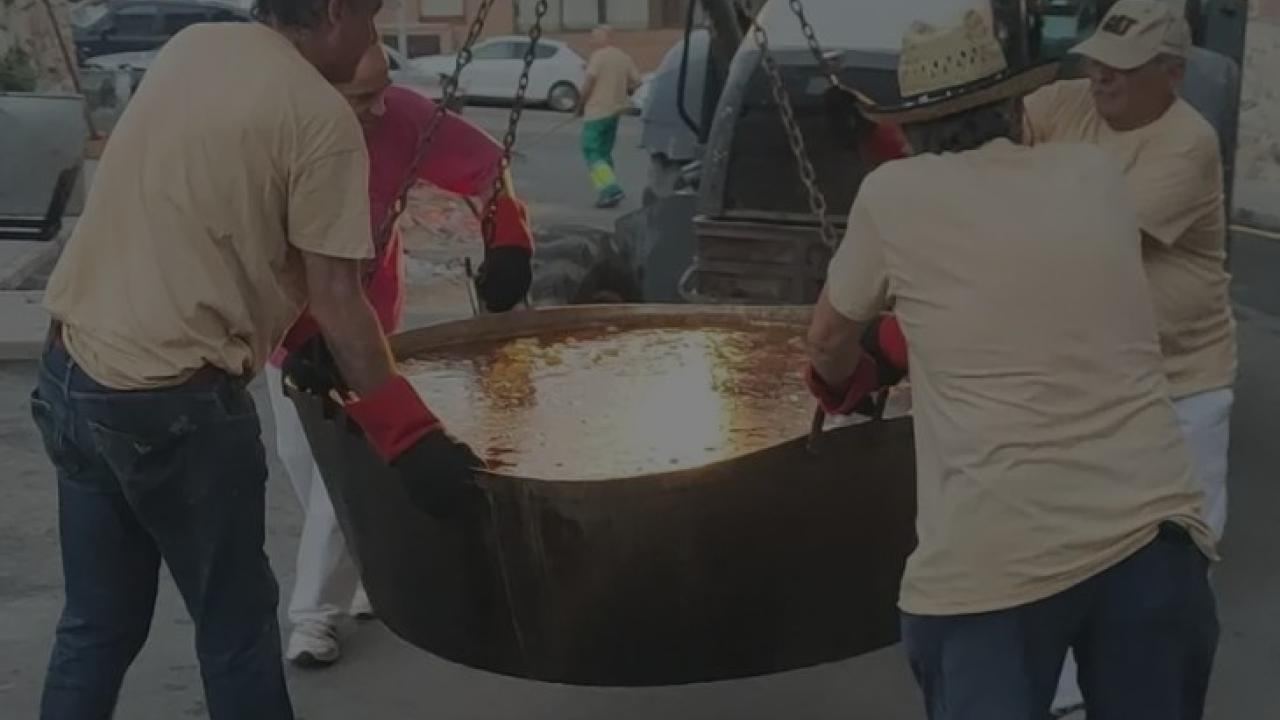
Hablar de la gastronomía en Manzanares El Real es rendir homenaje al recetario serrano más auténtico, donde el aroma a leña de encina guía al comensal hacia experiencias culinarias inolvidables en sus acogedores restaurantes y bares. La experiencia de comer en esta joya de las Villas de Madrid tiene su epicentro en los establecimientos históricos de la villa, donde los guisos tradicionales y los productos obtenidos de los recursos de su entorno natural son los protagonistas junto al célebre Toro con Patatas, el plato típico del municipio que conmemora su historia trashumante ligada al Cordel de los Toros.
El privilegio de degustar estos manjares alcanza su máxima expresión al maridarlos con los caldos de la cercana subzona de El Molar, amparados bajo la D.O. Vinos de Madrid, o con las sorprendentes cervezas artesanas "La Pedriza", un orgullo local premiado en ferias que se elabora en la propia villa, el preludio perfecto para descubrir su tabla de quesos y su repostería tradicional. Este legado artesano cobra vida en delicias como el intenso queso de cabra de las granjas próximas, los yogures artesanales y la suave miel de la Sierra de Guadarrama, elaboraciones que endulzan el paseo bajo sus cumbres graníticas y cierran con broche de oro cualquier banquete manzanariego.
Para garantizar una visita perfecta y descubrir todos los rincones donde saborear estos platos y dulces típicos, te recomendamos consultar el listado oficial de restaurantes de Manzanares El Real, una guía imprescindible para elegir entre los establecimientos que mejor preservan la herencia culinaria, el producto local de kilómetro cero y la hospitalidad de esta villa con siglos de tradición.
Alojamiento: ¿Dónde dormir en Manzanares El Real?
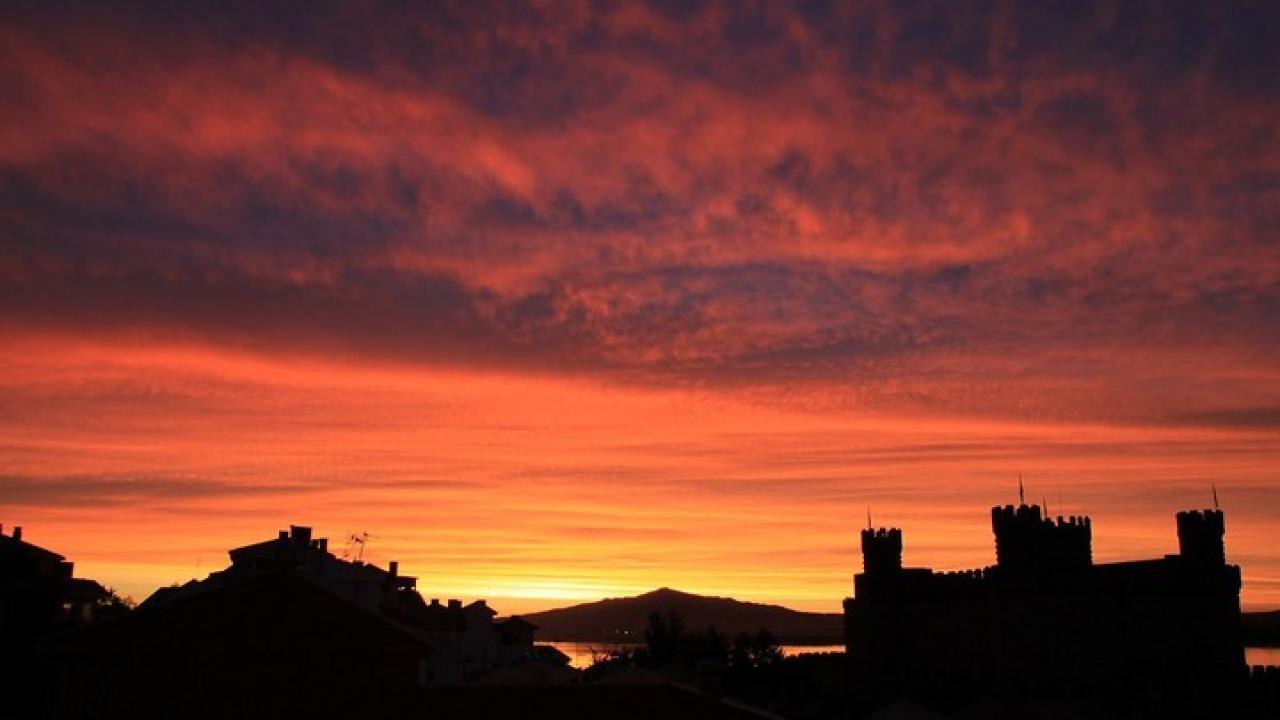
Elegir dónde dormir en Manzanares El Real es la mejor forma de completar una inmersión total en la calma y el sosiego de esta villa histórica, permitiendo descubrir el encanto de sus calles bajo la luz de los faroles y la imponente silueta iluminada de su fortaleza medieval. La oferta de alojamiento en la localidad destaca por su capacidad de fusionar el confort moderno con entornos familiares cargados de naturaleza, teniendo como máximo exponente sus hoteles y hostales céntricos ubicados a unos pasos de la Plaza del Pueblo, ideales para disfrutar de la vida local y de las vistas a las agujas graníticas del Parque Nacional.
El privilegio de pernoctar en este entorno se extiende a una cuidada selección de casas rurales, apartamentos turísticos y villas independientes perfectas para familias y montañeros, así como a opciones de camping y bungalows para quienes buscan una experiencia de desconexión total en plena naturaleza. Ya sea que busques una habitación acogedora con vistas directas al Castillo de los Mendoza o un refugio tranquilo desde el que iniciar tus rutas de senderismo, la hospitalidad manzanariega garantiza una estancia inolvidable.
Para encontrar la opción que mejor se adapte a tus necesidades y asegurar tu reserva en los establecimientos más auténticos, te recomendamos consultar el listado oficial de alojamientos de Manzanares El Real, una herramienta imprescindible para planificar tu descanso en uno de los destinos con más solera, patrimonio y naturaleza de la Comunidad de Madrid.
¿Cómo llegar a Manzanares El Real?
Descubre como llegar y moverte por Manzanares El Real fácilmente
Manzanares El Real goza de una ubicación estratégica a los pies de La Pedriza y junto al Embalse de Santillana, consolidado como uno de los principales destinos de naturaleza, escalada e historia de la Comunidad de Madrid. Su excelente conectividad facilita el acceso desde la capital y el resto de la región, ofreciendo diversas alternativas tanto para quienes optan por el vehículo privado como para los usuarios del transporte público.
Acceso por carretera
Para quienes viajen en coche, la principal vía de comunicación desde Madrid es la Autovía de Colmenar Viejo (M-607). Tras dejar atrás Colmenar Viejo, se continúa por la M-609 y finalmente se toma la M-608, que atraviesa directamente el municipio y lo conecta con Guadalix de la Sierra y Soto del Real. Otra alternativa escénica es acceder desde la Autovía del Noroeste (A-6), tomando la salida hacia la M-608 a través de Collado Villalba y Moralzarzal. La fluidez de estas vías permite situarse en el centro de la capital en un tiempo estimado de cuarenta y cinco minutos.
Transporte público interurbano
La conectividad con Madrid y las poblaciones de la Sierra de Guadarrama está garantizada mediante una red de autobuses interurbanos fluida y con frecuencias reforzadas durante los fines de semana.
- Conexión con Madrid: Desde el intercambiador de Plaza de Castilla, parten de forma regular las líneas 724 y 720. La línea 724 es la vía más directa para llegar al municipio, ofreciendo un trayecto rápido que pasa por Colmenar Viejo.
- Conexiones transversales: La línea 720 une Manzanares El Real con la estación de Cercanías de Colmenar Viejo (Línea C-4) y continúa hacia Collado Villalba (Líneas C-8 y C-10), facilitando el enlace con la red ferroviaria y otros municipios de la sierra. Asimismo, la línea 822 conecta el municipio con San Sebastián de los Reyes.
- Servicio nocturno: Para los desplazamientos durante la madrugada, la línea N702 mantiene la conexión operativa desde Madrid, asegurando el regreso fuera del horario diurno.
Movilidad interna y acceso a La Pedriza
Una vez en la localidad, el movimiento entre el casco urbano, el majestuoso Castillo de los Mendoza y los diferentes barrios residenciales se realiza de forma cómoda. Al tratarse de la principal puerta de entrada al Parque Nacional de la Sierra de Guadarrama, el acceso al sector de La Pedriza está regulado para proteger el ecosistema. Durante la temporada de mayor afluencia (fines de semana y festivos), se habilita un servicio especial de autobús lanzadera (la línea Lanzadera La Pedriza) que conecta el casco urbano y el Centro de Visitantes con el área recreativa de Canto Cochino, permitiendo a montañeros y turistas acceder sin necesidad de utilizar el vehículo propio.
Para planificar su viaje con mayor precisión y conocer la ubicación exacta de las paradas y frecuencias, descarga los mapas de transporte oficiales disponibles en esta sección. Contar con estos planos en su dispositivo le permitirá optimizar sus desplazamientos y disfrutar de Manzanares El Real con total comodidad.
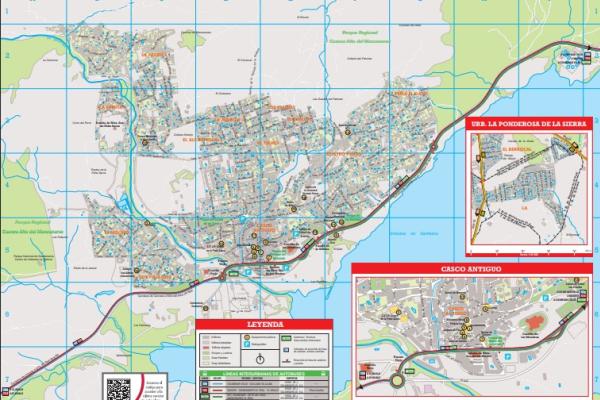 Mapa de Manzanares El Real
A new window will open