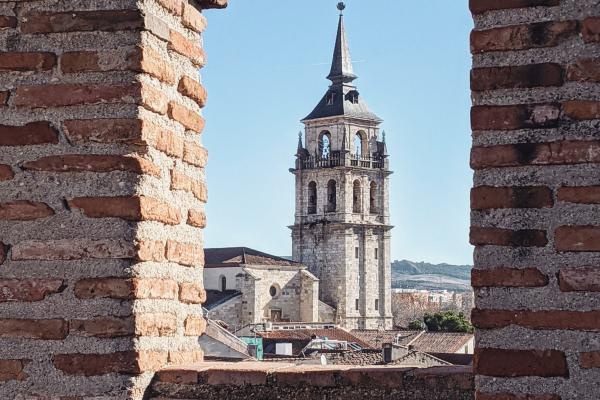
Aranjuez, an Earthly Paradise
Declared a UNESCO World Heritage Site in 2001, Aranjuez is a place where nature and history blend together in a unique way. Its gardens, designed with exquisite aesthetic taste, are true botanical museums that invite you to stroll and relax. The Royal Palace, a jewel of 18th-century architecture, and other historic buildings such as the Casa del Labrador, form a monumental ensemble of great beauty. The abundance of water, thanks to the Tajo and Jarama rivers, has allowed for the development of an irrigation system that has shaped the landscape and favored agriculture.
A Historical Legacy
Since the 15th century, Aranjuez has been a place of recreation for Spanish royalty. The kings of the House of Austria and Bourbon left their mark on this town, beautifying it with palaces, gardens, and works of art. During the 18th and 19th centuries, Aranjuez experienced its golden age as the summer residence of the court. Today, this historical legacy can be appreciated in every corner of the city. In addition to its cultural heritage, Aranjuez offers high-quality gastronomy, based on fresh produce from the garden and prepared with traditional recipes in exquisite local restaurants, one of which boasts a Michelin star.
What to see in Aranjuez
Just 50 kilometers from the capital, a getaway to Aranjuez is always a great idea. Don't miss its historic center, declared a Historic-Artistic Site, with the Royal Palace as its centerpiece and other gems such as the Royal Barges Museum, the Casa del Labrador, and the Bullring, built in 1796 by order of Charles IV and housing the Bullfighting Museum. A stroll through the Prince's Gardens, the Island Gardens, and the Parterre will allow you to evoke the melodies that Master Rodrigo dedicated to them in his famous Concerto of Aranjuez. Nature lovers will especially enjoy the surroundings of the Tajo River, with the groves and historic orchards that surround the municipality and once filled the pantries of the Court.
Throughout the year, Aranjuez breathes an atmosphere of culture and high-interest activities, with internationally renowned events such as the Motín festivities, and a large number of musical events such as the Early Music Festival, as well as those held at the Royal Carlos III Theater or the Isabel de Farnesio Cultural Center. In spring and autumn, it is pleasant to arrive by the Strawberry Train, which departs from the old Delicias station. Travel to Aranjuez on a historic train with wooden carriages and period-dressed staff offering traditional products.

Royal Palace of Aranjuez
The Royal Palace of Aranjuez, located on the Tagus River valley, is one of the residences of the Spanish Royal Family and an exceptional testament to Spanish history and art. Its origins date back to the Middle Ages, specifically to the former Casa Maestral of the Order of Santiago, used as a recreational residence by the monarchs beginning in the 15th century.
The Palace we know today is the result of a long construction process spanning several centuries and involving numerous architects and artists. Philip II commissioned the initial project to Juan Bautista de Toledo in 1561, who designed a palace around a square courtyard with two side wings, following the model of El Escorial. After Toledo's death, Juan de Herrera continued the work, introducing some modifications and completing the Cuarto Nuevo (New Room), intended for the king's chambers and the chapel.
During the 17th and 18th centuries, the Palace was expanded and transformed. Philip V promoted the construction of the eastern and western wings, while Santiago Bonavía carried out major remodeling work, such as the main staircase and the main façade. Charles III focused on the interior decoration, highlighting the Porcelain Cabinet, a jewel of Spanish Rococo art. Francesco Sabatini was commissioned to design the two wings flanking the Plaza de Armas, as well as the Royal Parade, a space designed for events and performances.
In the 19th century, the Palace underwent further transformations, adapting to the tastes and needs of the time. Modifications were made to the interior decoration, such as King Francis's Arab Cabinet, an example of exoticism and fascination with Eastern culture.
The Royal Palace of Aranjuez is an architectural complex of great historical and artistic value. Elements of different styles, from the Renaissance to Neoclassicism, can be appreciated here, merging into a harmonious and balanced whole. Highlights include its facades, interior courtyard, main staircase, chapel, and numerous halls and rooms decorated with works of art and period furniture.
The Palace also has other tourist attractions, such as its gardens, declared a UNESCO World Heritage Site.

Royal Gardens of Aranjuez
Considered the most beautiful gardens of that time, they served as inspiration to artists such as the composer Joaquín Rodrigo or the painter Santiago Rusiñol.
There are several historic gardens surrounding the Royal Palace of Aranjuez, each one representing a different type of style according to the time and taste of the monarch who commissioned its creation.
Today you can visit the Prince's Garden (between the Puerta de Villanueva and Calle Isabel II), the Queen's and King's Garden (the latter from the Parterre), the Isla, Isabel II and Parterre gardens.

The Casa del Labrador

Museum of Royal Fall. House of Marinos
The collection of falúas or fluvial pleasure boats is composed of forty objects, six of which are boats and the rest mastites, models and other elements related to the nautical hobbies of the kings. The museum recalls the courtyas in the rivers and ponds of the Real Sites of Buen Retiro in Madrid, La Granja de San Ildefonso and, above all, Aranjuez.
The oldest and most spectacular boat to be exhibited is the golden gondola commissioned in Naples by Charles II in 1683, for use in the pond of Buen Retiro in Madrid. Chronologically, it follows the Carlos IV façade, built in Cartagena at the beginning of the 19th century. From the reign of Fernando VII dates the falca with dolphins interlaced in the bow and the royal coat of arms laureate in the stern, as well as the pavilion adorned with butterflies and garlands. To the reign of Isabel II corresponds the canoe in mahogany wood with reinforcements of golden bronze, constructed in Ferrol in 1859. Also of Isabel II is the boat of cabotage work of Jose Tuduri de la Torre, dedicated by "Mahon to its queen". Finally, it exposes the falúa of Alfonso XII, gift of the city of Ferrol in 1879, that was used by the monarch in his stays summer in San Sebastián.
In addition we can enjoy the paintings referring to the Spanish squadron of the nineteenth century, as well as a set of bronze cannons from the reign of Fernando VI and various utensils for navigation of falúas.
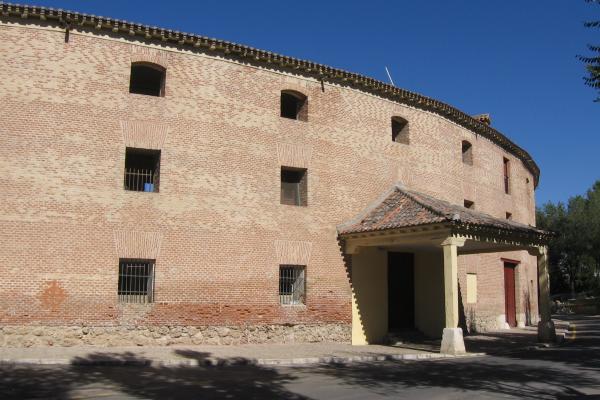
Plaza de Toros de Aranjuez: Monumento Histórico y Museo Taurino
La Plaza de Toros de Aranjuez es uno de los cosos más antiguos y bellos de España, integrada plenamente en el Paisaje Cultural de la Humanidad. Construida en 1796 por orden del rey Carlos IV, destaca por su imponente arquitectura neoclásica y su ubicación estratégica en el trazado ilustrado de la Villa. Inaugurada por figuras legendarias de la tauromaquia, su estructura de ladrillo y piedra ha sido testigo de más de dos siglos de historia, sobreviviendo a incendios y reconstrucciones hasta recuperar su esplendor original.
Al visitar este monumento, el viajero descubre mucho más que un recinto de festejos:
- Arquitectura Real: Su diseño circular y su fachada monumental la sitúan a la altura de las grandes plazas históricas como la Maestranza de Sevilla o la Ronda.
- Museo Taurino de Aranjuez: En su interior, el visitante puede recorrer una completa exposición que narra la evolución del arte del toreo a través de trajes de luces, cartelería histórica y objetos personales de grandes maestros.
- Patrimonio Nacional: El edificio forma parte esencial del conjunto monumental que rodea al Palacio Real, siendo una parada obligatoria en cualquier ruta a pie por el casco histórico.
Hoy en día, la Plaza de Toros sigue siendo un espacio vivo que acoge las tradicionales corridas de las Fiestas de San Fernando y las Fiestas del Motín, además de diversos eventos culturales. Su conservación y su musealización la convierten en uno de los puntos de mayor interés turístico para quienes buscan comprender la identidad y las tradiciones del Real Sitio.

Real Cortijo de San Isidro
In 1759 Charles III, who had been king of Naples and Sicily, came to the throne. He chose Aranjuez to live, as it reminded him of his Neapolitan city of Caserta and chose this enclave to develop an experimental agroindustrial and livestock project to activate progress from the enlightened perspective. Thus, in 1762 he created the Cortijo Real, similar to San Leucio, near Caserta, also of agricultural experimentation and that served as a supply of good products to the royal palace.
In the beautiful natural landscape of the Real Bosque began to break virgin lands, forming tree-lined streets to access the new orchards, artificial meadows for grazing etc. They brought from Naples cows, buffaloes, sheep, horses, oxen ... and to irrigate the lands they built three caces and transformed the historical caz de la Azuda. In addition, they planted 25,000 varied trees and 128,000 strains, raising a fence to protect crops from wild animals. In 1770, King Carlos III had a house built for the director of the cortijo, royal residence, stables, oratory, stables ...
Today, when entering the Real Cortijo we find an urban helmet of neoclassic style in which emphasizes the hermitage of San Isidro, in the center. Visiting this enclave allows us to admire the Real Bodega, the Plaza Mayor, the Winery and the Royal House. Its pentagonal perimeter is framed by leafy green areas. And in its environment, the hydraulic systems that distribute the water of the Tagus by the fertile plots are still active. These protected elements are the perfect excuse for a good hiker route.
A new window will open
Cultural and natural wealth on the Tagus River banks

The feast of the Riot
These celebrations, declared of International Tourist Interest, are celebrated since 1981. Each September, coinciding with the celebration of the traditional fairs of cattle and the harvest of yesteryear, the neighbors of Aranjuez remember before 6,000 spectators the Mutiny.
The first act takes place in the Palace of Godoy, where the assault is represented to the house of the minister of the king Carlos IV, Manuel Godoy. The neighbors go through the streets of Aranjuez with torches, the drum roll and the shout of "die Godoy", until arriving at the palace, where they capture him. The event ends with a fireworks display.
The assault was the beginning of a historical cycle, with the fall of a tyrant, the change of the holder of the Monarchy and the step towards the Spanish constitutionalism, whose initial leg was forged in the Royal Site of Aranjuez with the first meetings of the Board Supreme Central and Government of the Kingdom, which would culminate as a project and reality in 1812 when proclaiming the Constitution of Cadiz.
In addition, as part of these festivities, over 170 residents of Aranjuez give life to the chronicle of the National Episodes of Benito Pérez Galdós, which chronicles popular discontent, court intrigues, the fall of Godoy, the abdication of the monarch and the ascent to the throne of its son Fernando VII. The staging takes place in the Couples Square and the Royal Palace becomes the scene of the popular uprising. In an esplanade of more than 7,000 square meters the spectacular representation of the events that took place between the 17 and the 19 of March of 1808 transfers to neighbors and visitors to the Spain of the court of Carlos IV.
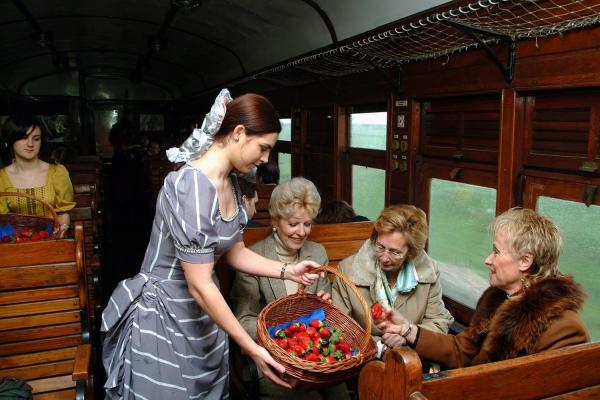
Strawberry Train
A train with a century of history, the Strawberry Train offers its visitors, on spring and autumn weekends, a journey through time and space, recalling the route of the first railway in the Community of Madrid. A journey of approximately 45 minutes in which you can enjoy wonderful views until reaching Aranjuez.
The Strawberry Train is a unique cultural and leisure experience, with a journey on a historic train made up of carriages with a century of history, and a magnificent day in Aranjuez, a city declared a Cultural Landscape World Heritage Site by UNESCO, where you can enjoy its many attractions.
On the way back, we will taste the famous Aranjuez strawberry, which gives its name to our train and gives a sweet taste at the end of our journey.

Royal Farmhouse of Charles III
In it is aged and bottled the wine Bodega del Real Cortijo. The visit begins in his garden, where is the huge door of apiary stone designed by Marquét (royal architect of many monuments of Aranjuez) in the s. XVIII. It is the access to the subterranean cave where it is possible to cross its two branches of almost half kilometer of length flanked by two hundred niches in which the wine ages. The visit ends in the winery, a vaulted room example of the civil architecture of 1792, where a tasting is performed. The winery also organizes complete tastings with winemakers.
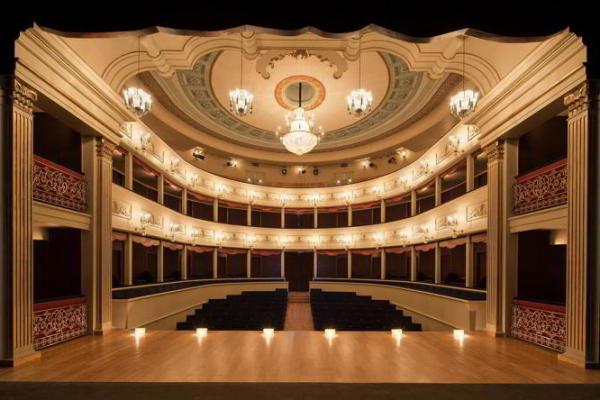
Teatro Real Carlos III: Historia, Neoclasicismo y cultura viva en Aranjuez
El Teatro Real Carlos III es uno de los epicentros culturales del Paisaje Cultural de Aranjuez. Construido entre 1767 y 1768, nació como la sede oficial de la prestigiosa Compañía de los Reales Sitios, albergando durante décadas las mejores representaciones de ópera italiana y teatro francés de la Ilustración.
Actualmente el Teatro Real Carlos III de Aranjuez cuenta con una programación de calidad y para todos los públicos que hará que tu visita a Aranjuez sea inolvidable.
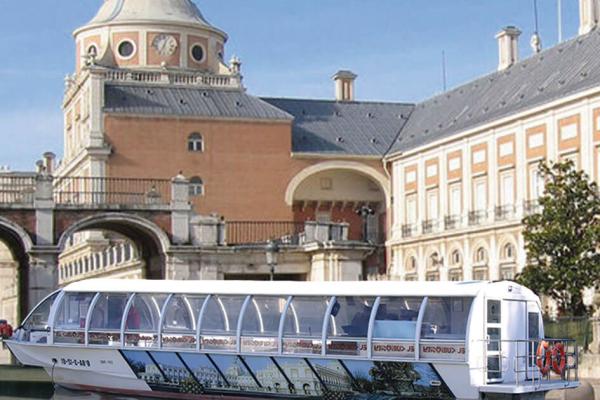
Aranjuez Tourist Boat: A Unique Cruise on the Tagus
Get on board the Curiosity, a boat that will take you sailing around the city of Aranjuez in a leisure experience for the whole family.
You'll have an onboard guide during the 45-minute trip, and you'll also be able to take part in an original outdoor escape-room game called ‘The Secret City’, suitable for all the family to enjoy.
Set sail on the magnificent heritage city of Aranjuez and discover places you would never have dreamed of before!
A new window will open
Rutas por Aranjuez
Del Esplendor Real a los Sotos del Tajo
Descubre Aranjuez a través de sus itinerarios históricos y naturales, donde el Paisaje Cultural de la Humanidad cobra vida en cada paso. Más allá de la visita palaciega, este destino ofrece experiencias que fusionan el urbanismo ilustrado del siglo XVIII con un ecosistema de ribera único, diseñado para ser recorrido y disfrutado con los cinco sentidos. Además desde Aranjuez puedes realizar 2 Etapas del Gran Tour de CiclaMadrid


Gastronomía: ¿Dónde comer en Aranjuez?

Saborear Aranjuez es descubrir la excelencia de su huerta histórica, un legado del siglo XVIII que sigue proveyendo a la capital de productos de una calidad excepcional. La cocina ribereña tiene sus grandes protagonistas en el espárrago y el fresón de Aranjuez, delicias que alcanzan su máxima expresión en los tradicionales 'gangos' —merenderos típicos situados a orillas del Tajo— y en los fogones de los mesones castellanos del casco antiguo.
La oferta culinaria de la Villa es un referente en la gastronomía madrileña, combinando el respeto por la tradición con la vanguardia de restaurantes galardonados con Estrella Michelin. Para planificar tu almuerzo o cena, te recomendamos consultar el listado oficial de restaurantes y hostelería de Aranjuez (abre en ventana nueva), donde podrás explorar desde rincones históricos con encanto hasta las propuestas más innovadoras de la Ribera del Tajo, con sus contactos directos y horarios actualizados.
Alojamiento: ¿Dónde dormir en Aranjuez?
Para disfrutar de la magia de Aranjuez al anochecer, cuando sus jardines y palacios se iluminan, la Villa ofrece una variada infraestructura que combina historia, confort y contacto con la naturaleza. Pernoctar en el Real Sitio permite al visitante vivir una experiencia de inmersión total, disfrutando de la tranquilidad de sus plazas ilustradas una vez que los grupos de excursionistas regresan a la capital.
La oferta de estancia en Aranjuez se adapta a cada tipo de viajero:
- Hoteles con Encanto: El casco antiguo alberga alojamientos situados en edificios históricos rehabilitados, ideales para quienes buscan una escapada romántica o cultural a pocos pasos del Palacio Real.
- Turismo de Naturaleza y Caravaning: A orillas del río Tajo se encuentra el Camping Internacional de Aranjuez, un referente en la Comunidad de Madrid para familias y entusiastas del caravaning. Este espacio ofrece parcelas e instalaciones modernas en un entorno arbolado de gran valor paisajístico.
- Hospedaje Moderno: La periferia y las zonas residenciales cuentan con hoteles funcionales con todos los servicios, perfectos para viajes de negocios o grandes eventos.
Para facilitar tu reserva y consultar la disponibilidad de plazas, puedes acceder al listado actualizado de hoteles y campings de Aranjuez (abre en ventana nueva), donde encontrarás toda la oferta oficial categorizada para planificar tu estancia ideal en el Paisaje Cultural de la Humanidad.
¿Cómo llegar a Aranjuez?
Descubre como llegar y moverte por Aranjuez fácilmente
Transporte público: Tren y Autobuses
La conectividad con Madrid y el resto de la zona sur está garantizada mediante una de las redes ferroviarias más históricas de España y un servicio de autobuses interurbanos de alta frecuencia.
- Cercanías Renfe: La Línea C-3 une Aranjuez con las principales estaciones del centro de Madrid (Atocha, Sol, Nuevos Ministerios y Chamartín). Con una frecuencia de paso constante, es la opción preferida por miles de usuarios. Además, durante la temporada turística, el emblemático Tren de la Fresa ofrece una experiencia histórica única desde el Museo del Ferrocarril de Madrid.
- Media Distancia: Al ser un nudo ferroviario clave, Aranjuez cuenta con paradas de trenes de Media Distancia que conectan la ciudad con Cuenca, Valencia y diversas localidades de Castilla-La Mancha.
- Autobuses Interurbanos: Desde el intercambiador de Legazpi y la Estación Sur (Méndez Álvaro), parten de forma regular las líneas 423 y VAC-158. Asimismo, otras líneas como la 429 y 430 enlazan la localidad con municipios cercanos y urbanizaciones periféricas. Para los desplazamientos nocturnos, la línea N402 mantiene el servicio operativo durante toda la madrugada.
Movilidad interna: Autobuses urbanos
Una vez en el Real Sitio, el movimiento entre los diferentes barrios, el Hospital Universitario del Tajo, la zona universitaria y los monumentos se realiza de forma eficiente a través de una red de cinco líneas de autobuses urbanos (L1 a L5). Este servicio está diseñado para facilitar el acceso de los vecinos y turistas a los jardines, palacios y centros de servicios sin necesidad de utilizar el vehículo propio.
Para planificar su viaje con mayor precisión y conocer la ubicación exacta de las paradas y frecuencias, descarga los mapas de transporte oficiales disponibles en esta sección. Contar con estos planos en su dispositivo le permitirá optimizar sus desplazamientos y disfrutar de Aranjuez con total comodidad.
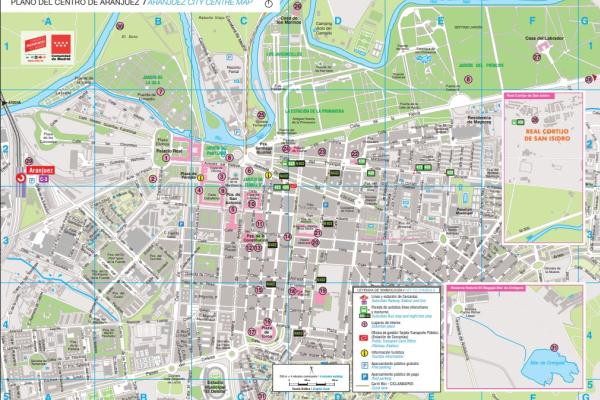 Mapa del centro histórico de Aranjuez
A new window will open

Preguntas Frecuentes sobre Aranjuez
¿Qué ver en Aranjuez en un día?
En un día en Aranjuez se puede visitar el Palacio Real de Aranjuez, pasear por sus jardines históricos como el Jardín del Príncipe o el Jardín de la Isla y recorrer el casco histórico, donde se concentran plazas, fuentes y edificios ligados a la antigua corte española.
¿Merece la pena visitar Aranjuez?
Sí, Aranjuez es uno de los destinos culturales más completos de la Comunidad de Madrid. Combina patrimonio histórico, jardines declarados paisaje cultural y el entorno del río Tajo, lo que lo convierte en una excursión muy recomendable desde Madrid.
¿Cuánto tiempo se necesita para visitar Aranjuez?
Lo habitual es dedicar entre medio día y un día completo. En unas 3 a 5 horas se pueden visitar los principales puntos del centro histórico y los jardines, aunque una visita más tranquila permite disfrutar mejor del entorno del palacio y sus espacios verdes.
¿Qué jardines hay en Aranjuez?
Los principales jardines son el Jardín del Príncipe, el Jardín de la Isla y el Jardín del Parterre, todos ellos vinculados al Palacio Real de Aranjuez y considerados uno de los conjuntos paisajísticos históricos más importantes de España.
¿Se puede ir a Aranjuez en transporte público desde Madrid?
Sí, Aranjuez está muy bien conectado con Madrid. Se puede llegar en tren de Cercanías (línea C-3) o en autobús interurbano, lo que lo convierte en una excursión fácil y accesible sin necesidad de coche.
¿Qué es el Tren de la Fresa y cuándo funciona?
El Tren de la Fresa es un tren turístico histórico que conecta Madrid con Aranjuez recreando el primer trayecto ferroviario de la Comunidad de Madrid. Funciona en temporada turística y ofrece una experiencia cultural completa con visitas guiadas al llegar a Aranjuez, incluyendo el palacio y sus jardines.
¿Cuál es la mejor época para visitar Aranjuez?
La primavera y el otoño son las mejores épocas para visitar Aranjuez, ya que el clima es más agradable y los jardines del palacio se encuentran en su máximo esplendor.